

Meet Your New All‑Purpose Greek Seasoning Recipe (Why DIY beats store‑bought)
Make a balanced, salt‑optional Greek seasoning recipe at home in 5 minutes. This all purpose Greek seasoning is bright, herby, and versatile enough to sprinkle on roasted vegetables, rub onto chicken or pork, or whisk into zesty marinades and dressings.
What you’ll get: a dependable, do‑everything blend you can keep by the stove for weeknights and grilling season alike - your go‑to all purpose Greek seasoning that delivers big flavor with minimal effort.
Why DIY beats store‑bought:
Control the salt: Make it salt‑free or salt‑smart to suit your taste or dietary needs.
Tailor the flavor: Dial up oregano, dill, garlic, or heat to match your menu.
Maximize freshness: Blend what you’ll use; no stale jars gathering dust.
Skip additives: No anti‑caking agents, fillers, or mystery “natural flavors.”
"About 90% of Americans consume more sodium than is recommended for a healthy diet." - Source
How it fits your everyday cooking: This Greek seasoning recipe bridges classic Greek spices - think oregano, garlic, dill, thyme - with a broader Mediterranean seasoning mix profile that works across roasted veggies, fish, lamb, tofu, grain salads, and dressings. It’s your flexible, Mediterranean spice mix for weeknight meals, meal prep, and backyard BBQs.
Prefer grab‑and‑go? Raw Spice Bar has you covered. Our small‑batch Mediterranean Seasoning is crafted for balanced, restaurant‑quality results without the guesswork, and our flexible spice subscription delivers monthly global discoveries with fresh 2 oz blends and easy recipe cards. Mix your own today, then keep Raw Spice Bar blends on hand for instant, reliable flavor when you need it.
Greek Spices 101: What’s in Greek Seasoning vs. a Mediterranean Spice Mix
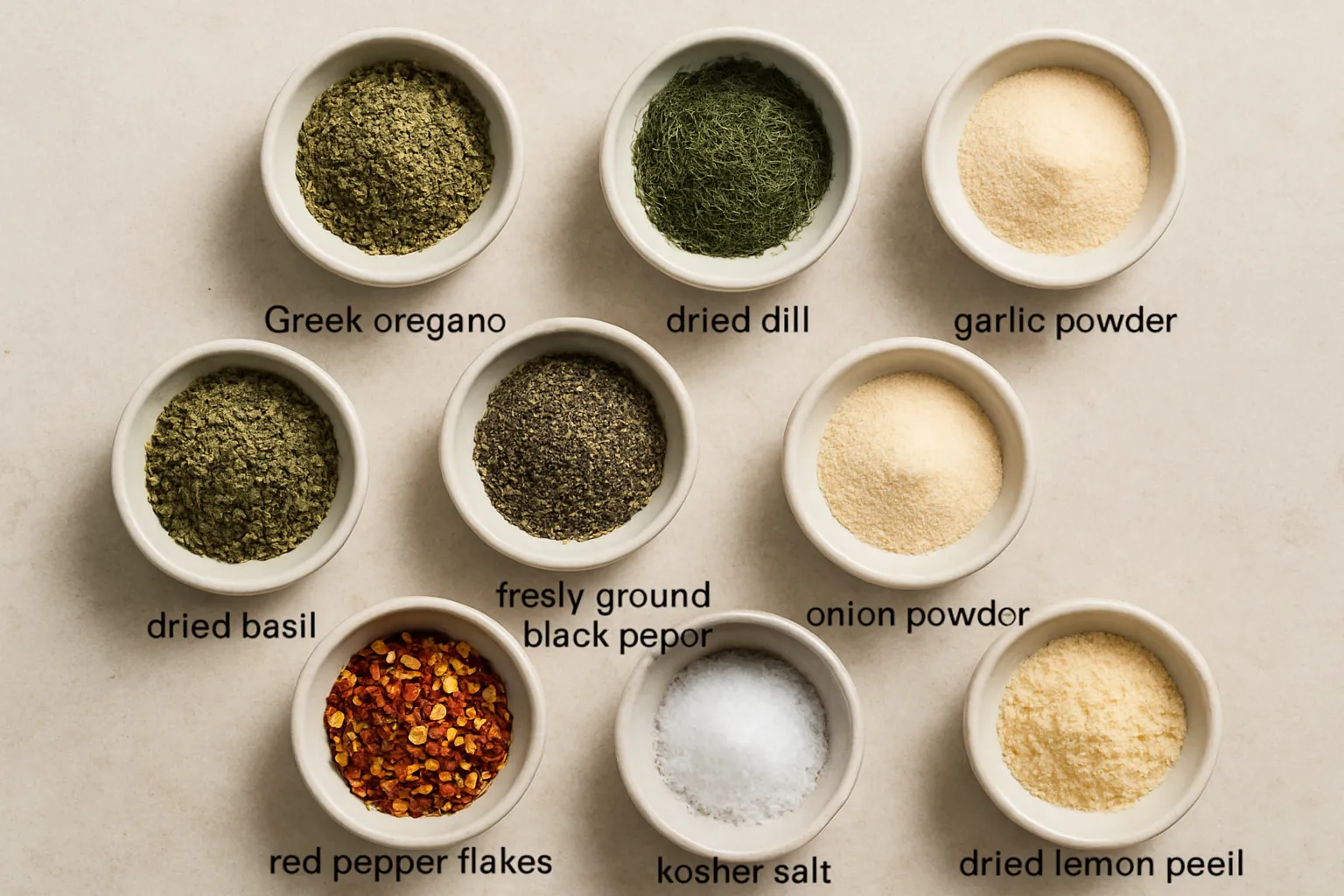
What is “Greek seasoning”?
A US‑popular, all‑purpose herb blend inspired by classic Greek flavors. This pantry staple leans on Greek spices to create a bright, savory profile you can shake over veggies, rub onto proteins, or whisk into dressings - a flexible counterpart to a broader Mediterranean seasoning mix.
Core flavor profile (the essentials)
Oregano‑forward: Greek oregano provides the signature woodsy, peppery backbone.
Savory base: garlic powder and onion powder for all‑purpose depth.
Herbs: dill and thyme for freshness; optional basil or marjoram for roundness.
Seasoning: black pepper for bite; a touch of heat from crushed red pepper flakes.
Optional lift: a hint of lemon peel for citrusy brightness.
Oregano seasoning spotlight
If you boost oregano and marjoram, you get a greener, more herb‑forward oregano seasoning. Expect:
Bigger aroma and a slightly earthier, peppery edge.
Cleaner, greener finish that pairs beautifully with tomatoes, cucumbers, olives, grilled fish, and feta.
A natural fit for simple oil‑and‑vinegar dressings where herbs lead and salt can stay optional.
Greek seasoning vs. a Mediterranean seasoning mix
Similarities:
Both rely on oregano, thyme, and garlic for savory, herbaceous flavor.
Key differences:
Greek seasoning stays close to oregano, dill, thyme, black pepper, and a touch of heat.
A Mediterranean seasoning mix often widens the lens with basil and rosemary, and may include lemon peel or sumac for pan‑regional brightness - great for grain bowls, roasted veggies, and seafood across the Mediterranean.
Ingredient quality: Greek oregano vs. Italian oregano
Greek oregano is bolder and earthier than Italian oregano, which is typically softer and more minty. Using Greek oregano (Origanum vulgare subsp. hirtum) gives your blend that unmistakable Greek character and stands up better to grilling and roasting.
"Greek oregano (Origanum vulgare subsp. hirtum) … is widely used in Mediterranean cuisine." - Source
Why it matters:
Stronger aroma and flavor mean you can keep salt lower without losing impact.
Better performance in marinades, rubs, and high‑heat cooking where delicate oregano can fade.
Not mixing today? Grab a ready‑to‑go blend
Prefer a perfectly balanced jar now? Raw Spice Bar’s Mediterranean Seasoning delivers a fresh, small‑batch 2 oz blend with a recipe card so you can cook confidently tonight. And if you love exploring beyond Greek spices, our flexible spice subscription brings monthly, chef‑crafted blends and global inspiration straight to your door - no fillers, no additives, just big flavor.
The Master Greek Seasoning Recipe (Salt‑Optional)
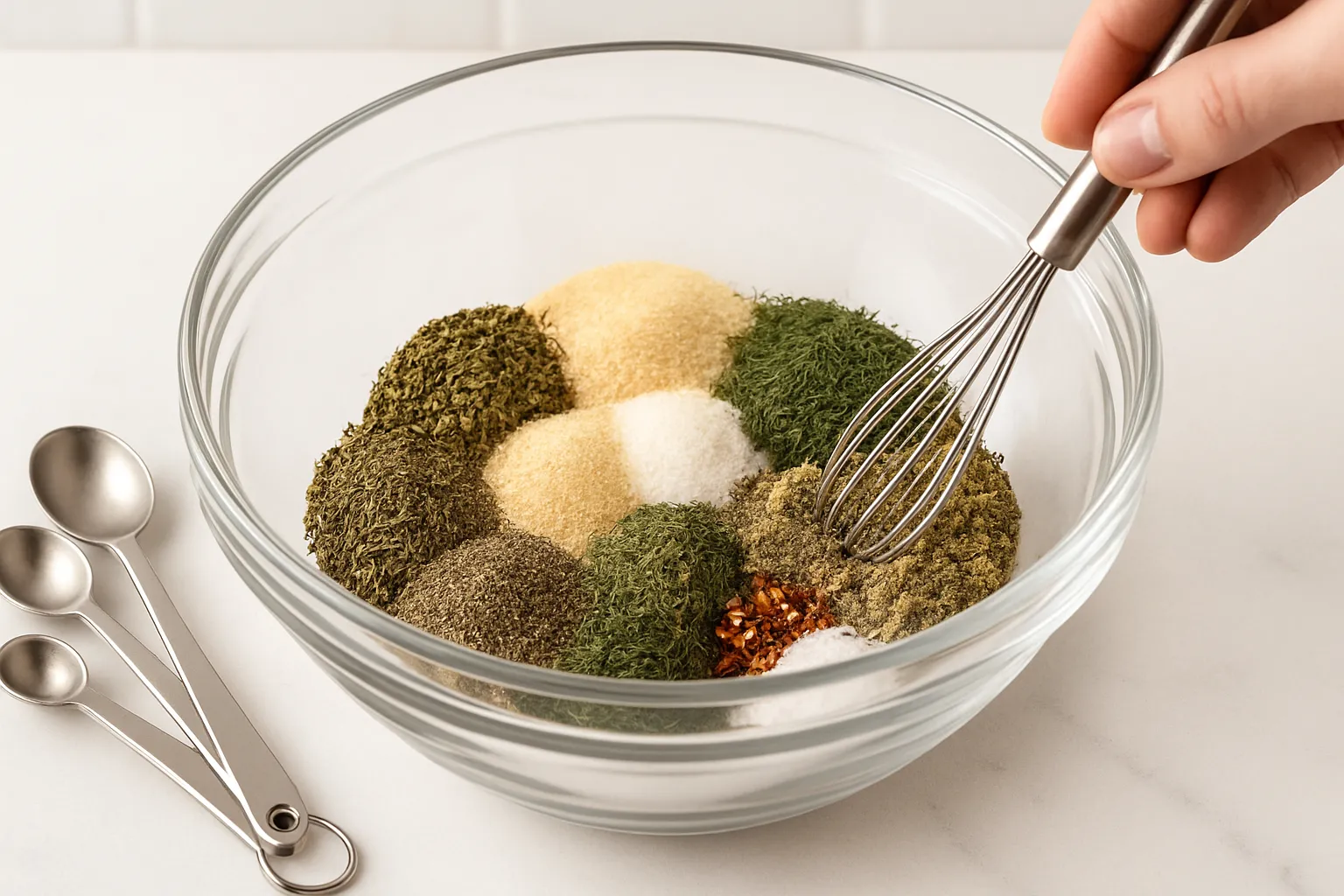
Ingredient ratio (by volume)
Base (salted):
Oregano > garlic powder > onion powder > dill ≈ thyme > black pepper > basil
Optional: crushed red pepper for heat
Kosher salt for balance (or omit for salt‑free)
Salt‑free option:
Same ratio, simply leave out the salt and season to taste during cooking.
Think of this as your all purpose Greek seasoning blueprint - you can keep it salt‑optional and still have a restaurant‑worthy greek seasoning recipe ready in minutes.
Step‑by‑step
-
Whisk to combine
Add measured dried spices to a clean glass bowl. Whisk thoroughly for even distribution and a consistent shake‑to‑shake flavor.
-
Optional quick pulse
For a finer consistency (great for rubs and dressings), give the mixture a 2–3 second pulse in a spice grinder. Avoid over‑processing to prevent clumping.
-
Taste and calibrate
Heat: add more crushed red pepper or freshly ground black pepper.
Herbal intensity: increase oregano for classic Greek, dill for fresh brightness, or basil for softness. A pinch of marjoram leans greener.
Savory depth: add a touch more garlic powder or onion powder to boost umami.
Pro tips
Use Greek oregano for a bolder, more authentic profile that stands up to grilling and roasting.
Choose kosher salt over table salt. Kosher’s larger crystals taste less “salty” by volume; if substituting table salt, start with half and adjust.
Short on time? Compare your custom blend side‑by‑side with Raw Spice Bar’s Mediterranean Seasoning for profile inspiration. Our fresh, small‑batch 2 oz packs and included recipe cards make it easy to cook confidently on busy nights.
Batch Scaling & Ratio
Version |
1× (about 1/2 cup) |
5× |
10× |
|---|---|---|---|
Salted |
≈ 8 tbsp (1/2 cup; 24 tsp); marinade: 1 tbsp seasoning + 1 tbsp lemon juice + 2 tbsp olive oil per lb protein |
≈ 2 1/2 cups (40 tbsp; 120 tsp); same marinade ratio |
≈ 5 cups (80 tbsp; 240 tsp); same marinade ratio |
Salt‑free |
≈ 8 tbsp (1/2 cup; 24 tsp); marinade: 1 tbsp seasoning + 1 tbsp lemon juice + 2 tbsp olive oil per lb protein |
≈ 2 1/2 cups (40 tbsp; 120 tsp); same marinade ratio |
≈ 5 cups (80 tbsp; 240 tsp); same marinade ratio |
Custom Variations: Oregano Seasoning, Lemon‑Herb, Smoky Grill, and Spicy
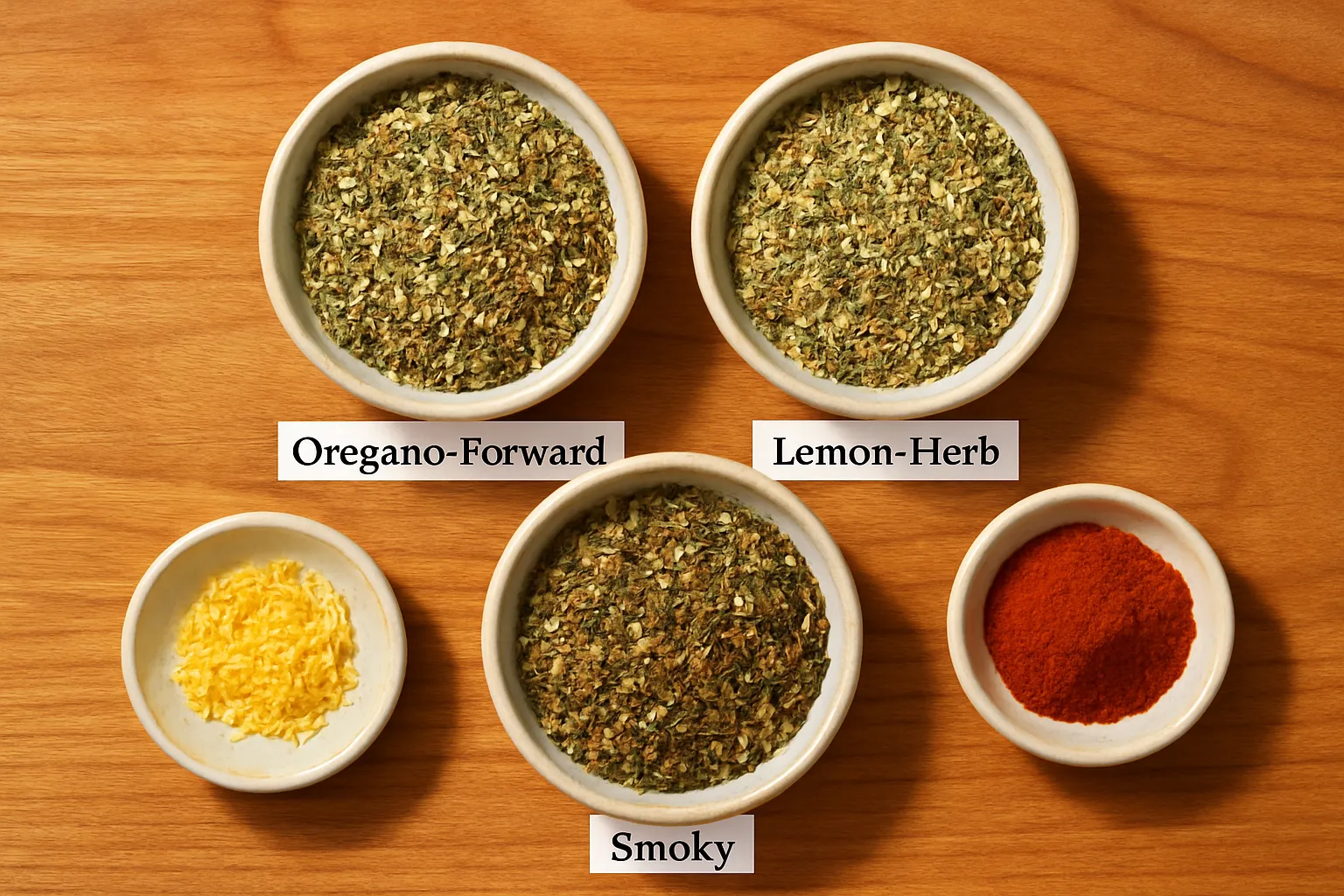
Oregano seasoning (herb‑forward)
Dial up oregano and add marjoram for a greener, aromatic profile.
Use as a table blend over tomatoes, cucumbers, feta, grilled fish, and olive‑oil toasts.
Lemon‑herb
Fold in dried lemon zest; optional pinch of sumac for tangy Eastern Mediterranean brightness.
Ideal for seafood, roasted potatoes, grain salads, and vinaigrettes.
Smoky grill
Add smoked paprika to bring campfire depth and round, sweet smoke.
Excellent on BBQ chicken thighs, pork chops, and grilled portobellos.
Spicy
Increase crushed red pepper for heat; balance with a touch more oregano to keep herbal clarity.
Great for shrimp skewers, sheet‑pan veggies, and spicy Greek‑style fries.
Salt‑free guidance
Keep blends unsalted for precision. Season proteins and vegetables with salt separately so you can adapt to brines, marinades, and salty cheeses like feta.
Want perfect balance fast?
Pair these variations with Raw Spice Bar’s Mediterranean Seasoning for instant, dependable results, or explore new twist‑ins every month with our spice subscription - fresh 2 oz blends plus recipe cards for effortless, discovery‑driven cooking.
From Dry Rub to Marinade to Dressing: Everyday Ways to Use This Blend
Quick formulas
-
Dry rub
1 to 1.5 tsp per lb of protein (chicken, pork, lamb, tofu). Pat dry, season evenly, rest 15–30 minutes before cooking.
-
Marinade
-
Per lb protein: 1 tbsp Greek seasoning + 2 tbsp olive oil + 1 tbsp lemon juice or vinegar. Marinate:
Chicken: 30–120 min
Pork: 30–90 min
Lamb: 30–120 min
Fish/Shrimp: 15–30 min
Tofu: 30–60 min
-
-
Sheet‑pan veg
1–2 tsp per lb vegetables + 1–2 tbsp olive oil. Roast at 425°F/220°C until browned and tender.
-
Yogurt sauce
1 tsp seasoning + 1 cup Greek yogurt + squeeze of lemon + 1 tsp olive oil; optional grated cucumber for tzatziki‑style dip.
-
Vinaigrette
1 tsp seasoning + 3 tbsp extra‑virgin olive oil + 1 tbsp red wine vinegar + pinch of salt. Shake until emulsified.
Tip: If you’re using a salt‑free all purpose Greek seasoning, add salt directly to your protein or veggies for precision.
Brand tie‑in
Cook with confidence using Raw Spice Bar’s recipe cards - packed with Greek‑leaning pairings and weeknight ideas. Browse our DTC catalog for a fresh 2 oz Mediterranean Seasoning or subscribe for monthly small‑batch blends and new ways to put your Greek seasoning recipe to work.
Pairing & Portion Guide: Proteins, Veggies, and Grains
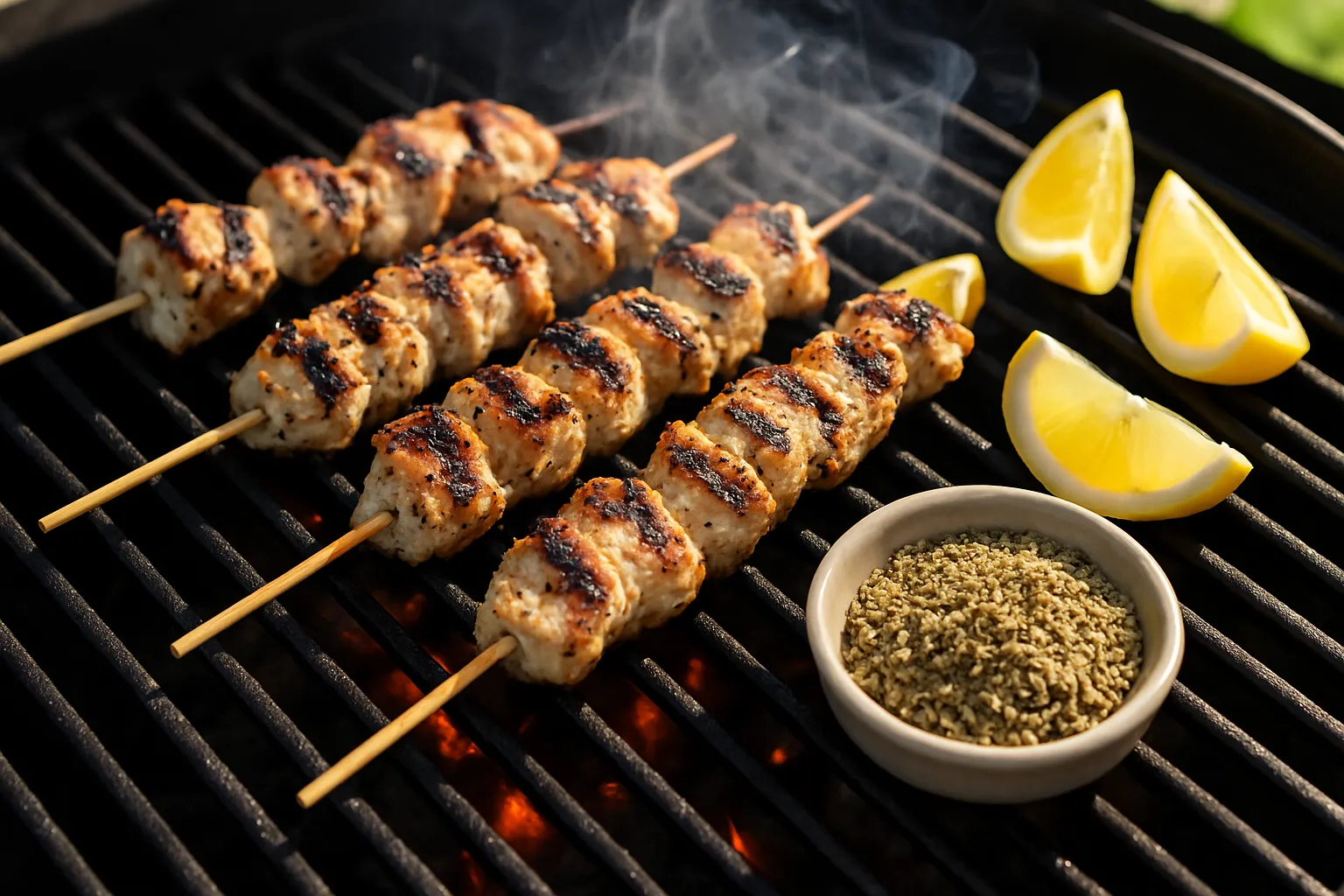
Use this at-a-glance matrix to season confidently, then layer flavors with lemon, garlic, and olive oil. For extra dimension, pair with Raw Spice Bar Mediterranean Seasoning for lemony herbal notes or explore monthly blends via our spice subscription.
Pairing & Dosage Matrix
Ingredient |
Seasoning amount (per lb or per 2 cups veg/grain) |
Best method(s) |
Pro tip add‑ins |
Suggested RSB companion blend |
|---|---|---|---|---|
Chicken breasts/thighs |
1–1.5 tsp per lb (dry rub) or 1 tbsp in marinade |
Grill, roast, skillet |
Lemon juice, olive oil, garlic |
Mediterranean Seasoning |
Pork chops/tenderloin |
1–1.5 tsp per lb or 1 tbsp in marinade |
Grill, roast, sous‑vide + sear |
Lemon zest, honey, olive oil |
Mediterranean Seasoning |
Lamb (chops/ground) |
1–2 tsp per lb |
Grill, broil, pan‑sear |
Garlic, oregano boost, yogurt |
Mediterranean Seasoning |
Salmon |
1 tsp per lb |
Roast, grill on cedar, pan‑sear |
Lemon slices, olive oil |
Mediterranean Seasoning |
White fish/shrimp |
1 tsp per lb |
Grill basket, sauté, roast |
Lemon juice, parsley |
Mediterranean Seasoning |
Tofu/tempeh |
1–1.5 tsp per lb (plus salt) |
Roast, grill, air‑fry |
Lemon, olive oil, cornstarch for crisping |
Mediterranean Seasoning |
Potatoes |
2 tsp per 2 cups |
Roast at 425°F/220°C |
Olive oil, lemon, parsley |
Mediterranean Seasoning |
Cauliflower |
2 tsp per 2 cups |
Roast at 425°F/220°C |
Olive oil, lemon zest |
Mediterranean Seasoning |
Eggplant |
2 tsp per 2 cups |
Roast, grill |
Olive oil, garlic, sumac |
Mediterranean Seasoning |
Zucchini |
2 tsp per 2 cups |
Roast, grill |
Olive oil, lemon |
Mediterranean Seasoning |
Bell peppers |
2 tsp per 2 cups |
Roast, grill |
Olive oil, balsamic splash |
Mediterranean Seasoning |
Mushrooms |
2 tsp per 2 cups |
Roast, sauté, grill |
Olive oil, garlic butter |
Mediterranean Seasoning |
Chickpeas |
2 tsp per 2 cups (drained) |
Roast, sauté |
Olive oil, lemon |
Mediterranean Seasoning |
Lentils |
1–1.5 tsp per 2 cups cooked |
Sauté finish, soup |
Olive oil, red wine vinegar |
Mediterranean Seasoning |
Rice/quinoa |
1–1.5 tsp per 2 cups cooked |
Fold in after cooking |
Olive oil, lemon zest |
Mediterranean Seasoning |
Farro |
1–1.5 tsp per 2 cups cooked |
Warm salad, pilaf |
Olive oil, herbs, feta |
Mediterranean Seasoning |
Portioning note: If using a salt‑free greek seasoning recipe, add salt to the protein/veg separately for precision, especially when pairing with salty cheeses or brined meats.
Storage and Freshness: Keep Your Mediterranean Spice Mix Vibrant
Best practices
Use an airtight glass jar (clear or amber). Glass preserves aroma better than plastic.
Store cool and dark: a closed cabinet or pantry away from heat, light, and humidity.
Keep lids closed tightly; never shake directly over steaming pots (steam introduces moisture).
Always use a dry spoon. Avoid storing above the stove or dishwasher vents.
Shelf life
Peak flavor: within 6 months.
Still good: up to ~1 year if kept dry, sealed, and away from light/heat.
Make smaller, more frequent batches to keep aromatics bright.
Labeling
Write the blend name, date mixed, heat level (e.g., “mild,” “spicy”), and “salt‑free” if applicable.
Note any special twists (e.g., “+ lemon zest” or “smoky”).
Freshness checks and quick refresh
Aroma test: open the jar and inhale - if the scent is faint or flat, it’s fading.
Color check: dull, grayish herbs indicate age and light exposure.
-
Quick refresh options:
Dry “wake‑up”: warm 1–2 teaspoons of the blend in a dry pan over low heat for 30–45 seconds, stirring constantly, then cool before using.
Bloomed oil: gently warm 1–2 teaspoons in 2–3 tablespoons olive oil until fragrant (not sizzling). Cool, then store in a sealed jar in the fridge and use within 7–10 days as a finishing oil for veggies, grains, and fish.
Brand tie‑in
To stay in the flavor‑peak zone, Raw Spice Bar ships fresh, small‑batch 2 oz blends - just the right size to use up while they’re most vibrant. Our Mediterranean Seasoning arrives with a recipe card, and our flexible spice subscription keeps your rack rotating with new, chef‑crafted blends so nothing goes stale.
Ingredient Quality, Swaps, and Troubleshooting
Quality notes
-
Greek oregano vs. Italian oregano
Greek oregano (Origanum vulgare subsp. hirtum) is bolder, earthier, and more peppery than Italian oregano, which leans softer and minty. Greek oregano’s higher essential oil content means it stands up better to grilling, roasting, and marinating - key for a great Greek seasoning recipe.
-
Garlic/onion powder
Choose pure powders made from 100% garlic/onion. If possible, avoid blends with anti‑caking agents and added salt. Fresh powders should smell robust and appear off‑white to pale ivory (not gray or stale‑yellow).
Smart swaps
No dill? Use parsley or add more thyme (1:1 by volume).
No thyme? Increase oregano slightly (start with +25%).
Only onion flakes on hand? Pulse to a finer texture or use 2× the volume compared to onion powder.
Want more citrus? Add dried lemon zest to the blend, or finish dishes with fresh lemon juice for brightness.
Fix‑it guide
-
Too salty
Dilute with more herbs (oregano, thyme, basil). In dishes, add lemon juice or a splash of red wine vinegar to balance.
-
Too bitter/herby
Round with olive oil or a tiny pinch of sugar/honey. Shorten marinade times for delicate proteins and use gentler heat.
-
Too spicy
Cut with more oregano and a bit of basil. In application, temper heat with Greek yogurt sauces, tahini, or extra olive oil.
Brand tie‑in
Want a dialed‑in, consistent profile without the measuring? Try Raw Spice Bar Mediterranean Seasoning - fresh, small‑batch 2 oz pouches designed to be used at peak flavor, plus a recipe card for easy wins. For ongoing inspiration and new twist‑ins, explore our flexible spice subscription and cook your way through global, chef‑crafted blends.
FAQs About Greek Seasoning
-
Is Greek seasoning the same as Mediterranean seasoning mix?
Similar, but not identical. A Greek seasoning recipe is oregano‑led (often with dill, thyme, garlic), while a Mediterranean seasoning mix is broader - commonly adding basil, rosemary, and sometimes lemon peel or sumac.
-
Can I use fresh herbs?
For a dry pantry blend, stick to dried herbs and spices. Use fresh herbs in marinades, sauces, or dressings where moisture is welcome.
-
How do I make an oregano seasoning only?
Boost oregano and marjoram, reduce dill and thyme, and keep it salt‑free for table use. This oregano seasoning is greener, more herb‑forward, and excellent on salads, grilled fish, and tomatoes.
-
How much should I use per pound of meat or veg?
Start with 1 tsp per lb for meats and 1.5 tsp per lb for vegetables. See the Pairing & Dosage Matrix above for detailed guidance and cooking methods.
-
Will this work for lamb burgers or kebabs?
Absolutely. Use 1 to 1.5 tsp per lb, then add lemon and olive oil. This all purpose Greek seasoning shines on lamb, pork, and chicken.
-
Is it gluten‑free/keto/vegan?
Yes. The blend is just herbs and spices (verify any added salt is free of anti‑caking agents with gluten). It’s naturally keto‑ and vegan‑friendly.
-
Can I make it salt‑free?
Yes. Mix the blend without salt and season proteins/veggies separately for precision - especially useful if your dish includes brines, broths, olives, or feta.
-
What proteins and vegetables pair best?
Chicken, pork, lamb, salmon, white fish, shrimp, tofu, and tempeh all do well. For vegetables: potatoes, cauliflower, eggplant, zucchini, bell peppers, and mushrooms. Grains like rice, quinoa, farro, chickpeas, and lentils love it too.
-
What oils and acids pair well?
Extra‑virgin olive oil with lemon juice or red wine vinegar is classic. For creamy sauces, stir the seasoning into Greek yogurt or tahini.
-
How do I avoid over‑salting?
If using a salt‑free base, salt your dish separately to taste. If your blend contains salt, account for salty ingredients (feta, olives, capers) and reduce added salt elsewhere.
-
Can I use it as a rub and a marinade?
Yes. As a dry rub, use 1 to 1.5 tsp per lb and rest 15–30 minutes. For a marinade per lb: 1 tbsp seasoning + 2 tbsp olive oil + 1 tbsp lemon juice or vinegar.
-
What if my seasoning tastes too strong or too mild?
Too strong: add olive oil or a squeeze of lemon; use less next time. Too mild: increase oregano/garlic slightly or bloom a portion in warm oil to amplify aroma.
-
How long does it keep?
Peak flavor for about 6 months; good up to ~1 year if stored airtight, cool, and dark. Mix smaller batches for maximum freshness.
Cook Bold, Cook Fresh: Try Raw Spice Bar’s Mediterranean Seasoning and Subscription
Homemade Greek seasoning wins because it’s fast, flexible, and flavorful. It powers weeknights, shines in grilling season, and streamlines meal prep - sprinkle as a dry rub, whisk into marinades, or shake into dressings. With a salt‑optional base and simple tweaks, your blend stays versatile for everything from souvlaki skewers to sheet‑pan veggies.
Want a ready‑made benchmark? Compare your DIY to Raw Spice Bar’s small‑batch Mediterranean Seasoning - a consistent, balanced blend designed to deliver vibrant, approachable flavor across proteins, vegetables, and grains. Use it as your everyday Mediterranean seasoning mix and keep your house blend for custom tweaks.
Explore more ways to cook boldly:
Direct‑to‑consumer spice catalog: fresh, small‑batch 2 oz blends you’ll actually finish at peak flavor.
Monthly spice subscription: discover global blends with easy recipe cards (omnivore and herbivore guidance included) for guaranteed weeknight wins.
Gift sets for every cook: 22‑spice Perfect Pantry, Global Cuisine, and Backyard BBQ - curated flavor collections that inspire.
Why Raw Spice Bar:
Fresh 2 oz blends crafted in small batches.
Clean ingredients - no fillers or preservatives.
Authentic yet approachable flavor profiles.
Clear usage and pairing tips to remove guesswork.
Start your flavor journey today at https://rawspicebar.com/.


