

Start Here: How Thai Spices Build Authentic Flavor (and why freshness wins)
Why Thai flavor feels complex (but isn’t)
Thai food tastes layered because it’s built on a simple blueprint of five tastes, then lifted by bright aromatics.
-
The five-taste blueprint: salty, sour, sweet, heat, umami
Salty: fish sauce, soy-based Thai seasoning
Sour: lime, tamarind
Sweet: palm sugar
Heat: fresh and dried chilies, spicy seasonings
Umami: shrimp paste, fish sauce, fermented soybean paste
Aroma + taste, working together: Thai spices like cumin, coriander, turmeric, white pepper, and paprika deliver base warmth, while herbs (lemongrass, galangal, makrut lime, Thai basil) supply high notes. Curry and spice pastes blend both - so you taste fragrance first, then flavor.
-
What competitors cover vs. what you’ll learn here:
Competitors: long herb lists and generic “Thai spice blends.”
This guide: how to balance the five tastes, which spices and Thai seasoning to pair by dish (curries, soups, stir-fries), and weeknight shortcuts that keep flavors authentic without spending all night pounding paste.
Freshness = flavor
-
Whole vs. ground: when to choose which
Whole spices (coriander seed, cumin seed, white peppercorns) are ideal for toasting and grinding right before cooking - best for curry pastes, rubs, and broths.
Ground spices are perfect for busy nights - great in marinades, stir-fries, and quick curry builds - so long as you’re using fresh, high-quality small-batch grinds.
-
Small-batch advantage and why 2 oz sizes reduce waste
Spices fade with time, light, and heat. Smaller, fresher packs help you use peak-flavor spices before they plateau. Our 2 oz blends are sized to cook frequently with optimal potency - no dusty jars lingering for years.
-
How Raw Spice Bar’s small-batch grinding preserves volatile aromatics
We grind in small runs and pack quickly, protecting delicate citrusy, floral, and peppery oils that make Thai spices pop in the pan. You’ll smell the difference the second the spices hit hot oil.
"Whole spices generally retain flavor for 3–4 years, while ground spices are best used within 2–4 years." - Source
What you’ll be able to cook after this guide
Curries: nail the core profiles and pairings for red, green, yellow, panang, and massaman - plus how to tweak curry and spice ratios for your ideal heat and richness.
Stir-fries, soups, marinades, and spicy meals with heat control: build fast sauces, balance salty-sour-sweet, and modulate heat using spicy seasonings (fresh or dried chilies, chili flakes, and nam prik pao).
Pantry shortcuts using curated blends from Raw Spice Bar: grab our Thai Curry blend to fast-track authentic flavor on weeknights; add fresh aromatics (lemongrass, lime leaves, basil) to finish like a pro.
Raw Spice Bar quick intro (context for this guide)
Thai Curry blend overview and included recipe card: our small-batch Thai Curry blend mirrors classic Thai profiles - coriander, cumin, turmeric, chilies, and aromatics - paired with a step-by-step recipe card (omnivore and herbivore options) so you go from pantry to bowl in 30 minutes.
Flexible spice subscription for ongoing global inspiration: discover new regions monthly - from Thai seasoning to Seoul Fire BBQ and Mediterranean - while keeping your pantry fresh.
Buy past blends + gift sets for the perfect pantry: stock up on prior-month favorites anytime, or grab gift sets (like the Perfect Pantry with 22 amazing spices) to cover weeknight sauces, rubs, and globally inspired, spicy meals without the guesswork.
The Thai Flavor Map: Balance salty, sour, sweet, heat, and umami
Pillars of balance
Salty: fish sauce, soy sauce, seasoning sauce
Sour: lime, tamarind
Sweet: palm sugar (vs white sugar)
Heat: fresh and dried chilies, white pepper
Umami: shrimp paste, fish sauce, dried shrimp, chili jam
"Thai cooking is about the juggling of disparate elements to create a harmonious finish." - Source
How to adjust in real time
-
Taste-as-you-go system: add, balance, round, brighten
Add: identify what’s missing (salty/sour/sweet/heat/umami) and add the smallest possible increment, then retaste.
Balance: if one pillar dominates, counter with its natural opposite (too salty → more sour/sweet; too sour → more sweet/salty; too sweet → more sour/salty).
Round: use umami (fish sauce or chili jam) to deepen thin flavors without increasing heat.
Brighten: finish with fresh lime, torn makrut lime leaf, or Thai basil for lift.
-
Common mistakes
Over-sweetening: palm sugar should balance, not cloak; add a little at a time and retaste after 30 seconds of simmer.
Forgetting acidity: a squeeze of lime or a dash of tamarind at the end wakes up “flat” sauces and curries.
Raw Spice Bar shortcuts to balance
Use Thai Curry blend as your backbone: start the sauce with our small-batch Thai Curry blend, then tune balance with lime (sour), palm sugar (sweet), and fish sauce (salty/umami). This keeps authentic Thai spices front-and-center with weeknight simplicity.
Rely on our recipe cards: choose proteins/veg confidently (chicken, tofu, shrimp; green beans, eggplant, bell peppers), then finish with fresh basil or a crack of white pepper for restaurant-level aroma. Our cards include omnivore and herbivore options to get spicy meals on the table fast.
When to use “curry and spice” together
Blooming technique: bloom curry and spice blends in neutral oil or the “cracked” fat from coconut cream until fragrant - this releases volatile aromatics for deeper flavor.
Add delicate herbs at the end: fold in Thai basil, makrut lime leaf slivers, or a final squeeze of lime off-heat so they stay bright and lively.
Taste pillar |
Core Thai ingredients |
Fresh herb/spice example |
Pantry seasoning example |
Raw Spice Bar pairing suggestion |
How to balance if over/under |
|---|---|---|---|---|---|
Salty |
Fish sauce, soy sauce, seasoning sauce |
Fresh garlic, scallions |
Fish sauce, light soy, Golden Mountain-style seasoning |
Thai Curry blend + a splash of fish sauce for depth |
Over-salty: add lime or palm sugar; dilute with coconut milk/stock. Under-salty: add fish sauce in 1/2 tsp increments. |
Sour |
Lime, tamarind |
Lime juice/zest, lemongrass |
Tamarind paste/concentrate |
Thai Curry blend + tamarind for sweet-sour curries |
Over-sour: add palm sugar or coconut milk; a touch of fish sauce to round. Under-sour: add lime off-heat or 1–2 tsp tamarind. |
Sweet |
Palm sugar (vs white sugar) |
Thai basil (naturally sweet aroma) |
Palm sugar, a pinch of white sugar if needed |
Thai Curry blend + palm sugar for classic balance |
Over-sweet: add lime/tamarind and a pinch of salt/fish sauce. Under-sweet: add 1/2–1 tsp palm sugar, retaste after simmer. |
Heat |
Fresh/dried chilies, white pepper |
Bird’s eye chilies, spur chilies |
Chili flakes, white pepper |
Thai Curry blend + chili flakes for adjustable heat |
Too hot: add coconut milk, palm sugar, or acid; serve with rice. Not hot enough: add chili flakes or sliced fresh chili at the end. |
Umami |
Shrimp paste, fish sauce, dried shrimp, chili jam |
Coriander root, shallots (base savoriness) |
Nam prik pao (Thai chili jam), fish sauce |
Thai Curry blend + spoon of chili jam for savory-sweet depth |
Over-umami/salty: dilute with stock/coconut milk; add lime for lift. Under-umami: add 1/2 tsp fish sauce or 1 tsp chili jam. |
Essential Thai Herbs & Aromatics (lemongrass, galangal, lime leaf, basil, chilies)
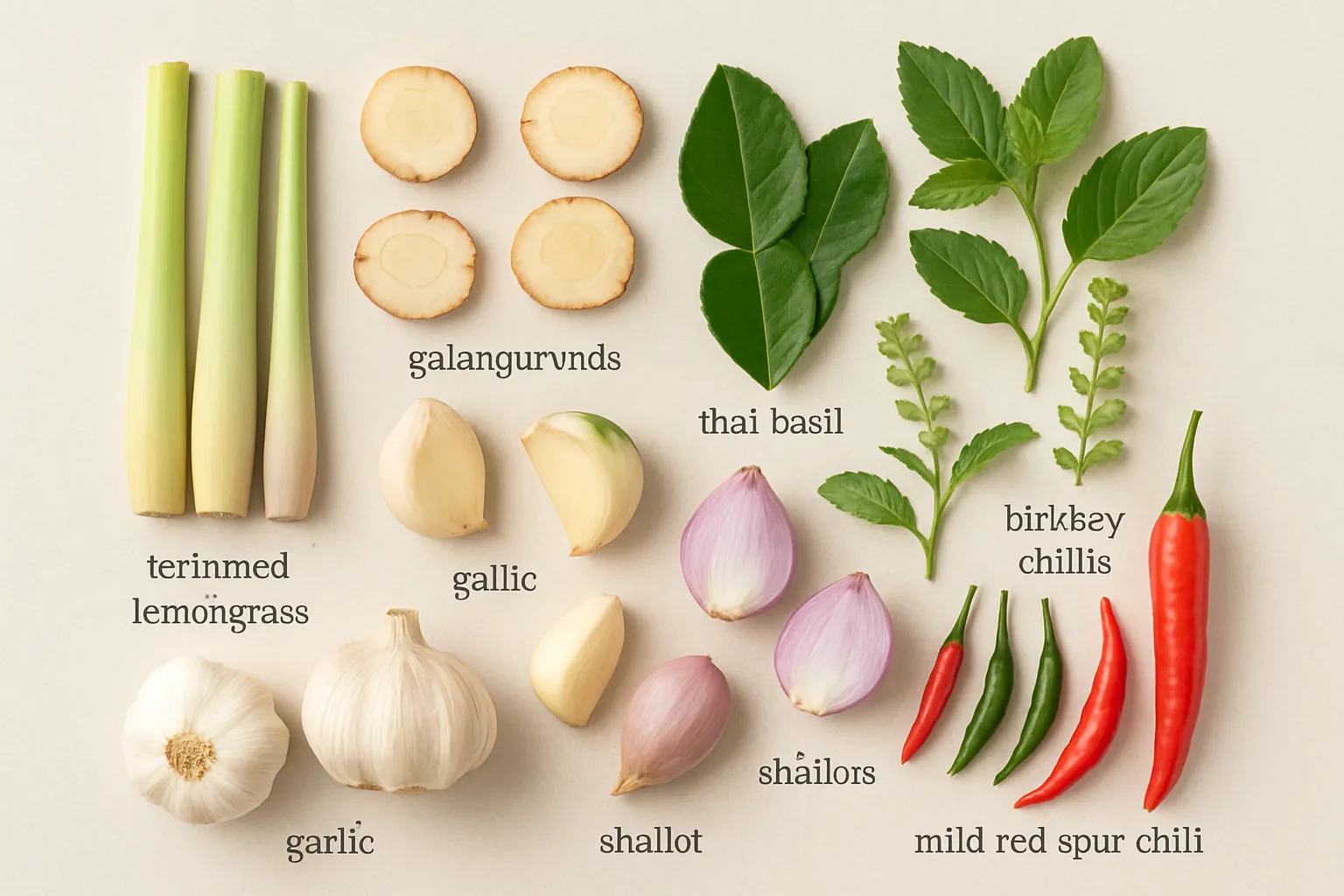
Lemongrass (takrai)
Flavor, parts, and prep: Citrusy and cool without acidity. Use the bottom 4–6 inches (the pale, tender bulb). Peel tough outer layers, trim the root, then bruise with the back of a knife to burst aromatic cells. Slice thin for pastes; cut into 2–3 inch batons for infusions in soups.
Best uses: Tom yum, tom kha, curry pastes, marinades. Bruised batons infuse and are removed; finely sliced lemongrass becomes part of the paste or salad.
Fresh vs frozen vs dried: Fresh or frozen delivers the bright, lemony aroma you expect. Dried works for long infusions only (soups/stock) and should be strained out. Powders often taste muted or dusty and can turn bitter with high heat - avoid for pastes.
Galangal (kha)
Not ginger: Galangal is piney, peppery, and citrus-woody - completely different from ginger’s lemon-spice warmth. Don’t substitute if you want authentic flavor.
Slicing vs pounding: For soups, slice into thin coins to infuse; for curry pastes, finely chop or pound to a paste so its oils integrate.
Freezing tips: Pre-slice into thin rounds, freeze in a single layer, then bag. Use from frozen directly into simmering soup or a mortar/blender.
Makrut lime leaves (bai makrut)
Aroma without acidity: Think concentrated lime zest and cut grass - fragrant but not sour. It lifts coconut-rich dishes without adding tartness.
How to use: For infusion, tear a leaf to bruise and add whole to simmer; for eating, stack leaves, remove the firm midrib, and chiffonade into ultra-fine slivers so they’re tender.
Storage: Freeze whole leaves in an airtight bag (press out air). They thaw in seconds and keep aroma remarkably well.
Thai basil & holy basil
Flavor differences: Thai basil (horapa) is sweet-anise and floral; holy basil (kaprao) is peppery, clove-like, and more assertive - perfect with chilies and garlic in spicy stir-fries.
Availability and subs: Thai basil is widely available; if you can’t find holy basil, use Italian basil plus a pinch of white pepper or sliced chilies to approximate peppery lift.
Aromatic base
Garlic and shallots: They add sweetness, depth, and body to pastes, stir-fries, and relishes. Pounding in a mortar releases oils and a smoother, rounder flavor; blending is faster but can oxidize aromatics - add a little oil or water and pulse to reduce heat/friction.
Fresh chilies
Bird’s eye vs spur chilies: Bird’s eye (prik kee noo) are small and hot; use sparingly and slice thin. Spur chilies (prik chee fa) are larger and milder; great for color and chili flavor without intense heat.
Freezing whole: Freeze chilies whole in a bag and slice from frozen - this preserves texture and heat. Avoid thawing on the counter; they turn mushy.
De-seeding to dial heat: Remove seeds and inner membranes to moderate spice while keeping fresh chili aroma.
Where Raw Spice Bar fits
Build the core with our Thai Curry blend - coriander, cumin, turmeric, chilies, and warming aromatics - then finish with fresh basil or a whisper of makrut lime leaf for lift. The result: authentic Thai flavor fast, with our recipe card guiding proteins, veg, and heat control.
Core Thai Spices & Pantry Seasonings (coriander, cumin, white pepper, turmeric, tamarind, palm sugar, fish sauce, shrimp paste)
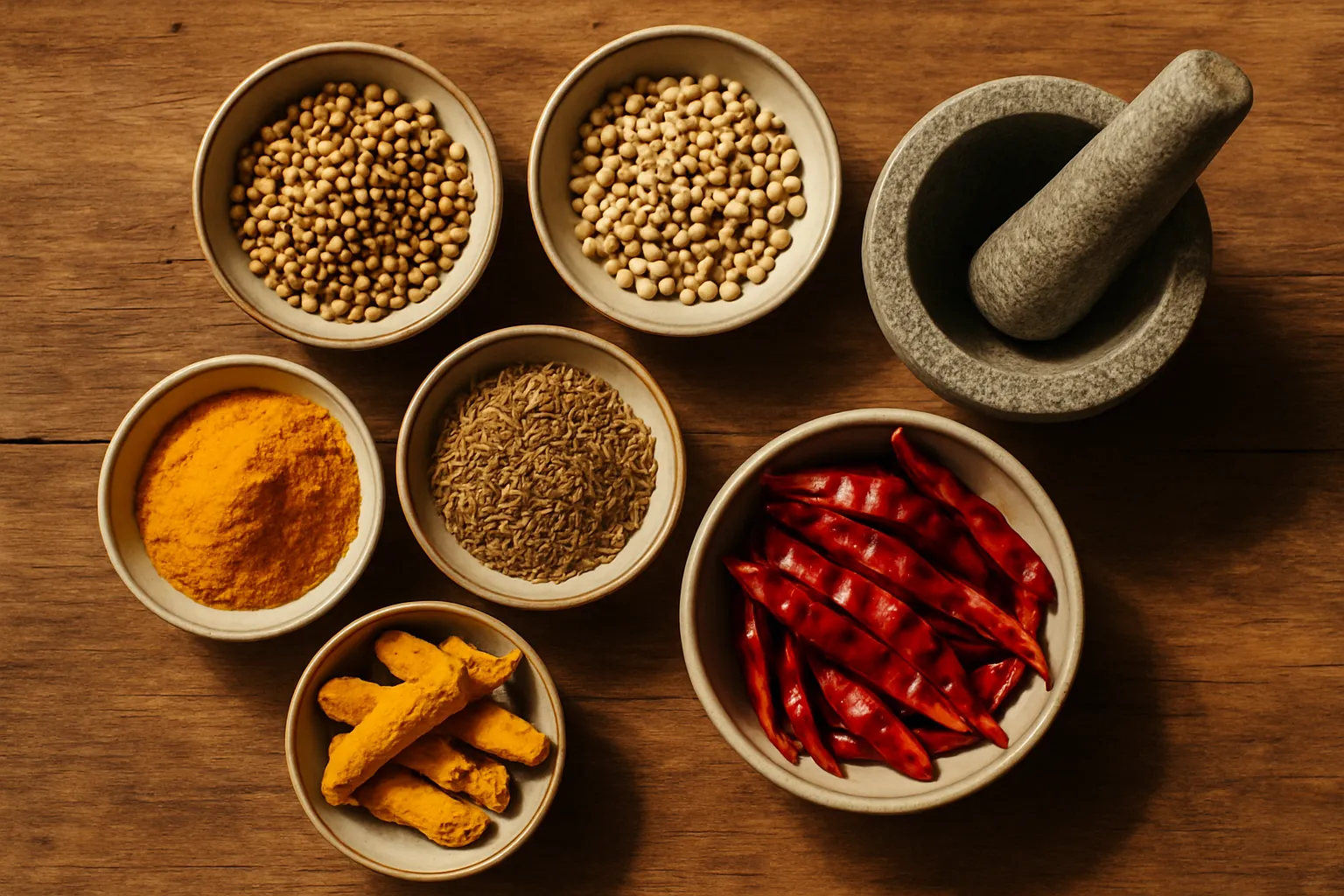
The spice spine
-
Coriander seed + cumin: nutty, warm base for pastes
Lightly toast whole seeds until fragrant, then grind for a sweeter, rounder warmth that forms the backbone of red, yellow, and massaman curries.
-
White pepper: lemongrass-friendly heat for soups/stir-fries
More citrusy and floral than black pepper; perfect in clear soups, marinades, and quick stir-fries where you want heat without smokiness.
-
Turmeric: earthiness and color (fresh vs ground)
Fresh turmeric delivers lively, gingery-earth notes and a vibrant hue - great in pastes. Ground turmeric is convenient for weeknights; buy small-batch, bright-yellow powder for best flavor and color.
Sour and sweet
-
Tamarind paste vs lime juice; when to pick each
Tamarind: round, fruity-sour depth for cooked dishes (pad Thai, tamarind fish, massaman). Lime: bright, volatile acidity for finishing soups, salads, and curries off-heat.
-
Palm sugar vs white sugar: caramel notes and balance
Palm sugar adds toffee-caramel complexity that balances chilies and fish sauce; use white sugar only when you want neutral sweetness.
Funk and umami
-
Shrimp paste (gapi): why a little goes a long way; storage
Intense, savory depth used in many curry pastes and chili jams; start with 1/4–1/2 tsp in pastes. Store tightly sealed in the fridge (double-bag to contain aroma).
-
Fish sauce basics (and vegan swaps when needed)
Choose clean, anchovy-forward fish sauce; add by the 1/2 teaspoon and taste. Vegan swap: light soy sauce plus a splash of mushroom stock or a quality vegan “fish” sauce.
"Thai bird’s eye chilies typically measure about 50,000–100,000 Scoville Heat Units (SHU)." - Source
Raw Spice Bar advantage
-
Small-batch grinding for coriander/cumin/pepper freshness
We toast and grind in small runs so the nutty coriander, warm cumin, and citrusy white pepper reach you at peak aroma.
-
Thai Curry blend with balanced warm spices + chilies
Our Thai Curry blend captures the classic warm-spice backbone and chili brightness - add coconut milk, fish sauce, and tamarind or lime to tune salty-sour-sweet-heat in minutes.
Curry Pastes 101: red, green, yellow, panang, massaman
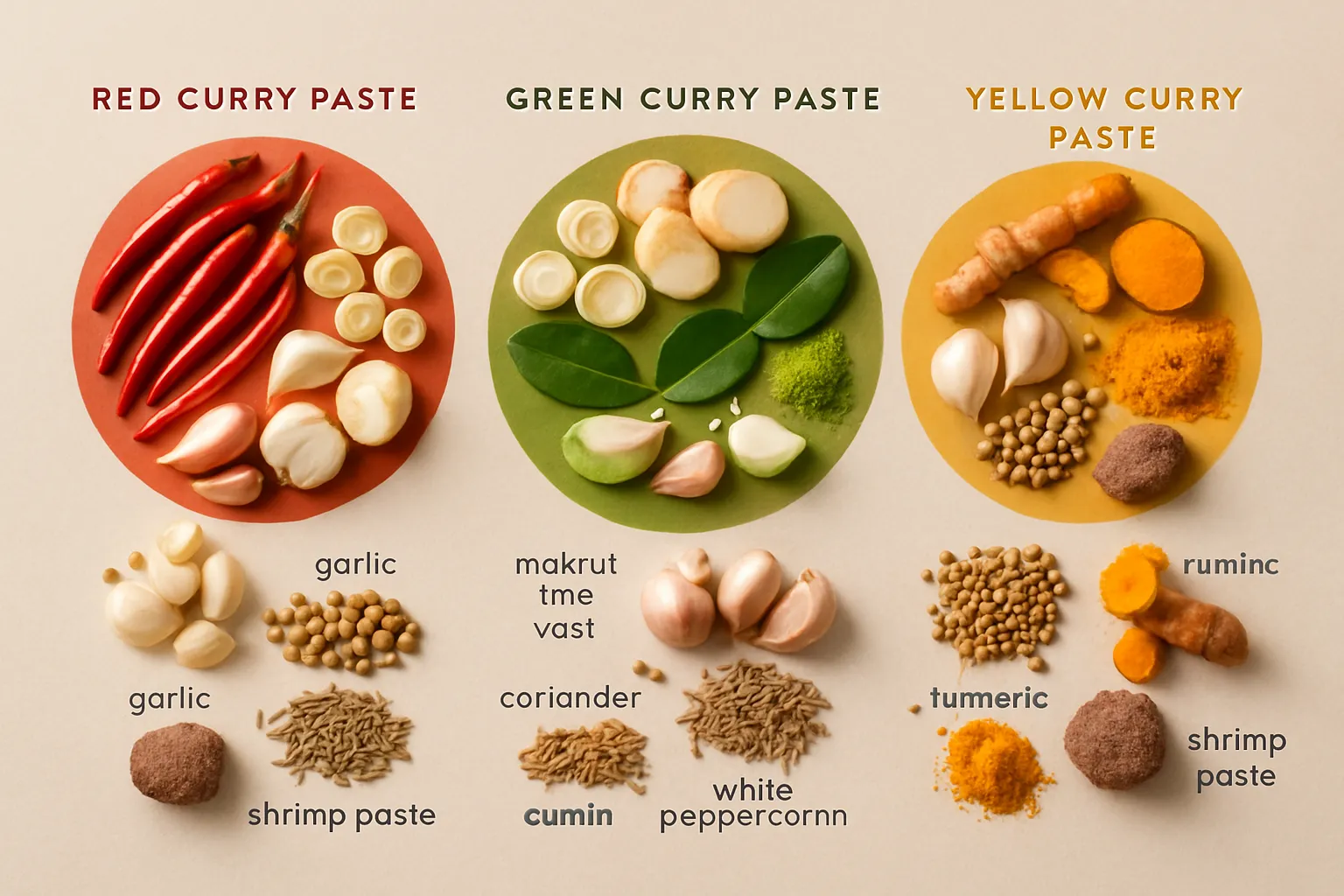
Anatomy of a paste
Herb core: lemongrass coins, galangal slices, garlic, shallots, plus makrut lime zest/leaves for high notes.
Spice core: coriander seed, cumin seed, white pepper; turmeric (fresh or ground) in yellow/massaman.
Heat: red paste uses soaked dried red chilies; green paste relies on fresh green chilies; yellow often combines milder dried chilies with turmeric.
Umami: a touch of shrimp paste (gapi) to deepen and integrate flavors - use sparingly.
Blooming technique: fry the paste in coconut cream until the fat “splits” and the paste smells intensely aromatic. This releases volatile oils and builds a glossy, rich base for coconut milk and stock.
Choosing the right paste for the dish
-
Red vs green vs yellow
Red: balanced warmth and chili heat; versatile across proteins and vegetables.
Green: herb-forward, brightest aroma, typically spicier due to fresh green chilies.
Yellow: gentler heat with turmeric earthiness and sunny color - great family-friendly option.
Panang: richer and slightly sweeter, with a thicker, clingy sauce; often garnished with crushed peanuts or a peanutty accent and fine makrut lime leaf slivers.
Massaman: southern-Thai-meets-Persian influence; warm spices (cardamom, cinnamon, clove) with tamarind for gentle tang; fabulous with slow-cooked beef or hearty vegetables.
Curry and spice pairings (protein/veg)
Poultry: red, green, panang excel; yellow for milder, kid-friendly bowls.
Beef/lamb: massaman or panang to complement richness; red for a classic.
Seafood: green or red; keep cook times short to preserve tenderness.
Tofu/tempeh: red or yellow for weeknights; panang for a luxe, thicker sauce.
Vegetables: eggplant, green beans, bell peppers, winter squash, cauliflower; green curry loves tender herbs and young veggies, massaman pairs with potatoes and onions.
Raw Spice Bar shortcuts
Fast base: use Raw Spice Bar’s Thai Curry blend to anchor the warm-spice backbone and chili brightness; bloom in oil or coconut cream, then add coconut milk and stock.
Finish like a pro: stir in fish sauce and palm sugar to balance, then add fresh basil or a whisper of finely sliced makrut lime leaves for lift.
Recipe cards: omnivore and herbivore pathways with clear timing cues help you hit perfect doneness on proteins and veg - ideal for weeknights.
Paste/Blend |
Core spices & herbs |
Heat level |
Best proteins |
Best vegetables |
Finishing touches |
Raw Spice Bar pairing & typical amount |
|---|---|---|---|---|---|---|
Red |
Coriander, cumin, white pepper; lemongrass, galangal, garlic, shallots; dried red chilies |
Medium |
Chicken, pork, shrimp, tofu |
Eggplant, green beans, bell peppers |
Fish sauce + palm sugar; basil |
Thai Curry blend, 1.5–2 tbsp per 14 oz coconut milk |
Green |
Same spice spine + fresh green chilies; lemongrass, galangal, lime zest/leaves |
Medium–hot |
Chicken, fish, shrimp, tofu |
Thai eggplant, pea eggplant, zucchini |
Lime leaves chiffonade; Thai basil |
Thai Curry blend + fresh green chilies, 1.5 tbsp blend |
Yellow |
Coriander, cumin, turmeric; milder chilies; lemongrass/galangal |
Mild |
Chicken, tofu, chickpeas |
Potatoes, carrots, onion |
A touch of palm sugar; cilantro stems |
Thai Curry blend + extra turmeric, 1–2 tbsp |
Panang |
Red paste base, slightly sweeter/thicker; kaffir lime leaf aroma |
Medium |
Beef, chicken, tofu |
Green beans, red peppers |
Peanut garnish (optional), fine lime leaf slivers |
Thai Curry blend + peanut sprinkle, 2 tbsp |
Massaman |
Warm spices (cardamom, cinnamon), coriander/cumin; tamarind |
Mild–medium |
Beef, lamb, tofu |
Potatoes, onions, carrot |
Roasted peanuts, a dash of tamarind |
Thai Curry blend + pinch cinnamon/cardamom, 2 tbsp |
Spicy Seasonings & Heat Control (for craveable, not punishing, spicy meals)
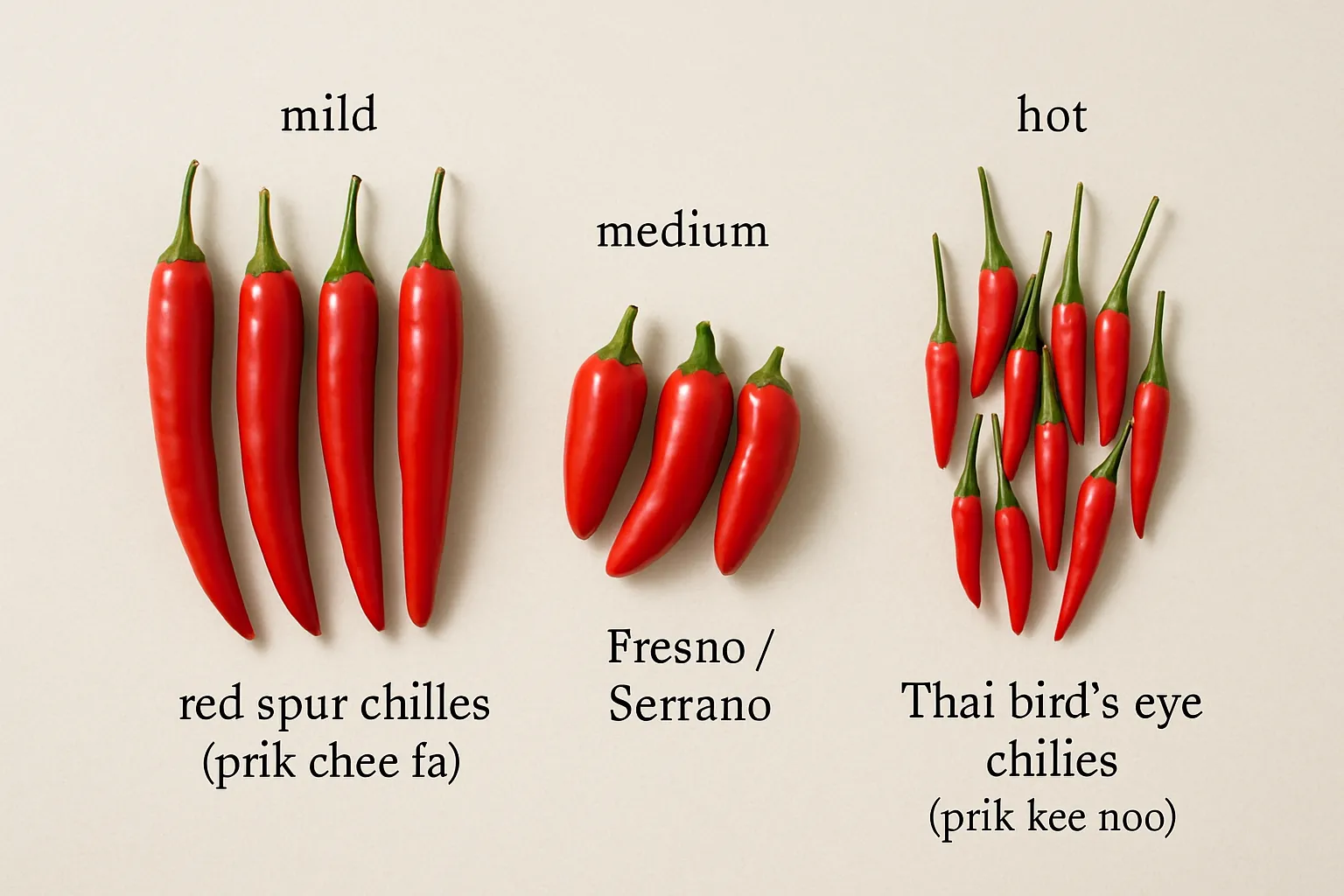
Building controlled heat
Layer for dimension: combine a few slices of fresh chili for bright bite, a pinch of dried chili flakes for steady warmth, and a crack of white pepper for citrusy, nose-warming heat.
-
Adjusting intensity:
Seeds/membranes: remove to reduce heat; keep for more kick.
Quantity: add in 1/4–1/2 teaspoon increments for flakes; 1–2 slices at a time for fresh chilies.
Timing: add early for deeper, integrated heat; add at the end for a sharp, fresh spike.
Smart swaps
Chili jam (nam prik pao): brings sweet-umami warmth and gentle heat - perfect when you want depth without fire.
Soften edges, keep flavor: round with palm sugar or temper with a splash of coconut milk; both mellow sharpness while preserving aromatics.
Practical heat ladder
Low: white pepper warmth, a few spur chili strips, or a scant pinch of flakes.
Medium: Fresno/serrano stand-ins or 1–2 teaspoons mild flakes.
High: 1–2 thinly sliced bird’s eye chilies per serving, tasting as you go.
Very high: concentrated dried blends or extra-hot flakes - use sparingly and balance with fat (coconut milk) and sweetness.
Raw Spice Bar in action
Start calibrated: our Thai Curry blend sets a balanced, approachable baseline of heat.
Customize: finish with fresh spur or bird’s eye chilies to your preference; use our recipe card cues to modulate with palm sugar, fish sauce, and lime for perfectly craveable spice.
Pantry Shortcuts & Substitutions (vegan, gluten‑free, weeknight wins)
Smart substitutions that keep flavor
-
Vegan
Fish sauce swap: use light soy sauce + a dash of Thai seasoning sauce (Golden‑Mountain‑style) for deeper savory notes. Start 1 tbsp soy + 1 tsp seasoning sauce per 1 tbsp fish sauce, then adjust to taste.
Shrimp paste swap in curry and spice pastes: use white or yellow miso in tiny amounts (start with 1/2 tsp per 1 lb protein or per 2 cups curry) for gentle umami without seafood.
Extra lift: a splash of mushroom stock or a pinch of toasted seaweed can round out savory depth in spicy meals.
-
Gluten‑free
Sauces: choose tamari or certified GF soy; verify Thai seasoning sauces for wheat.
Fish sauce: many are naturally GF, but always check labels.
Noodles and carbs: rice, rice noodles, and rice vermicelli are naturally GF go‑tos for weeknights.
When to use dried or frozen
-
Frozen lemongrass/galangal/makrut lime leaves
Excellent stand‑ins for fresh; use 1:1. Add straight from the freezer to soups and curries.
-
Dried leaves for infusions
Makrut lime leaves (dried) and lemongrass pieces work for simmered infusions - add early and strain/remove before serving.
-
Powders: when they fall short
Lemongrass or galangal powders lack volatile aromatics and can taste flat or bitter in high heat; avoid in pastes. If you must use them, add near the end and boost with fresh basil or lime zest.
Weeknight shortcuts
-
20‑minute pot curry (serves 3–4)
Stir‑fry aromatics: 1 tbsp neutral oil + 2–3 cloves garlic (minced) + 1–2 tsp grated ginger or a few slices galangal (if on hand), 30–45 seconds.
Bloom the blend: add 1.5–2 tbsp Raw Spice Bar Thai Curry blend; stir 30–60 seconds until fragrant.
Build the sauce: pour in 1 can (13.5–14 oz) coconut milk + 1/2–1 cup stock or water. Simmer 3–4 minutes.
Season and balance: 1–2 tsp fish sauce (or tamari for vegan), 1–2 tsp palm sugar, optional 1–2 tsp tamarind or squeeze of lime. Taste and adjust salty/sour/sweet/heat.
Add protein/veg: chicken thighs, shrimp, tofu, or chickpeas; plus quick‑cook veg (bell peppers, green beans, zucchini). Simmer until just tender.
Finish: Thai basil and/or fine slivers of makrut lime leaf off‑heat. Serve with jasmine rice or rice noodles.
-
Mix‑and‑match made easy
Use Raw Spice Bar recipe cards to pick a protein/veg combo and a quick carb. The cards outline omnivore/herbivore pathways and give timing cues so your curry and spice layers stay bright, not muddy.
-
One‑pan stir‑fry shortcut (10–12 minutes)
Sear protein (or tofu) in a little oil; remove.
Add aromatics (garlic/shallot) and 1–2 tsp Thai Curry blend; bloom briefly.
Toss in veg, return protein, splash of stock, 1–2 tsp fish sauce/tamari, and a pinch of palm sugar. Finish with lime and basil.
-
Fast marinade for grilling/roasting
1 tbsp Thai Curry blend + 1 tbsp oil + 1 tsp fish sauce/tamari + 1 tsp palm sugar + 1 tsp lime juice. Marinate 15–30 minutes for chicken, shrimp, or tofu; roast or grill, then finish with fresh lime.
Quick Spicy Meals: 20‑minute blueprints using Thai seasoning
These fast, flavor‑packed blueprints use Thai spices and Thai seasoning the way Thai cooks do - bloomed for aroma, balanced for salty‑sour‑sweet‑heat, and adaptable for spicy meals any night of the week. Each includes a suggested measure of Raw Spice Bar’s Thai Curry blend; adjust to your heat tolerance.
1) Weeknight Red Curry Stir‑Fry (no simmer)
You’ll need (serves 2–3): 12 oz chicken thigh or firm tofu (cubed), 3 cups mixed veg (bell pepper, green beans, zucchini), 1 small onion (sliced), 2 cloves garlic (minced), 1–2 tbsp neutral oil, 2–3 tsp Raw Spice Bar Thai Curry blend, 1/3 cup coconut milk, 1–2 tsp fish sauce (or tamari), 1 tsp palm sugar, lime.
-
Steps:
Heat oil in a large skillet over medium‑high; add onion and garlic, 45–60 seconds.
Bloom blend: sprinkle in Thai Curry blend; stir 30–45 seconds until fragrant.
Add chicken/tofu; stir‑fry 3–5 minutes until nearly cooked. Add veg; stir‑fry 3–4 minutes.
Splash in coconut milk just to glaze (about 1/3 cup). Season with fish sauce/tamari and palm sugar. Toss 1 minute.
Off heat: squeeze lime. Optional heat bump: a few bird’s eye chili slices.
Tip: For saucier results, add another 1/3 cup coconut milk and a splash of stock.
2) Lemongrass Chili Broth Bowl
You’ll need (serves 2): 1 tbsp oil, 2 cloves garlic (minced), 1 shallot (sliced), 1–2 lemongrass stalks (trimmed, bruised, cut 2–3" pieces), 3 cups chicken or veggie stock, 1–2 tsp fish sauce (or tamari), 1–2 tbsp lime juice, 2 cups greens (bok choy/spinach), cooked rice or rice noodles, chili oil or chili flakes.
-
Steps:
Sauté garlic/shallot in oil 45 seconds. Add lemongrass; sauté 30 seconds.
Add stock; simmer 6–8 minutes to infuse.
Season: fish sauce/tamari, then lime to taste.
Add greens just to wilt. Ladle over rice or rice noodles. Finish with chili oil.
Optional add‑ins: sliced mushrooms, tofu cubes, or poached shrimp.
3) Green(ish) Fried Rice Hack
You’ll need (serves 2): 2 cups day‑old jasmine rice, 2 tsp oil, 2 cloves garlic (minced), 2–3 tsp Raw Spice Bar Thai Curry blend, 1–2 tsp fish sauce (or tamari), 1 tsp palm sugar, 1 cup mixed veg (peas, green beans, bell pepper), 1 cup basil (Thai or Italian), lime.
-
Steps:
Heat oil; fry garlic 30 seconds. Bloom Thai Curry blend 30 seconds.
Add veg; stir‑fry 2 minutes. Add rice; break up clumps and toss 2–3 minutes.
Season with fish sauce/tamari and palm sugar; toss until steamy.
Off heat: fold in basil. Finish with lime.
Protein twist: Add a beaten egg after step 1, scramble, then continue; or toss in diced chicken/shrimp pre‑cooked.
4) Panang‑Style Skillet with Peanuts
You’ll need (serves 2–3): 1 tbsp oil, 2–3 tsp Thai Curry blend (or 2 tbsp panang paste if on hand), 1 can (13.5–14 oz) coconut milk, 10 oz shrimp or mushrooms, 1–2 tsp fish sauce (or tamari), 1–2 tsp palm sugar, 1–2 tsp tamarind (optional), crushed roasted peanuts, fine slivers of makrut lime leaf or basil.
-
Steps:
Warm oil; bloom Thai Curry blend 30–45 seconds. Add half the coconut milk; simmer 2 minutes to thicken.
Add shrimp or mushrooms; simmer 3–4 minutes, adding more coconut milk to reach a thick, clingy consistency.
Season with fish sauce/tamari and palm sugar; add tamarind for gentle tang if desired.
Top with crushed peanuts and lime‑leaf slivers or basil.
Note: Aim for a thicker, spoon‑coating sauce typical of panang.
5) Massaman‑Inspired Sheet‑Pan
You’ll need (serves 3–4): 1 lb potatoes (1" chunks), 1 large onion (wedges), 1 lb chicken thighs or chickpeas/firm tofu, 2 tbsp oil, 1.5–2 tbsp warm spice mix (Thai Curry blend + 1/4 tsp cinnamon + pinch cardamom), salt. Glaze: 2 tbsp tamarind, 1–2 tsp palm sugar, 2–3 tbsp stock, 1 tsp fish sauce/tamari.
-
Steps:
Heat oven to 425°F/220°C. Toss potatoes, onion, protein with oil, spice mix, and a pinch of salt. Roast 18–22 minutes, turning once.
Meanwhile simmer glaze 2–3 minutes until glossy.
Toss roasted tray with warm glaze; finish with crushed peanuts and a squeeze of lime if desired.
Make it saucy: Serve with warmed coconut milk on the side for drizzling.
Raw Spice Bar tie‑ins
-
Each blueprint includes a suggested measure of Thai Curry blend on your recipe card; typical ranges:
Stir‑fries and fried rice: 2–3 tsp per 2–3 servings.
Skillet curries: 1.5–2 tbsp per 1 can coconut milk.
Sheet‑pan rubs: 1.5–2 tbsp total, plus a cinnamon/cardamom pinch for “massaman” vibes.
Adjust to heat tolerance: for spicier meals, add fresh chilies or a pinch of chili flakes; for milder, add a splash more coconut milk and a touch of palm sugar - then rebalance with lime.
Buy, Store, and Grind: keeping Thai spices at peak flavor
Buying tips
-
Choose whole seeds when possible
Prioritize whole coriander seed, cumin seed, and white peppercorns. Whole thai spices protect volatile oils better than pre-ground, so your curry and spice pastes pop with aroma.
-
Look for origin and roast freshness
Seek clearly labeled origin (Thailand/SE Asia for Thai seasoning profiles) and recent roast/grind dates. Avoid dusty bags with faded color or broken seals - signs the spices have been exposed to air and light.
-
Smell before you stock
If allowed, open or gently shake to release aroma. Bright, lemony coriander, warm toasty cumin, and citrusy white pepper should be vivid, not flat.
Storage best practices
-
Airtight, cool, dark
Keep spices in airtight containers, away from heat, light, and humidity - never above the stove. A pantry or drawer beats an open shelf.
-
Label open dates and practice FIFO
Mark the date you opened each jar and use first-in, first-out. This keeps thai seasoning fresh and consistent for spicy meals.
-
Whole vs ground expectations
Whole spices stay vibrant longer; grind small amounts as needed. Ground spices fade faster - plan to refresh regularly (aim to use most ground blends within a year for best flavor).
-
Batch size matters
Smaller packs help you finish spices before they plateau. Raw Spice Bar’s fresh, small‑batch 2 oz blends are sized to rotate quickly without waste.
Grinding and blooming
-
Mortar & pestle vs grinder
Mortar & pestle: best texture for curry and spice pastes; pounding releases oils slowly for rounder flavor.
Electric grinder: fast and consistent for seeds (coriander, cumin, white peppercorns). Pulse in short bursts; sift if you want a finer powder.
-
Toast, then grind
Lightly toast whole coriander and cumin in a dry pan over medium heat until fragrant (30–90 seconds). Cool before grinding to protect citrusy/floral notes.
-
Bloom aromatics for maximum aroma
Bloom ground spices or blends in neutral oil - or in “split” coconut cream - until fragrant, 30–60 seconds. This unlocks warm spice depth before liquid is added and is essential for Thai curry and spice cooking.
Why Raw Spice Bar
-
Fresh, small‑batch 2 oz blends reduce staleness
We grind in small runs and pack quickly so your thai spices arrive vibrant; 2 oz means you’ll use them at peak.
-
Transparent flavor notes and pairing tips
Each blend includes flavor notes, usage guidance, and recipe cards (omnivore and herbivore) to balance salty‑sour‑sweet‑heat without guesswork.
-
Subscribe, restock, or gift
Subscribe for monthly global discoveries (including Thai seasoning), buy past favorites anytime, or choose gift sets for the perfect pantry. It’s the easiest way to keep spicy seasonings fresh, versatile, and weeknight‑ready.
Conclusion: Bring Thai flavor home with Raw Spice Bar
Your next step
Start with the Thai Curry blend and a recipe card to cook a balanced curry or stir‑fry tonight - bloom the blend, add coconut milk or stock, and tune salty‑sour‑sweet‑heat for a perfect finish.
Use the flavor map and pairings table to swap proteins/veg with confidence. You’ll master Thai spices and Thai seasoning quickly, whether you’re building curry and spice pastes or fast spicy meals.
Why choose Raw Spice Bar now
Fresh small‑batch blends: our 2 oz format keeps spices vibrant for authentic taste with less waste.
Approachable authenticity: clear flavor notes, pairing tips, and recipe cards (omnivore and herbivore) make spicy seasonings easy on weeknights.
Flexible discovery: subscribe for monthly global blends - including Thai favorites - or buy past blends anytime to stock your perfect pantry.
Gifting made simple: choose curated gift sets like Global Cuisine, Backyard BBQ, or Perfect Pantry for cooks you love (including you!).
Call to action
Shop the Thai Curry blend and subscribe for monthly discoveries at rawspicebar.com.
Share your spicy meals and tag Raw Spice Bar so we can cheer you on - and inspire others to bring Thai flavor home.


