

Meet Sage’s Flavor - and When a Substitute Makes Sense
Sage brings cozy, woodsy depth to cool‑weather cooking. Its flavor is earthy and piney with a slightly peppery edge, which is why sage seasoning shows up in so many fall and holiday menus. When you want that comforting aroma without the guesswork, Raw Spice Bar’s small‑batch blends make it easy - our Herbal Thanksgiving blend doubles as a ready-to-use poultry seasoning mix, and Mediterranean Seasoning delivers marjoram-forward warmth for a similar profile.
"In the U.S., searches for 'sage substitute' jump about 80% every November–December, with the latest spike occurring Nov–Dec 2025." - Source
What sage tastes like (earthy, piney, slightly peppery) and why it’s so popular in holiday cooking
Sage is savory and grounding: think foresty pine, soft citrus, and a gentle pepperiness that stands up to butter, cream, and rich meats. Around the holidays, it balances hearty dishes - turkey, gravy, buttery breads, and umami-heavy stuffings - so everything tastes rounder and more complete. It pairs beautifully with onions, garlic, brown butter, and roasted vegetables.
Where sage shines: stuffing/dressing, poultry and sausage, brown‑butter pasta, beans, roasts
Stuffing and dressing: classic bread or cornbread stuffings come alive with sage’s woodsy lift.
Poultry and sausage: sage defines many poultry rubs and traditional sausages.
Brown‑butter pasta: crisped sage leaves perfume ravioli, gnocchi, and simple butter sauces.
Beans and roasts: bean stews, pork roasts, and root vegetables benefit from sage’s savory depth.
Pro tip: Out of sage seasoning? Reach for a smart substitute for sage, like marjoram seasoning for a softer echo, or a balanced poultry seasoning mix (Raw Spice Bar’s Herbal Thanksgiving) to keep that holiday character in one shake.
When to use a substitute for sage
You’re out of sage seasoning (fresh or dried)
You prefer a milder profile (marjoram or thyme are gentler stand-ins)
Dietary preferences or recipe style calls for a different herb (Mediterranean-leaning dishes might love oregano or rosemary instead)
Fresh vs. dried: potency and timing basics
Dried, rubbed, and ground sage are more concentrated and should go in earlier, so they have time to bloom and mellow during simmering or roasting.
Fresh leaves are gentler and best added near the end for aroma - or crisped in fat (butter, olive oil) for a toasty, nutty finish.
Need a shortcut? Raw Spice Bar’s blends are freshly milled for full aroma, with recipe cards to help you swap confidently. When sage is missing, reach for Herbal Thanksgiving (our poultry seasoning mix) or a marjoram-forward blend like Mediterranean Seasoning to keep your dish on track.
Exact Conversion Ratios: Fresh, Dried, Rubbed, and Ground Sage (+ Video)
Core rule of thumb
1 tablespoon fresh sage (finely chopped) ≈ 1 teaspoon dried sage (leaf/rubbed) ≈ 1/2 teaspoon ground sage
"For 1 tablespoon fresh herbs, use 1 teaspoon dry herbs." - Source
Timing and technique
Add dried/ground early to mellow; add fresh near the end for brightness
Bloom any form in fat (butter/olive oil) to amplify aroma
Tip: If you’re using a substitute for sage (like marjoram seasoning), bloom it in the same fat you’ll use for cooking to mirror sage’s aromatic lift.
Blend math (for mixes like poultry seasoning mix or Italian seasoning)
Start 1:1 for dried sage; if salt is present, reduce mix to 3/4 and add salt separately
For pre-blended options, Raw Spice Bar’s Herbal Thanksgiving (a poultry seasoning mix) follows the same 1:1 dried-sage starting point; adjust to taste.
Rubbed vs. ground sage
Ground is finer and more potent; start with 1/2 of rubbed’s amount
Example: If a recipe calls for 1 teaspoon rubbed sage, begin with 1/2 teaspoon ground sage and adjust.
Sage forms & conversions
Fresh (finely chopped) |
Dried (leaf/rubbed) |
Ground |
Usage notes |
|---|---|---|---|
1 Tbsp |
1 tsp |
1/2 tsp |
Standard conversion; use for most recipes and dressings. |
2 Tbsp |
2 tsp |
1 tsp |
Scale up for larger batches of stuffing or roasts. |
1 Tbsp (3 tsp) |
1 Tbsp (3 tsp) dried ≈ 3 Tbsp fresh |
1.5 tsp |
For big pots of soup/beans; taste as it simmers. |
- |
1 tsp |
1/2 tsp |
Add dried/ground early to mellow; bloom in butter/olive oil. |
1 Tbsp |
- |
- |
Add fresh near the end or crisp in brown butter for pasta/gnocchi. |
Pro tip: When you don’t have sage seasoning on hand, apply the same math to a balanced substitute for sage - start with marjoram seasoning at the 1:1 dried equivalency, or use a poultry seasoning mix like Raw Spice Bar’s Herbal Thanksgiving at the dried-sage measure, then fine‑tune to taste.
Top 10 Substitutes for Sage (with Exact Ratios and Best Uses)
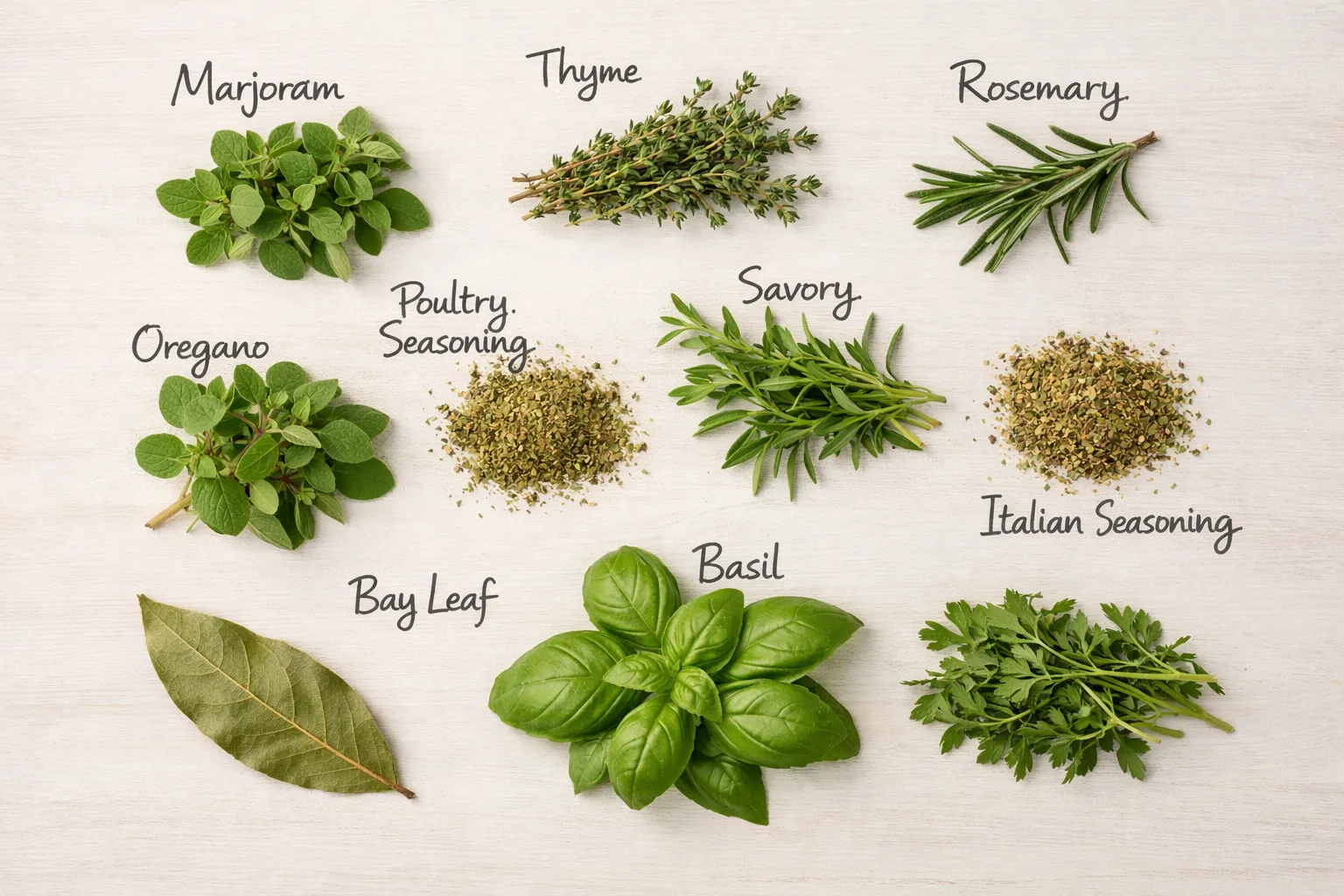
1. Marjoram (closest to sage; great in stuffing)
Ratio: 1:1 fresh to fresh; 1:1 dried to dried; add late to protect its delicate aroma
Flavor: woodsy, citrus‑floral, gentle mint family notes
Raw Spice Bar tip: Our Mediterranean Seasoning leans marjoram-forward for an easy, sage-adjacent swap.
2. Thyme (versatile and savory)
Ratio: 1:1 (fresh or dried)
Best for: poultry, soups/stews, beans, roasted veg
Pro move: Bloom in olive oil or butter before adding liquids.
3. Rosemary (bold and resinous)
Ratio: 1:2 (use half as much as sage)
Best for: roasts, bread, potatoes; chop finely
Tip: Use tender, bright sprigs to avoid overpowering.
4. Poultry seasoning mix (sage-forward blend)
Ratio: 1:1 for dried sage; taste for salt and adjust
Best for: turkey/dressing, meatloaf, gravy
Raw Spice Bar pick: Herbal Thanksgiving is our clean, small‑batch poultry seasoning mix.
5. Oregano (earthy, slightly bitter)
Ratio: 1:2 (use half), add gradually
Best for: tomato sauces, mushroom dishes, stews
Note: Pair with garlic and olive oil for balance.
6. Savory (summer/winter)
Summer savory ratio: 1:1; winter savory: 1:2 (use half)
Best for: beans/legumes, sausages, stews
Flavor: peppery, thyme‑like; winter savory is more assertive.
7. Tarragon (anise‑like sweetness)
Ratio: start 1:2 (use half); avoid dominating stuffing
Best for: chicken, fish, creamy sauces
Tip: Lightly bruise leaves to release aroma.
8. Bay leaf (for long simmers)
Ratio: ~1 leaf per 1 tsp dried sage; remove before serving
Best for: soups, stocks, braises
Guidance: Add early so it has time to infuse.
9. Basil (sweet-peppery)
Ratio: 1:1 fresh; dried basil is stronger - start 3/4 amount
Best for: pasta, veg sautés, lighter sauces
Tip: Add fresh basil off heat to preserve aroma.
10. Italian seasoning (all‑in‑one)
Ratio: 1:1 in place of dried sage
Best for: roasts, sauces, casseroles
Raw Spice Bar swap: Try our Tuscany or Bolognese-inspired blends for balanced Italian herb character.
Quick Picks by Recipe: Stuffing, Poultry, Soups & Stews, Sausage, Pasta, Veg
Stuffing/Dressing
Best: marjoram 1:1; or poultry seasoning mix 1:1 (reduce salt elsewhere if salted)
Raw Spice Bar tip: Our Herbal Thanksgiving poultry seasoning mix is sage‑forward and clean; Mediterranean Seasoning offers a marjoram seasoning profile for gentle warmth.
Roast Turkey/Chicken
Best: thyme 1:1; rosemary 1:2; combo works well (2 parts thyme : 1 part rosemary)
Pro move: Bloom in butter/olive oil to round resinous edges.
Soups & Stews
Best: bay leaf 1 leaf per 1 tsp dried sage + thyme 1:1; remove bay before serving
Notes: Add early and simmer to infuse.
Sausage & Meatballs
Best: marjoram 1:1; winter savory 1:2; black pepper and garlic to taste
Tip: Add a pinch of fennel for classic sausage vibes.
Pasta with Brown Butter
Best: thyme 1:1; basil 1:1 (fresh ribbons added at the end)
Technique: Crisp herbs in browned butter for fragrance.
Roasted Vegetables
Best: rosemary 1:2; Italian seasoning 1:1
Raw Spice Bar pick: Try Tuscany or Bolognese-style blends for an Italian seasoning lift.
Vegetarian Stuffing or Mushroom Gravies
Best: oregano 1:2; marjoram 1:1; a splash of acid (sherry vinegar/lemon) to brighten
Balance: Add umami (miso/soy) if skipping meat drippings.
Best substitute by dish
Dish |
Best Substitute |
Ratio |
Flavor Notes |
Add‑Ins |
|---|---|---|---|---|
Stuffing/Dressing |
Marjoram; Poultry seasoning mix |
1:1; 1:1 (reduce salt if mix is salted) |
Woodsy, citrus‑floral; sage‑forward blend |
Onion, celery; toasted bread; butter |
Roast Turkey/Chicken |
Thyme; Rosemary; Thyme+Rosemary combo |
1:1; 1:2; 2 parts thyme : 1 part rosemary |
Savory, herbal; resinous, piney |
Lemon zest, garlic, olive oil |
Soups & Stews |
Bay leaf + Thyme |
~1 bay per 1 tsp dried sage + thyme 1:1 |
Subtle backbone; savory lift |
Mirepoix, peppercorns; remove bay |
Sausage & Meatballs |
Marjoram; Winter savory |
1:1; 1:2 (use half) |
Floral-woodsy; peppery-thyme-like |
Black pepper, garlic, fennel |
Pasta with Brown Butter |
Thyme; Basil (fresh) |
1:1; 1:1 (add fresh at the end) |
Earthy-herbal; sweet-peppery |
Browned butter, lemon, Parm |
Roasted Vegetables |
Rosemary; Italian seasoning |
1:2; 1:1 |
Piney, robust; balanced herb blend |
Olive oil, sea salt, chili flakes |
Veg Stuffing/Mushroom Gravies |
Oregano; Marjoram |
1:2; 1:1 |
Earthy-bitter; gentle woodsy |
Sherry vinegar or lemon to brighten |
Need an all‑in‑one substitute for sage? Reach for Raw Spice Bar’s Herbal Thanksgiving poultry seasoning mix (start 1:1 in place of dried sage) or go marjoram‑forward with our Mediterranean Seasoning for a softer, aromatic echo of sage.
Technique Tips to Make Substitutes Taste More Sage‑Like
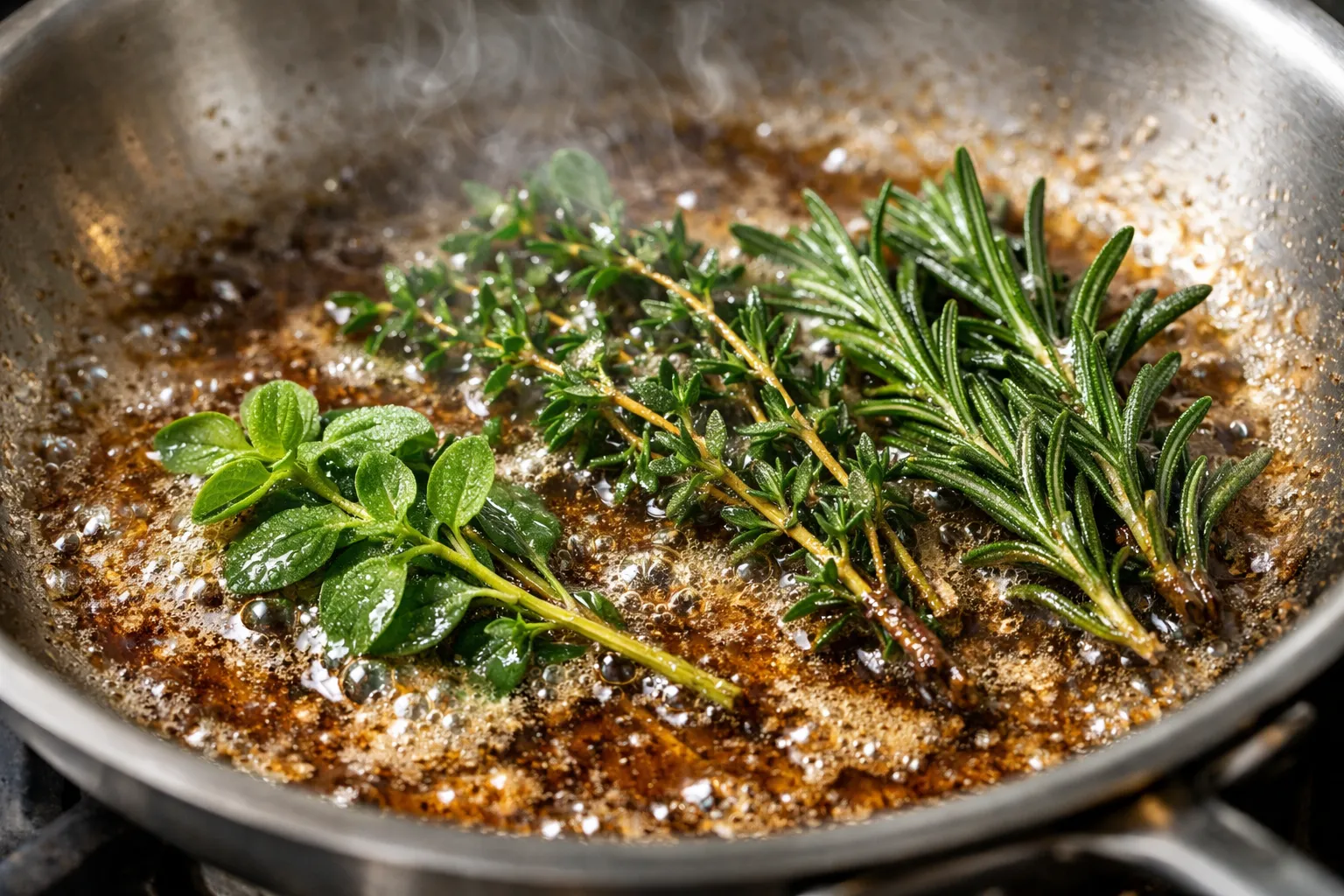
Bloom herbs in fat
Swirl in butter or olive oil 30–60 seconds on low heat to release aromatic oils
For a sage-adjacent aroma, bloom marjoram or thyme in the same fat you’ll use for the dish.
Layer early and late additions
Dried at the start; fresh at the finish for complexity
Add a few fresh leaves at plating to recreate sage’s lifted, piney top-notes.
Use bouquet garni or sachets for long simmers
Capture the aroma, avoid stray stems in finished dishes
Ideal for soups, braises, and beans where bay leaf + thyme stand in for sage.
Balance the profile
Add salt, a touch of acid (lemon/sherry vinegar), and sweetness (caramelized onion) to mimic sage’s warm depth
Optional umami: a dash of soy or miso keeps vegetarian gravies robust.
Grind or rub
Briefly crush dried herbs to wake up oils; keep ground quantities conservative
Start small with potent substitutes (rosemary, winter savory) and build to taste.
Raw Spice Bar tip: Our Herbal Thanksgiving poultry seasoning mix blooms beautifully in butter for stuffing, while Mediterranean Seasoning offers a marjoram-forward lift when sage is out.
Avoid These Common Swap Mistakes
Overpowering with rosemary or winter savory (use half quantity)
Resinous herbs are potent. Start at a 1:2 ratio versus sage (use half as much), chop finely, bloom in fat, and build up slowly. For ground forms, start even lower. This keeps your substitute for sage balanced rather than brash.
Dropping bay leaves into quick sautés (they need simmer time)
Bay leaf needs time to infuse - think 20–40 minutes in soups, stocks, and braises. Skip it for quick pan sauces; reach for thyme or marjoram seasoning instead, which release flavor faster.
Using sweet basil in sausage mixes (opt for marjoram instead)
Basil can skew sweet/anise‑like in sausage. Marjoram’s woodsy, citrus‑floral profile is closer to classic sausage seasoning. Use marjoram 1:1 with sage for reliable results.
Over-salting when mixes contain salt (taste and season at the end)
Some blends (like certain poultry seasoning mix or Italian seasoning) include salt. Start with 3/4 the amount, taste at the end, then adjust salt. If your blend is unsalted, season as usual - but still finish with a taste test.
Ignoring fresh vs. dried equivalencies and timing (leads to bitterness or flat flavor)
Mind the conversion: 1 Tbsp fresh ≈ 1 tsp dried ≈ 1/2 tsp ground. Add dried/ground early to mellow; add fresh near the end for aroma. Bloom any sage seasoning substitute in butter or olive oil to open up the oils before it hits the dish.
Raw Spice Bar Solutions: Small‑Batch Blends That Replace Sage
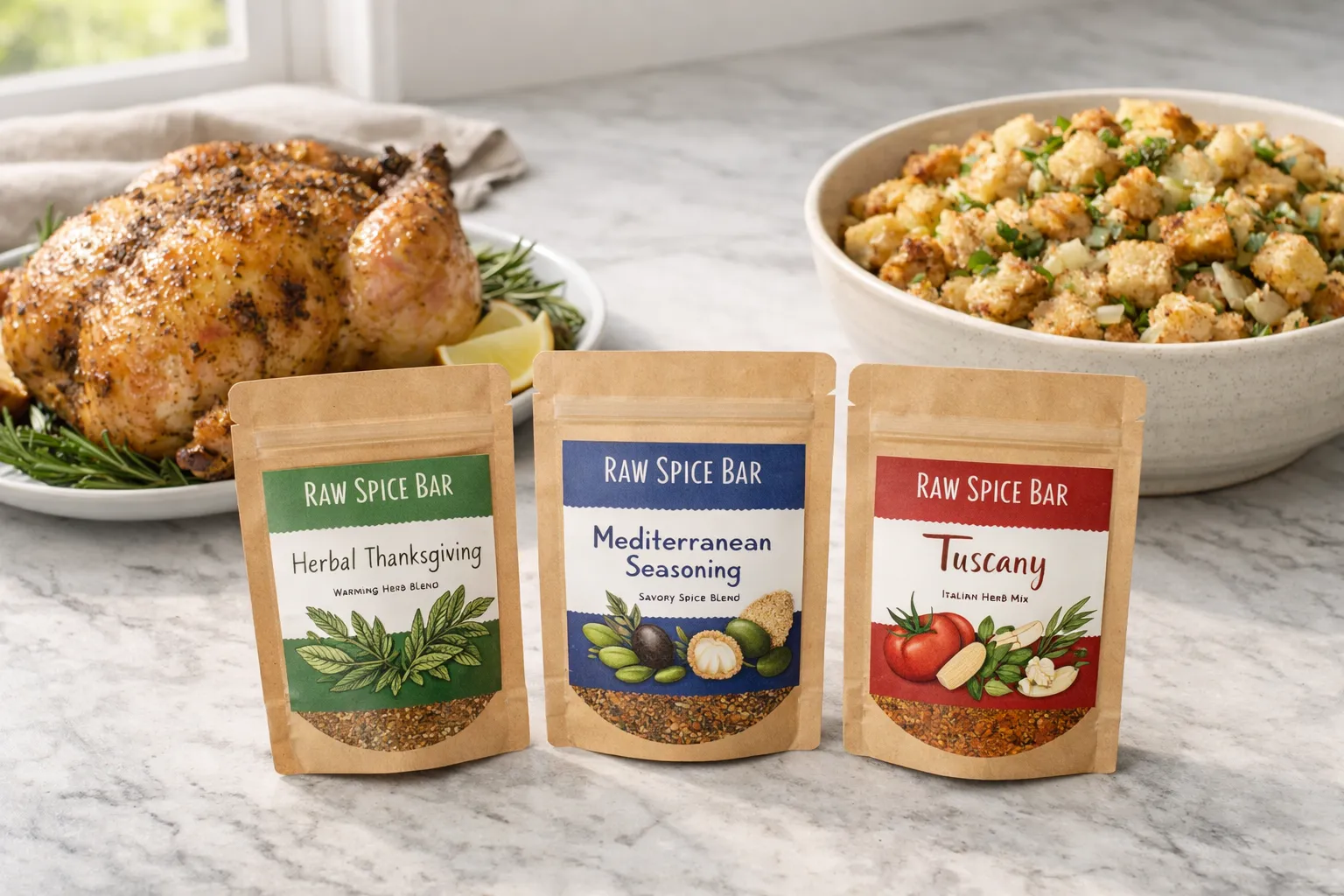
Herbal Thanksgiving (U.S.)
Sage‑forward, herbaceous profile tailor‑made for stuffing, gravies, and turkey rubs
Ratio: 1:1 in place of dried sage; for fresh sage, start at 3/4 tsp blend per 1 Tbsp fresh and adjust
Mediterranean Seasoning
Thyme‑ and oregano‑led warmth for roast chicken and vegetables
Ratio: 1:1 for dried sage in rubs; 3/4 amount if blend contains salt
Tuscany (Italy)
Robust, savory herbs for beans, stews, and rustic breads
Ratio: start at 3/4 tsp per 1 tsp dried sage; add more to taste
American BBQ (Southern U.S.)
For turkey breast, pork loin, or smoked veg when you want smoky, bold depth
Ratio: start light (1/2–3/4 tsp per 1 tsp dried sage) due to bolder spices
Bonus twists from the catalog
Bohemian Blend for mushrooms and gravies; Sazón for chicken and rice; Thai Curry for veg roasts with heat
Why choose Raw Spice Bar
Fresh, small‑batch 2 oz blends; clean, all‑natural; recipe cards included (omnivore & herbivore options)
Flexible spice subscription for ongoing discovery; gift sets (Global Cuisine, Backyard BBQ, Perfect Pantry with 22 spices) make it easy to explore
How to use with confidence
Follow included pairing notes and recipe card timings to mirror sage’s warmth without guesswork
FAQ: Fast Answers on Sage Substitutes and Conversions
What is the fresh sage to ground sage equivalent?
Start at 1 Tbsp fresh ≈ 1/2 tsp ground; add to taste
Rubbed sage vs. ground sage?
1 tsp rubbed ≈ 1/2 tsp ground; ground is finer and stronger
What’s a sprig of sage?
Typically a 2–4 inch stem with several leaves; ≈ 1/2 tsp dried when chopped
What can I use in place of sage in stuffing?
Marjoram 1:1 or a poultry seasoning mix 1:1; add late if using marjoram
Tip: Raw Spice Bar’s Herbal Thanksgiving poultry seasoning mix is a sage-forward, clean swap.
Best substitute for sage in soup?
Bay leaf (1 per tsp dried) plus thyme 1:1; simmer and remove bay
Can I combine substitutes?
Yes - try thyme + rosemary (2:1) or marjoram + oregano (2:1) for balance
Storage tips
Fresh: wrapped in a damp towel in the fridge 4–5 days; Dried: airtight, cool/dark up to 6 months for best potency
For maximum aroma, use fresh-milled blends like Raw Spice Bar’s small‑batch 2 oz pouches and replace every season.
4 Quick Micro‑Recipes Using Sage Substitutes

1) Brown‑Butter Thyme Pasta (20 minutes)
Swap: Thyme 1:1 for fresh sage; crisp leaves in brown butter, toss with pasta and Parmesan
Optional: Finish with lemon zest and cracked pepper.
2) Marjoram & Lemon Roast Chicken
Swap: Marjoram 1:1 for dried sage in rub; add lemon zest and garlic; roast until juices run clear
Tip: Dry the skin and rub with olive oil for extra crisp.
3) Mushroom & Oregano Skillet Stuffing
Swap: Oregano 1:2 (use half); add caramelized onions and a splash of sherry; bake until crisped
Pro move: Stir in a spoon of miso for deep umami.
4) Rosemary‑Garlic Pan Potatoes
Swap: Rosemary 1:2; fry gently in olive oil with smashed garlic; finish with sea salt
Tip: Parboil potatoes first for ultra‑crisp edges.
Raw Spice Bar pairing notes
Herbal Thanksgiving for classic stuffing; Mediterranean for chicken/veg; Tuscany for mushroom gravies
Bonus: American BBQ for smoky roasted veg or turkey breast; Bohemian Blend for earthy mushroom sautés.
Bring Global, Sage‑Savvy Flavor Home with Raw Spice Bar
Recap the essentials
Exact conversions: 1 Tbsp fresh ≈ 1 tsp dried ≈ 1/2 tsp ground
Best substitutes: marjoram (1:1), thyme (1:1), rosemary (1:2), poultry seasoning mix (1:1), plus oregano, savory, tarragon, bay, basil, Italian seasoning
Pro tip: Bloom any sage seasoning or substitute for sage in butter or olive oil to amplify aroma, and layer dried early/fresh late for complexity.
Why choose Raw Spice Bar for smarter swaps
Fresh, small‑batch blends (2 oz) crafted for clear, reliable flavor - no fillers, no preservatives.
Authentic global profiles designed to make marjoram seasoning, thyme, and other sage stand‑ins feel effortless across proteins, veg, soups, and stews.
Recipe cards included with timing, ratios, and pairing notes so you can apply conversions confidently (great for stuffing, poultry, mushroom gravies, and beyond).
Versatility you can taste - our Herbal Thanksgiving doubles as a sage‑forward poultry seasoning mix, while Mediterranean and Tuscany deliver herbaceous, everyday ease.
Next steps
Try Herbal Thanksgiving for holiday classics (stuffing, turkey rubs, gravy).
Explore Tuscany and Mediterranean for weeknight beans, roasts, and chicken/veg.
Start a flexible spice subscription for monthly discoveries, or gift big flavor with our curated sets - like the Perfect Pantry featuring 22 essential spices - so you’re never without a smart sage substitute when inspiration (or a recipe) strikes.


