

1) Why Salt‑Free Seasoning Salt Matters (and What You’ll Learn)
Big flavor doesn’t have to ride on sodium. With the right balance of aromatics, acids, umami, heat, and texture, you can build an everyday salt free seasoning salt (an “all season salt”) that wakes up weeknight meals as effectively as any shaker on the table - just smarter. In this guide, we’ll show you how to layer flavors so your seasoned salt recipe delivers brightness, savoriness, and satisfying depth without the sodium spike. You’ll also see how Raw Spice Bar’s fresh, small‑batch blends make going salt‑free feel exciting, not limiting.
"The average sodium intake for Americans is about 3,400 mg/day, exceeding the recommended limit of 2,300 mg/day." - Source
What this guide covers
The flavor framework: aromatics, acids, umami, heat, and texture so your food pops without sodium.
A master salt‑free seasoned salt recipe (aka an all season salt) with exact ratios by teaspoons and grams.
5 quick regional variations using the same base.
How to use: dosing by protein/veg, dry-rub vs. marinade, and finishing techniques.
Storage, freshness, and safety tips.
Where Raw Spice Bar fits in: fresh, small‑batch blends to boost global flavor without relying on salt.
Why go salt‑free?
Cut sodium, keep satisfaction: build complexity with spices, acidity, and umami so you don’t miss the salt shaker.
Better control: add any salt at the table only if needed.
How we’ll weave in Raw Spice Bar
Use the master blend alongside globally inspired spice packets (e.g., Berbere, Mediterranean Seasoning, Sazón) for easy weeknight wins.
Subscription option to keep flavors fresh and fun, with recipe cards that show omnivore/herbivore pairings.
2) The Flavor‑Building Framework (Aromatics + Umami + Acid + Heat + Texture)
Big, satisfying flavor comes from layering - not from salt. Use this framework to build a salt free seasoning salt (your everyday “all season salt”) that tastes complete and lets you control sodium. It also sets you up for a reliable seasoned salt recipe you can tweak for any cuisine.
"Flavor foods with herbs, spices, citrus, and vinegars instead of salt." - Source
Watch how to toast spices and balance ratios for a salt‑free seasoned salt:
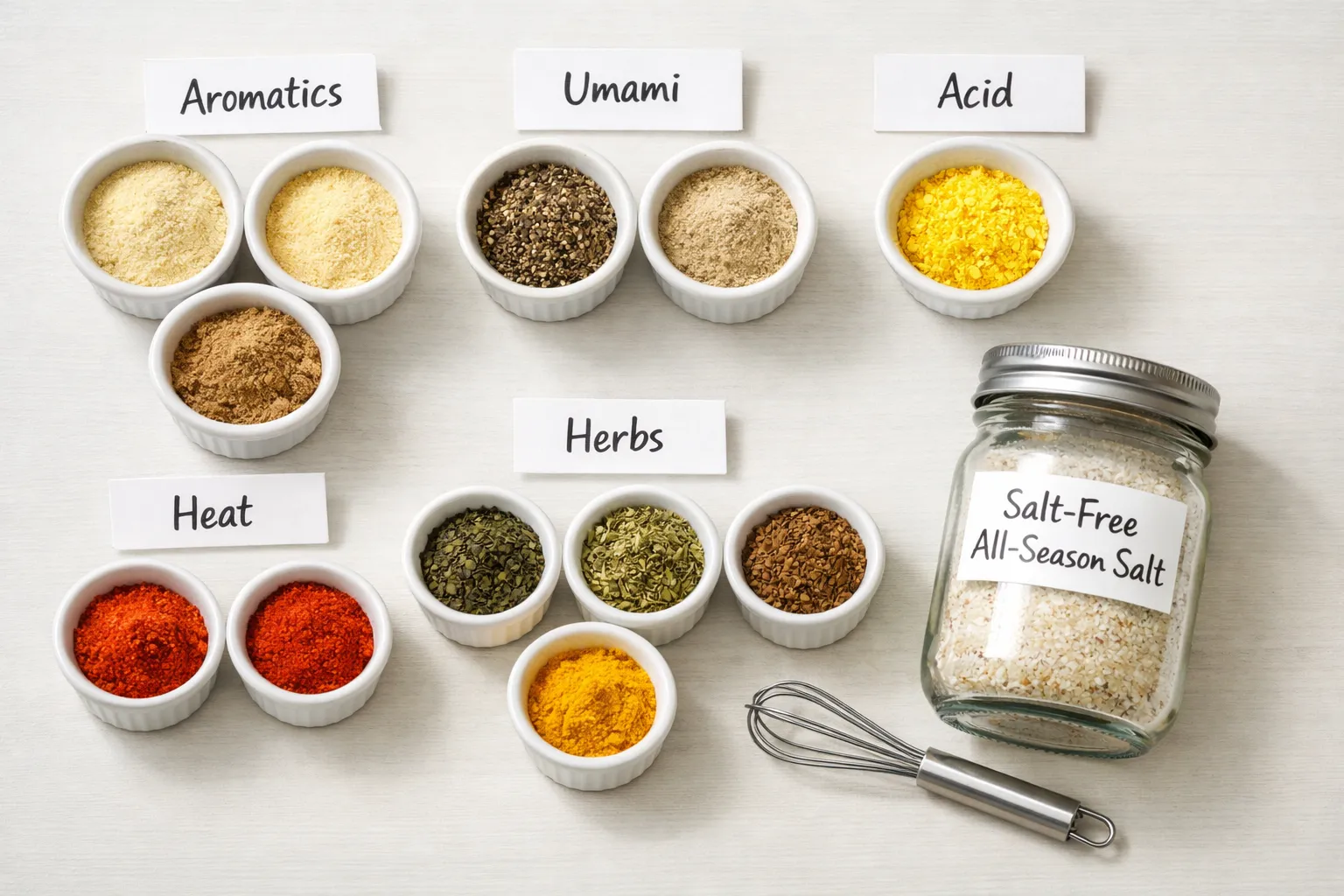
Aromatics (sweet-savory base)
Garlic powder, onion powder, leek powder, and celery seed bring foundational sweetness and savory depth.
Toasted coriander and cumin add gentle warmth and roundness that mimic some of salt’s “completing” effect.
Umami (deep savoriness)
Mushroom powder, tomato powder, smoked paprika, and nutritional yeast deliver mouth‑watering depth.
Optional: kombu powder in soups/stews for a clean, oceanic umami without adding sodium.
Acid (brightness that wakes up the palate)
Dried lemon/orange zest powder and sumac add zing and aromatic lift.
Use micro‑pinches of citric acid for precision brightness; finish with vinegars or fresh citrus juice at the table.
Heat (from warm to fiery)
Black and white pepper for gentle warmth; Aleppo pepper for fruity, mild heat.
Cayenne, chipotle, and Korean gochugaru to scale from smoky to vibrant heat without blowing out flavor.
Texture & Temperature (make flavors feel bigger)
Toasted spices bloom aroma; crunchy toppings (toasted seeds, crispy shallots) add contrast.
Hot‑cold plating (e.g., hot salmon over cool herbed yogurt, warm veggies over crisp greens) amplifies perceived flavor.
Pro tip
Layer intentionally: bloom spices in a little oil, season during cooking, then finish with acid and fresh herbs. This sequence builds complexity so your all season salt tastes complete without sodium.
Where Raw Spice Bar helps
Add regional character to your master salt‑free seasoned salt by pairing it with Raw Spice Bar’s globally inspired blends: Berbere for Ethiopian heat and citrusy depth, Seoul Fire BBQ for Korean chile warmth, Mediterranean Seasoning for herb‑forward brightness, or Sazón for Puerto Rican color and savoriness.
Keep discovery going with our flexible subscription. Fresh, small‑batch blends arrive with recipe cards (omnivore and herbivore options) so you can confidently season, taste, and only add a pinch of salt at the table if truly needed.
3) Master Salt‑Free Seasoned Salt (All‑Season Salt) - Simple Recipe & Ratios
Yield
About 1 cup (makes 16 tbsp). Scales well.
Ingredients (by volume)
4 tbsp sweet paprika (or 3 tbsp sweet + 1 tbsp smoked for a subtle smoky note)
3 tbsp onion powder
3 tbsp garlic powder
2 tbsp mushroom powder (or tomato powder) for umami
1 tbsp ground black pepper
2 tsp ground celery seed
2 tsp dry mustard (or ground coriander)
1½ tsp dried thyme
1½ tsp dried oregano
1 tsp lemon zest powder or 1/2 tsp citric acid (micro‑pinches go a long way)
1/2–1 tsp cayenne or Aleppo pepper (to taste)
Optional color/balance: 1/2 tsp turmeric
Ingredients (by weight, approximate)
Paprika 28 g; onion powder 21 g; garlic powder 21 g; mushroom or tomato powder 14 g; black pepper 6 g; celery seed 4 g; dry mustard 4 g; thyme 2 g; oregano 2 g; lemon zest powder 1.5 g (or citric acid 0.8 g); cayenne 1–2 g; turmeric 1 g.
Method
If using whole seeds (celery/coriander), lightly toast in a dry pan until fragrant; cool completely.
Combine all ingredients; grind any coarse bits to a uniform texture.
Taste a pinch: adjust heat (cayenne), brightness (zest/citric), or earthiness (paprika) to your palate.
Store airtight, away from heat/light.
Flavor profile
Savory, lightly smoky-sweet, bright, and gently spicy - designed to be your everyday all season salt replacement.
Dosing guide (quick)
Vegetables/grains: 1–1.5 tsp per lb.
Chicken/pork: 2 tsp per lb.
Beef/lamb: 2–3 tsp per lb.
Marinades: 1 tbsp per 1/4 cup oil + 1–2 tbsp acid.
Raw Spice Bar shortcut ideas
Fold in 1–2 tsp of a Raw Spice Bar blend per tablespoon of master mix to pivot regional: e.g., +Berbere for Ethiopian heat, +Mediterranean Seasoning for herbaceous lemony notes, +Sazón for Puerto Rican warmth.
5 Quick Variations (Regional Twists) Using the Master Blend
Use your master salt free seasoning salt (all season salt) as the base, then pivot with these fast add‑ins per 1 tablespoon of the master seasoned salt recipe.
Smoky BBQ “Grillhouse”
Add per 1 tbsp master blend: +1 tsp smoked paprika, +1/2 tsp ground mustard, +1/2 tsp chipotle; great on poultry, tofu, sweet potatoes.
Mediterranean Herb & Citrus
Add per 1 tbsp master blend: +1 tsp Mediterranean Seasoning (Raw Spice Bar), +1/2 tsp lemon zest powder; fish, chickpeas, zucchini.
Chile‑Lime
Add per 1 tbsp: +1 tsp ancho or guajillo, +1/4 tsp cayenne, finish with fresh lime; shrimp, corn, avocado.
Herby Garlic Pepper
Add per 1 tbsp: +1 tsp granulated garlic, +1/2 tsp cracked pepper, +1/2 tsp parsley; roasted broccoli, steaks, mushrooms.
Berbere Heat (Ethiopia‑inspired)
Add per 1 tbsp: +1 tsp Raw Spice Bar Berbere; use with lentils, carrots, and chicken thighs.
Tips
Keep the base unsalted; add a pinch of flaky salt at the table only if needed.
Adjust heat with cayenne, Aleppo, or chipotle; swap herb profiles with parsley, dill, or basil based on your pantry.
For brightness, finish with a squeeze of citrus or a drizzle of vinegar to make flavors pop without sodium.
5) How to Use Your Salt‑Free Seasoned Salt: Rubs, Marinades, and Finishes
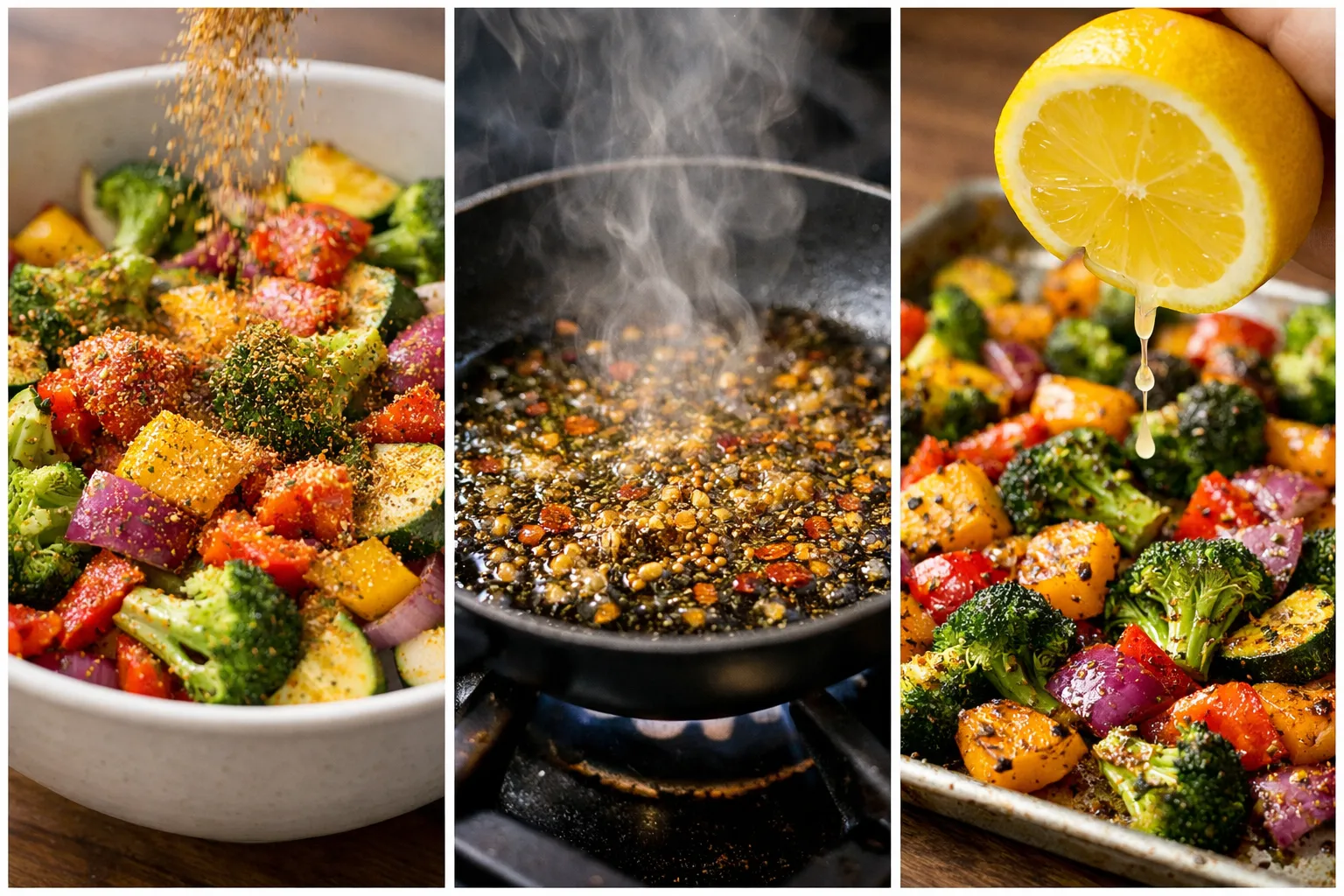
"1 teaspoon of table salt contains about 2,300 mg of sodium - roughly the entire recommended daily limit." - Source
Dry rubs (best for roasting, grilling, air‑frying)
Pat food dry; 1–3 tsp per lb depending on protein/veg; rest 10–20 minutes before cooking.
Marinades (juicy + flavorful)
Base formula: 1 tbsp master mix + 1/4 cup oil + 1–2 tbsp acid (vinegar/citrus) + optional sweet (1 tsp honey/maple) for balance; marinate 20–60 minutes (fish 15–30).
Finishing without sodium
Splash acids (lemon, sherry vinegar), fresh herbs, quality EVOO drizzle, or a knob of unsalted butter; a pinch of Raw Spice Bar blend to refresh aroma.
Heat management
Add spicy components early for mellow warmth; add late for sharper heat.
Pairing quick hits
Vegetables: toss with oil + 1–1.5 tsp mix/lb; finish with lemon.
Chicken: 2 tsp/lb + splash of apple cider vinegar; finish with chopped parsley.
Seafood: 1 tsp/lb + orange zest; don’t overmarinate.
Beans/grains: 1 tsp per cup cooked; bloom in oil before stirring in.
Chef move: toast & bloom
Lightly toast the blend, then bloom in oil for 30–60 seconds before adding liquids.
Flavor Finisher Matrix
Finisher Type |
Examples |
When to Add |
Effect on Flavor |
|---|---|---|---|
Acid |
Lemon juice/zest, sherry vinegar, red wine vinegar |
After cooking/at table |
Brightness, lifts savoriness |
Fresh Herbs |
Parsley, dill, cilantro, chives |
After cooking/at table |
Freshness, green aromatics |
Fats |
EVOO, unsalted butter, tahini drizzle |
After cooking/at table |
Richness, roundness |
Crunch/Texture |
Toasted seeds, crispy shallots, toasted panko |
After cooking/at table |
Contrast, perceived complexity |
Heat |
Aleppo flakes, gochugaru, cayenne pinch |
After cooking/at table |
Warmth, sharp spice aroma |
6) Pantry Guide, Sourcing, and Smart Swaps (Save Money, Max Flavor)
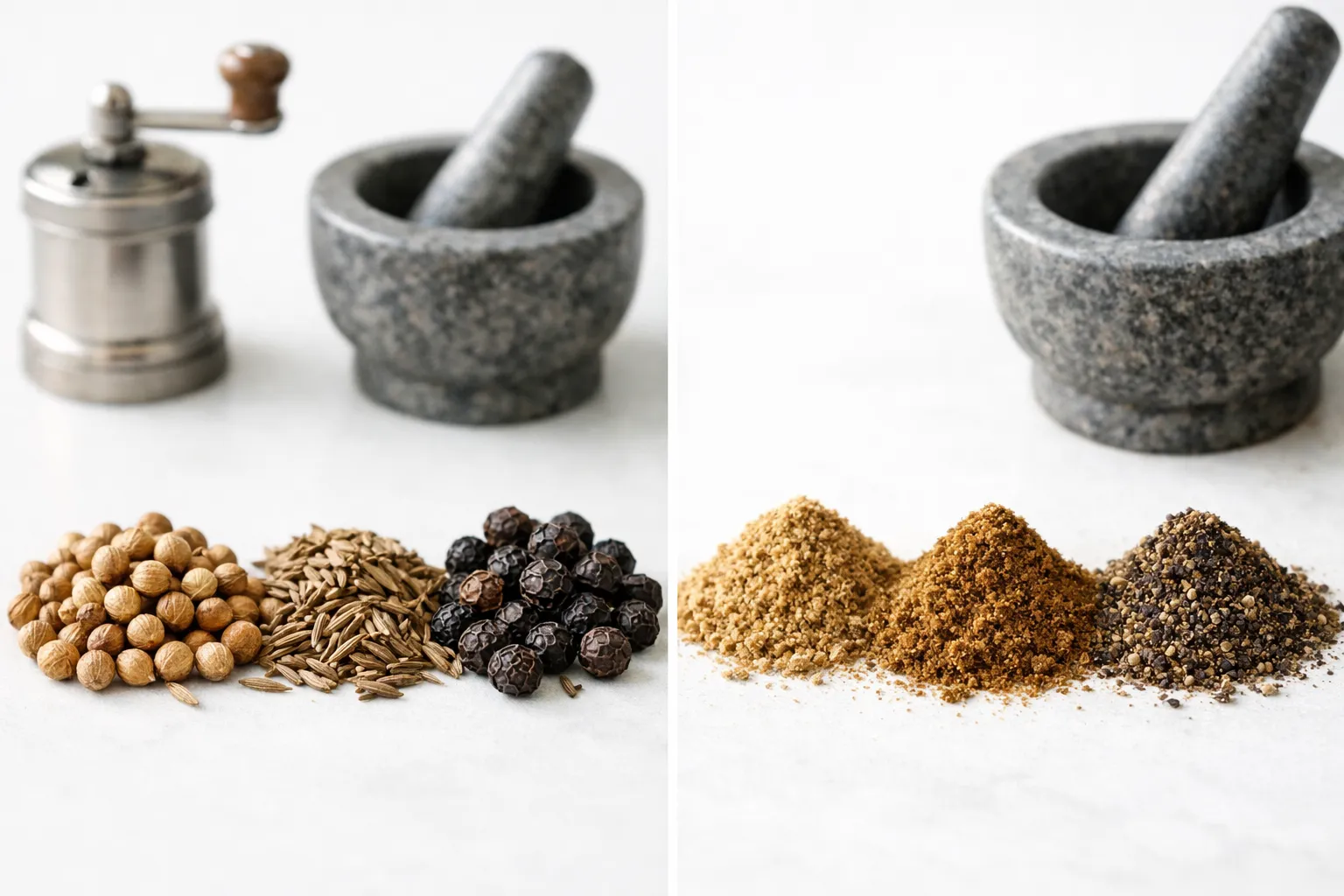
Whole vs. ground
Whole spices last longer and taste brighter; grind small batches.
Smart sourcing
Buy small, fresh packs or subscribe with Raw Spice Bar to keep turnover high; choose blends to experiment globally without waste. Pick up past favorites from the catalog to test and riff on your master mix.
Budget moves
Refill jars; date‑label; store cool/dark; rotate every 6–12 months for ground spices.
Umami & brightness swaps
Mushroom ↔ tomato powder; lemon zest powder ↔ sumac ↔ tiny pinch citric acid; smoked paprika ↔ chipotle.
Heat level swaps
Cayenne ↔ Aleppo ↔ gochugaru for fruitier heat.
Herb profile swaps
Thyme ↔ marjoram ↔ oregano based on cuisine.
Swap It Out
Ingredient Missing |
Best Substitute |
|---|---|
Onion powder |
Leek or shallot powder - similar sweet‑savory depth; start with 75% the amount. |
Mushroom powder |
Tomato powder - different but umami‑rich; add a pinch of black pepper to balance. |
Lemon zest powder |
Sumac or a micro‑pinch of citric acid - add late to preserve brightness. |
Smoked paprika |
Chipotle or ancho - chipotle adds smoke + heat; ancho adds sweet, mild smokiness. |
7) Storage, Freshness, and Food Safety
"Never reuse marinade used on raw meat, poultry, or seafood unless it’s boiled first to destroy harmful bacteria." - Source
Keep it vibrant
Airtight glass, away from heat, light, moisture. Avoid shaking over steaming pots.
Shelf life: maximum aroma 6–12 months for ground; refresh with a squeeze of citrus at the table if aroma fades.
Safe marinating
Marinate chilled; discard used marinade or boil for 3+ minutes if reusing as a sauce.
Batch strategy
Mix small; refresh often. Mark open date.
Anti‑caking tips
Add a few grains of dry rice to the jar or use silica packets safe for food storage.
10 Instant No‑Salt Finishes Chefs Use (In 10 Seconds)
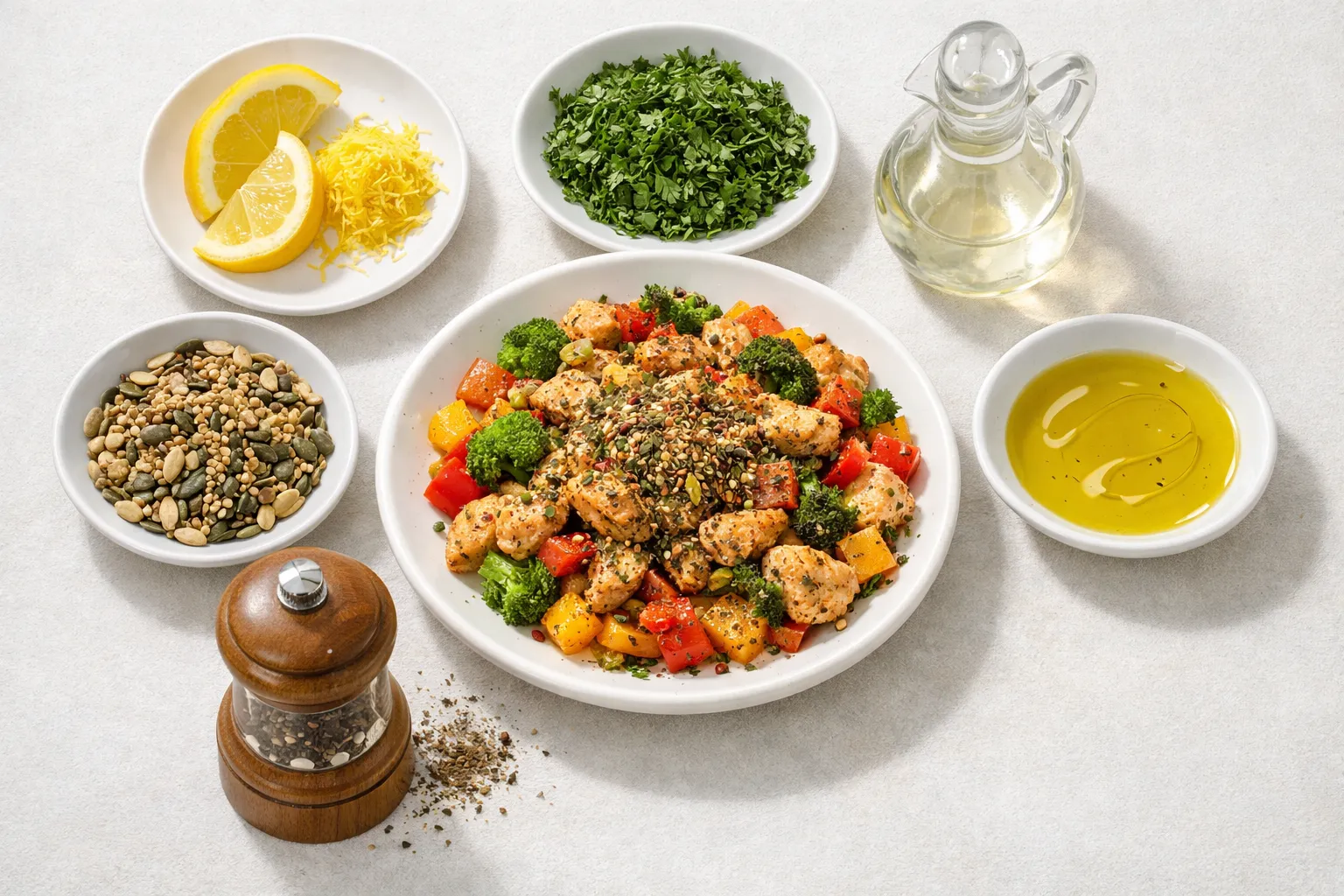
Quick, dramatic upgrades
1: Lemon zest microplane shower over roasted veg.
2: Sherry or red wine vinegar splash on stews.
3: Fresh herbs (parsley, dill, mint) chopped and folded in.
4: Toasted sesame or pumpkin seeds for crunch.
5: Aleppo or gochugaru pinch for warm heat.
6: A little unsalted butter to carry aroma.
7: Good EVOO drizzle on beans/grains.
8: Freshly cracked black pepper right before serving.
9: Grated garlic into yogurt for a fast sauce; add your master mix.
10: Squeeze of orange or lime on fish and chicken.
Raw Spice Bar tie‑in
“Finish & refresh” with a pinch of a global blend (e.g., Sazón, Mediterranean Seasoning) to release fresh aroma at the table.
Troubleshooting & FAQs (Balance Like a Pro)
If it tastes flat
Add acid (lemon/vinegar) or umami (mushroom/tomato powder). Bloom spices briefly in oil.
If it tastes bitter
Reduce char; add a hint of sweetness (roast carrots, a touch of honey) or fat (EVOO, unsalted butter). Use sweet paprika over smoked.
If it’s too hot
Dilute with more paprika/onion powder; add dairy (yogurt) or sweetness.
If it’s too tangy
Cut citric acid/zest; add richness and a pinch more aromatic base.
Can I add actual salt?
Yes - at the table, to taste. Keep the blend salt‑free for maximum control.
What about MSG?
Optional if you use it; you can also build umami with mushroom/tomato powders.
Is Raw Spice Bar salt‑free?
Many blends are herb‑and‑spice focused with clean ingredients; check each label. Use them with your master salt free seasoning salt (all season salt) to expand flavors while managing sodium.
My dry rub isn’t sticking - what now?
Pat food very dry, lightly oil, then apply your seasoned salt recipe. Rest 10–20 minutes before cooking.
The aroma faded in storage - can I rescue it?
Toast a small portion and finish dishes with acid and fresh herbs; or “refresh” with a pinch of a brighter Raw Spice Bar blend right at the table.
Wrap‑Up: Big Flavor, Zero Sodium - Start Cooking with Raw Spice Bar
Your takeaways
You don’t need sodium to deliver crave‑worthy meals - use aromatics, umami, acid, heat, and texture.
Keep a jar of the master salt‑free seasoned salt on your counter for everyday, all season salt coverage.
Pivot global with a teaspoon of a Raw Spice Bar blend per tablespoon of the master mix.
Next steps (CTA)
Grab a few small‑batch blends from Raw Spice Bar (Mediterranean, Berbere, Sazón, American BBQ) and build your salt‑free seasoning salt today.
Prefer guided discovery? Subscribe for monthly blends with recipe cards (omnivore + herbivore options) so dinner feels fresh without more effort.
Gift flavor: Perfect Pantry or Global Cuisine gift sets for cooks who want big taste without the sodium.
We’ve given you a flexible seasoned salt recipe, regional riffs, and chef‑level finishing moves. Now it’s your turn to make bold, balanced meals with zero sodium stress. Explore Raw Spice Bar’s fresh, small‑batch catalog and transform weeknights - one spoonful of salt free seasoning salt at a time.


