

Why Freshly Ground Wins: The Case for the Best Grinder for Spices
Whole spices vs. pre-ground: what changes in the cup and on the plate
When you grind whole spices, you rupture the cell walls that trap their volatile oils - the aromatic compounds that deliver vivid flavor and fragrance. The moment those walls break, aroma blooms; the longer ground spices sit, the more those volatiles oxidize and dissipate. That’s why freshly ground black pepper tastes floral, piney, and hot, while a jar of pre-ground peppercorn can taste muted and dusty.
In practical terms, choosing the best grinder for spices is really about controlling this flavor release at the exact moment you cook. With a good grinder, spice becomes an ingredient you “activate” on demand - turning whole spices like whole cumin, coriander, cardamom, and pepper black whole into bright, complex seasoning right before they hit the pan or plate. The payoff is immediate in both the cup (tea, chai, or spice blends) and on the plate (rubs, sauces, sautés): richer aroma, sharper definition, and cleaner finish.
"Black pepper’s key flavor compounds decline over time after grinding, following first‑order kinetics - evidence of rapid aroma loss in pre‑ground pepper." - Source
Because degradation starts the moment spices are ground, buying whole spices and grinding as needed preserves potency and consistency - especially for everyday staples like ground peppercorn, cumin, and coriander.
Flavor you can taste tonight
Steak and pepper: Crack pepper black whole over a just-rested steak and you’ll get a burst of citrus, pine, and heat that pre-ground pepper can’t touch. The steak tastes juicier because the pepper’s aromatics are lively rather than flat.
Taco night with whole cumin: Bloom freshly ground whole cumin in oil for 30–60 seconds before adding onions or tomatoes. The kitchen fills with warm, nutty perfume, and your weeknight tacos suddenly taste like you toasted and ground them à la minute at a taquería.
Smarter portions, less waste: Grinding small amounts right when you need them locks in consistency from dish to dish, avoids stale jars lingering in the pantry, and keeps blends fresher longer.
Whether you’re finishing with freshly ground black pepper, stirring in just-ground coriander for soup, or blooming cumin for beans, a good spice grinder turns “good enough” into “wow” in seconds.
Where Raw Spice Bar comes in
At Raw Spice Bar, we take freshness seriously. Our small-batch, globally inspired blends are crafted to highlight peak-aroma spices - so the grinder you choose is the final step that unlocks their full character in your kitchen. Pair a dependable grinder with our 2 oz blends and you’ll taste the difference across cuisines: from Seoul Fire BBQ and Thai Curry to Berbere, Sazón, and Mediterranean Seasoning. Each blend arrives with a recipe card (omnivore and herbivore options included) so you can put your grinder to work the moment it lands.
Want ongoing discovery without the guesswork? Our flexible spice subscription brings new, fresh blends to your door - perfect for grinding and cooking right away. Choose a good spice grinder, then let Raw Spice Bar guide you through restaurant-quality global flavor at home.
Types of Spice Grinders (and When to Use Each)
A good grinder turns whole spices into on-demand flavor. The right tool depends on what you grind most, how much you need at once, and how uniform you want the results.
"Essential oils evaporate within hours of grinding." - Source
Electric blade grinders
Pros: fast, affordable, versatile for spices, nuts, seeds.
Cons: less uniform particle size; can overheat delicate spices if run too long.
Best for: quick batches of coriander, cumin, fennel; freshly ground black pepper or ground peppercorn in quantity.
How to use well: Pulse in short bursts and shake the cup between pulses for a more even grind. For heat-sensitive spices, stop and let the cup cool. Great when you need a jar of fresh ground black pepper for rubs or a big batch blend from whole spices.
Burr grinders (spice-capable)
Pros: most uniform grind; excellent for peppercorns with repeatable settings.
Cons: pricier; many models are designed primarily for coffee; use caution with oily spices (they can gum up burrs).
Best for: consistent ground peppercorn and ground white pepper for sauces and finishing.
How to use well: Dedicate burrs to spices (not coffee) and brush out the chute. Adjust the grind to match use: coarse for crusts and steaks, fine for velvety sauces where ground white pepper disappears visually.
Manual mills (pepper/salt-style)
Pros: portable and precise; perfect for everyday table use and finishing.
Cons: lower throughput; typically set up for a single spice at a time.
Best for: pepper black whole at the table; small amounts of coriander or allspice cracked over salads, soups, and steaks.
How to use well: Keep one mill for pepper and another for a favorite whole spice (e.g., Sichuan peppercorns). Refill often to keep aroma bright.
Mortar & pestle
Pros: ultimate control over texture (from coarse crush to fine powder); ideal for pastes and wet aromatics.
Cons: requires effort; heavier; granite sets need seasoning/maintenance.
Best for: curry pastes, spice pastes with garlic/ginger, and crushing tough aromatics like cloves or cinnamon sticks.
How to use well: Toast whole spices, then pound to your preferred texture. Add fresh aromatics (ginger, garlic, chiles) to build complex pastes that a grinder can’t replicate.
Specialty tools
Nutmeg/cinnamon mills and microplanes excel at very hard, aromatic spices you use in tiny amounts.
When a microplane excels: grating nutmeg directly into béchamel, custard, eggnog; shaving cinnamon over oatmeal or coffee for a feathery texture and intense top-note aroma.
When a grinder is better: larger quantities, multi-spice blends, and uniform particle size for rubs, marinades, and baking mixes.
Choosing the best grinder for spices isn’t one-size-fits-all. Many kitchens benefit from a fast electric blade grinder for batch work plus a manual mill for table service. Then, add a mortar & pestle or microplane for pastes and hard spices. Pair your tools with Raw Spice Bar’s small-batch, globally inspired blends and you’ll get peak aroma every time you grind.
How to Choose the Right Grinder Spice for Your Kitchen
Choosing the best grinder for spices comes down to how you cook, which spices you use most, and the texture you want in the pan and on the plate.
Start with your cooking style
Weeknight cook: Prioritize convenience and cleanup. An electric blade grinder is fast and flexible for coriander, cumin, fennel, and fresh ground black pepper. Pulse in short bursts and rinse the cup right away for easy maintenance.
Batch blender: You’ll want capacity and power. A sturdy electric blade grinder or a spice-capable burr grinder helps you process ground peppercorn, larger rubs, or multi-spice blends consistently.
Flavor explorer: Prefer manual control for pastes and texture. A mortar & pestle lets you go from coarse crack to ultra-fine, and build spice pastes with ginger/garlic and chiles that a motorized grinder can’t replicate.
Match grinder to specific spices
Pepper black whole vs. ground white pepper: Use a burr or quality manual mill for consistent pepper black whole at the table. Choose a fine setting (or a burr grinder) for silky ground white pepper in cream soups and sauces.
Whole cumin and coriander: Electric blade grinders excel for quick batches; mortar & pestle if you want partial-cracked seeds for texture and aroma blooms when blooming in oil.
Cinnamon sticks and cloves: These are dense and tough - use a powerful electric blade grinder or crush with a heavy mortar & pestle. A microplane or specialty cinnamon/nutmeg mill is great for small, fragrant finishes.
Delicate seeds (fennel, caraway) and leafy spices: Short pulses in a blade grinder or gentle pounding in a mortar avoids heat buildup and bitterness.
Key decision factors
Grind uniformity: Burr > manual mill > blade (with good pulsing technique). Finer control matters for ground white pepper and certain baking blends.
Capacity: Blade grinders handle larger batches; manual mills excel at small, fresh portions; mortar & pestle fits everything from 1 teaspoon to paste-size jobs.
Speed: Blade is fastest; burr is steady and repeatable; manual tools trade speed for precision.
Noise: Blade and burr are louder; manual tools are near-silent.
Cleanup: Removable cups simplify cleaning; burrs need brushing; mortar & pestle rinses clean but is heavier. Avoid water in electric bases.
Materials: Stainless blades are durable; ceramic burrs resist corrosion; granite mortar grips ingredients; cast iron is ultra-sturdy but needs drying/oiling.
Safety notes: Cloves can scratch plastic lids and their oils can gum up plastics - use stainless interiors when possible. Avoid overheating by pulsing briefly and letting cups cool.
A quick comparison (at-a-glance)
Grinder Type |
Best For (spices/dishes) |
Grind Uniformity |
Capacity |
Cleanup |
Noise |
Budget |
|---|---|---|---|---|---|---|
Electric Blade |
Whole cumin/coriander, fennel, ground peppercorn in quantity, multi-spice blends |
Medium (improves with pulsing) |
Medium–High |
Easy if cup is removable |
Medium–High |
$ |
Burr (spice-capable) |
Consistent pepper black whole, ground white pepper for sauces |
High |
Medium |
Moderate (brush burrs) |
Medium |
$$–$$$ |
Manual Mill |
Everyday table pepper, small amounts of coriander/allspice |
Medium–High (small volumes) |
Low |
Easy |
Low |
$–$$ |
Mortar & Pestle |
Curry/spice pastes, garlic/ginger blends, crushing cloves/cinnamon |
User-controlled (coarse to fine) |
Variable (depends on bowl size) |
Rinse and dry; heavier |
Silent |
$–$$ |
Specialty Microplane |
Nutmeg/cinnamon finishing, tiny fragrant amounts |
N/A (grates shavings) |
Very Low |
Easy |
Low |
$ |
Once you’ve matched your grinder to your cooking style and spices, put it to work with Raw Spice Bar’s small-batch blends - from Berbere and Sazón to Mediterranean Seasoning and Seoul Fire BBQ. Pair a reliable grinder with our flexible spice subscription and you’ll have freshly ground, globally inspired flavor on demand.
How to Use Your Spice Grinder for Peak Flavor (Step-by-Step)
Pre-step: toast whole spices (optional but impactful)
In a dry skillet over medium heat, toast whole cumin and coriander until fragrant (30–90 seconds), shaking often. Spread on a plate to cool fully before grinding - this keeps citrusy top notes bright and prevents steam from clumping inside the grinder.
Step-by-step guides by spice
-
Pepper black whole → freshly ground black pepper
Steak: Use a coarse grind for a crunchy crust and big aroma. For mills, open the dial; for blade grinders, short pulses with a quick shake between.
Vinaigrettes & finishing: Go medium-fine for even dispersion without gritty bites.
-
Ground white pepper
Best for cream sauces, purées, and soups where you want pepper’s warmth without black flecks. Use a burr or fine blade grind; add late in cooking to keep aroma vivid.
-
Whole cumin
Pulse 2–4 times in 1-second bursts; shake between pulses. Stop at medium-fine to avoid bitterness. For blooming, grind just before it hits the warm oil.
-
Coriander seeds
Aim for medium to preserve citrus notes. Over-grinding can mute lemony brightness; a mortar & pestle “crack” works beautifully for salsas and rubs.
-
Cinnamon sticks & cloves
For small amounts and garnish: use a microplane or specialty mill for feathery shavings.
For blends and baking: a powerful electric blade grinder or a heavy mortar & pestle. Break sticks first; pulse in short bursts to minimize heat.
Grind-size cheat sheet
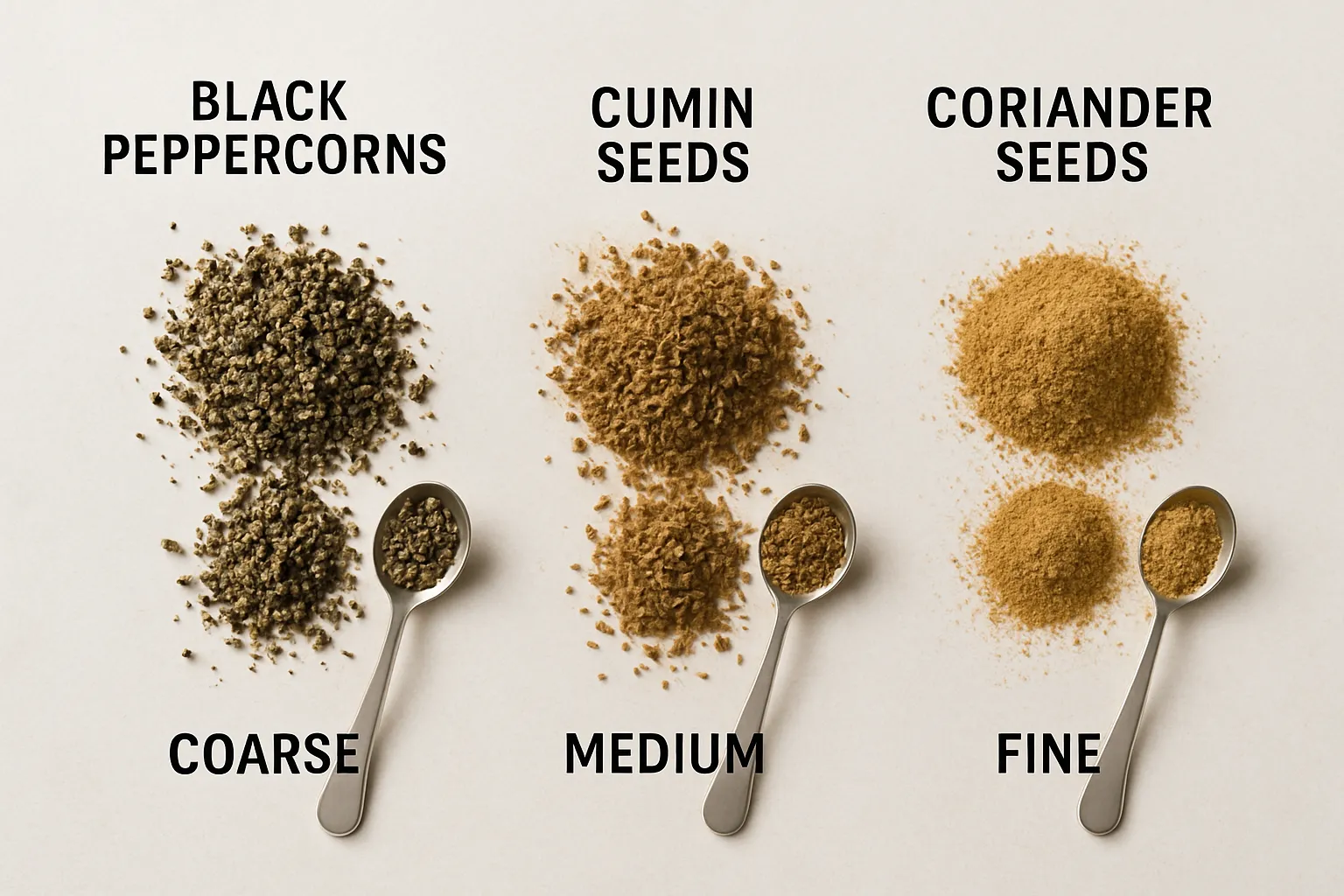
Coarse: Steak pepper crusts, rustic sausages, slow braises, pickling blends (texture-forward).
Medium: Everyday rubs, stews, chili, vinaigrettes, rice and grain pilafs (balanced aroma and distribution).
Fine: Sauces, baking blends, cream soups, delicate marinades (rapid extraction and smooth texture).
Pro tips
Pulse instead of holding: Short bursts keep particles more uniform and temperatures lower.
Shake to redistribute: Lift and shake the cup between pulses for even grinding.
Rest between pulses: Let the grinder cool 5–10 seconds to protect delicate volatile oils.
Measure by weight: Weigh whole spices before grinding for repeatable results across recipes and batches.
Match tool to task: Use stainless interiors for oily spices like cloves; avoid plastic lids that can scratch. For cinnamon/cloves, consider mortar & pestle to prevent overheating and resin buildup.
Pair these steps with Raw Spice Bar’s small-batch blends and recipe cards, and you’ll unlock peak aroma - whether you’re finishing with freshly ground black pepper or building a cumin-forward chili blend.
Cleaning and Maintenance: Keep Your Grinder Flavor-True
Why cleanliness matters
Prevent cross-aromas so cumin doesn’t taste like last night’s coffee or cloves.
Stop rancid oil buildup that dulls fresh, bright notes - especially in freshly ground black pepper.
Extend grinder life: clean burrs/blades grind cooler and more consistently, preserving the best grinder for spices performance.
Cleaning by grinder type
-
Electric blade
After each use: brush out fines (soft pastry brush or dedicated grinder brush), then wipe the cup and lid with a barely damp cloth.
De-oil: pulse a handful of stale bread or uncooked rice to absorb residual oils; discard and wipe.
Wash: hand-wash removable stainless cups/lids; dry fully before reassembly.
Avoid: soaking the motor base; running continuously (overheats delicate spices).
-
Burr
Dry clean: remove hopper and burrs per manual; brush burrs and chute; tap out fines. Use a small handheld vacuum if needed.
Avoid oily pastes and very sticky spices; dedicate a burr set to spices (not coffee).
Maintenance: periodic deep clean with grinder cleaning pellets if the manufacturer allows.
-
Manual mills
Quick reset: open to coarse and run a spoonful of dry rice or coarse salt to scrub residual aromas; empty and brush.
Disassemble per maker’s guide for a periodic deep clean; wipe the interior and let air-dry completely.
-
Mortar & pestle (granite)
Season before first use: grind dry white rice, repeating until the powder stays white; rinse with warm water only; air-dry thoroughly.
After use: scrape out, rinse with warm water, brush away residue; avoid soap (can absorb into stone).
Drying: towel-dry, then air-dry fully; store where air circulates.
"To season a granite mortar and pestle, grind uncooked white rice until the powder stays white, and avoid soap - clean with warm water only." - Source
Odor control and storage
Neutralize strong aromas: grind a spoonful of dry rice or stale bread; for stubborn odors, wipe with a 1:1 vinegar-water cloth, then dry thoroughly.
Fight humidity: store parts fully dry; add food-safe silica packs in storage bins (never inside the grinder body).
Prevent rust (cast iron): dry immediately; wipe with a drop of neutral oil; store with lid off for air flow.
Quick-reference do’s & don’ts
Grinder Type |
Do |
Don’t |
Tools |
Safe Detergents |
Dishwasher-Safe Parts |
|---|---|---|---|---|---|
Electric Blade |
Brush out fines; pulse rice/bread to de-oil; hand-wash removable cup/lid; dry fully |
Don’t soak base; don’t hold the button continuously; don’t grind cloves in plastic-lidded cups |
Soft brush, microfiber cloth, small vacuum, rice/bread |
Mild dish soap on removable stainless parts only |
Often cups/lids (check manual) |
Burr (Spice-Capable) |
Brush burrs/chute; dedicate to spices; occasional pellet clean if allowed |
Don’t run oily pastes; don’t wash burrs in water unless maker allows |
Burr brush, pipe cleaners, handheld vacuum |
Typically none; dry-clean only unless specified |
Rarely any (check manual) |
Manual Mill |
Run coarse salt/rice to scrub; disassemble and wipe dry |
Don’t leave damp; don’t overload oily spices |
Small brush, toothpick for crevices, soft cloth |
Mild soap on exterior/collection jar if removable |
Sometimes jars only (check manual) |
Mortar & Pestle (Granite) |
Season with rice; rinse with warm water; air-dry completely |
Don’t use soap; don’t store damp |
Stiff nylon brush, drying rack |
Water only for granite |
No |
Specialty Microplane/Mills |
Rinse/shake out; dry immediately |
Don’t leave wet; don’t push hard spices sideways |
Soft brush, bottle brush |
Mild soap (non-porous parts) |
Usually yes for metal grater only (verify) |
Keep your grinder spice-ready and flavor-true, and your Raw Spice Bar blends will shine from first grind to last - no off-notes, just clean, globally inspired aroma every time.
Consistency, Safety, and Troubleshooting
Consistency problems and fixes
-
Uneven grind
Work in smaller batches so particles circulate evenly.
Use pulse technique: 1-second bursts; stop, shake, and repeat.
Tilt and shake between pulses to redistribute heavy pieces and fines.
For pepper mills, tighten/loosen the adjustment ring and test a few turns; consistency improves when the mechanism isn’t overfilled.
-
Static cling in electric cups
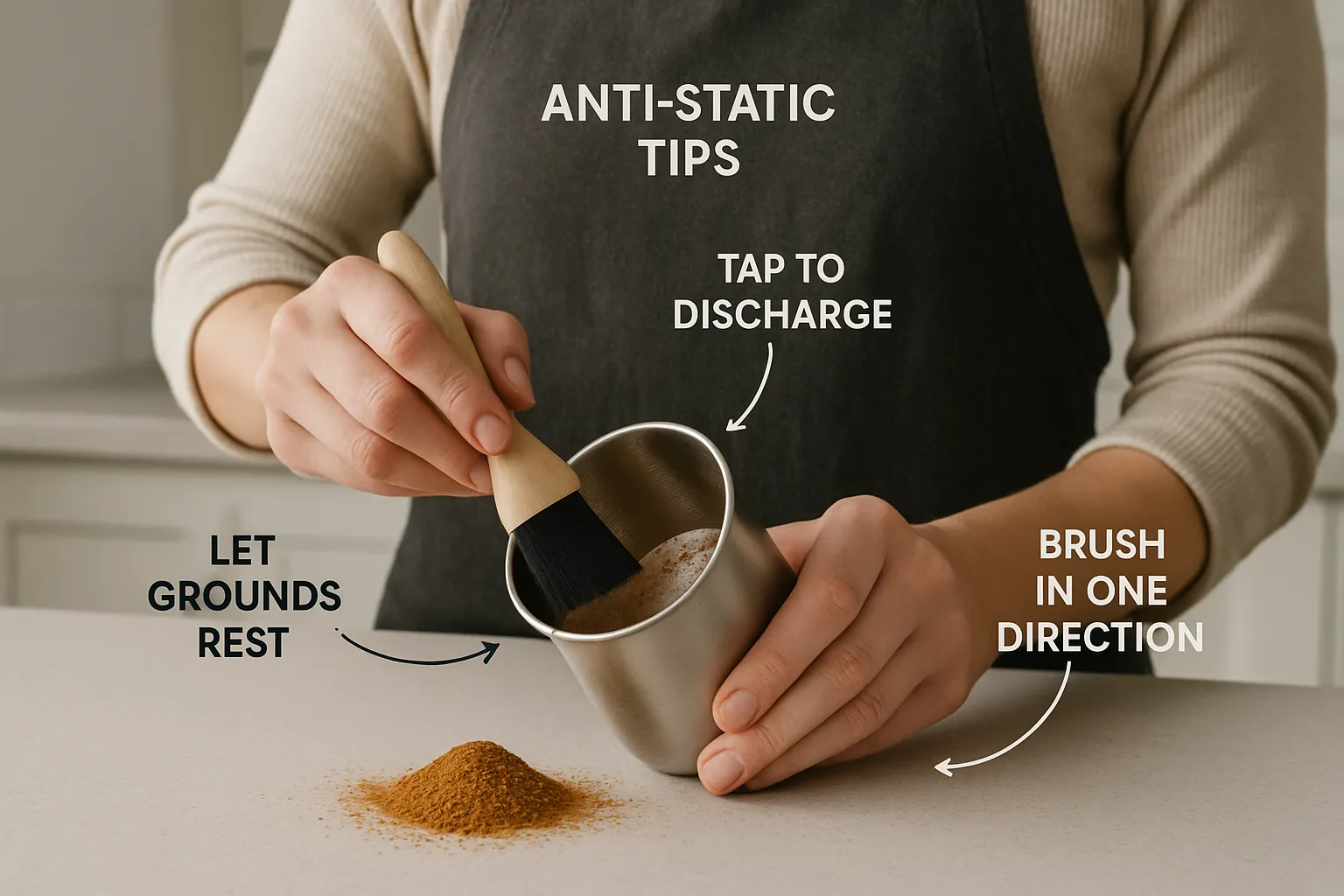
Let grounds rest 30–60 seconds so charge dissipates before opening the lid.
Tap the cup on the counter to discharge, then use an anti-static brush to sweep fines.
Avoid ultra-dry environments; a light breath of humidity in the room reduces cling.
Heat and bitterness
-
Overheating oils dulls aromatics and can taste bitter.
Use short bursts and rest periods; avoid holding the button down.
Chill whole spices in the freezer for 5–10 minutes before grinding large batches.
For tough spices (cinnamon/cloves), break into smaller pieces and pulse in quick intervals to limit heat.
Safety notes
Hard spices (cinnamon/cloves): Use sturdy stainless cups or a heavy mortar & pestle; avoid brittle plastics that can scratch.
Keep fingers and tools clear of blades; unplug before cleaning or dislodging stuck pieces.
Child-safe storage: Store grinders empty, with lids secured, cords wrapped, and out of reach.
Watch for resin buildup from cloves/cinnamon; clean promptly to prevent sticking and off-flavors.
When to replace
Dull blades that smear instead of cutting; longer grind times for the same result.
Chipped or rusting burrs; metal shavings or inconsistent output.
Cracked cups, warped lids, or persistent odors and flavors that remain after deep cleaning.
Electrical issues: overheating, burning smell, or intermittent power.
Grind Size Meets Cuisine: Global Pairings with Raw Spice Bar
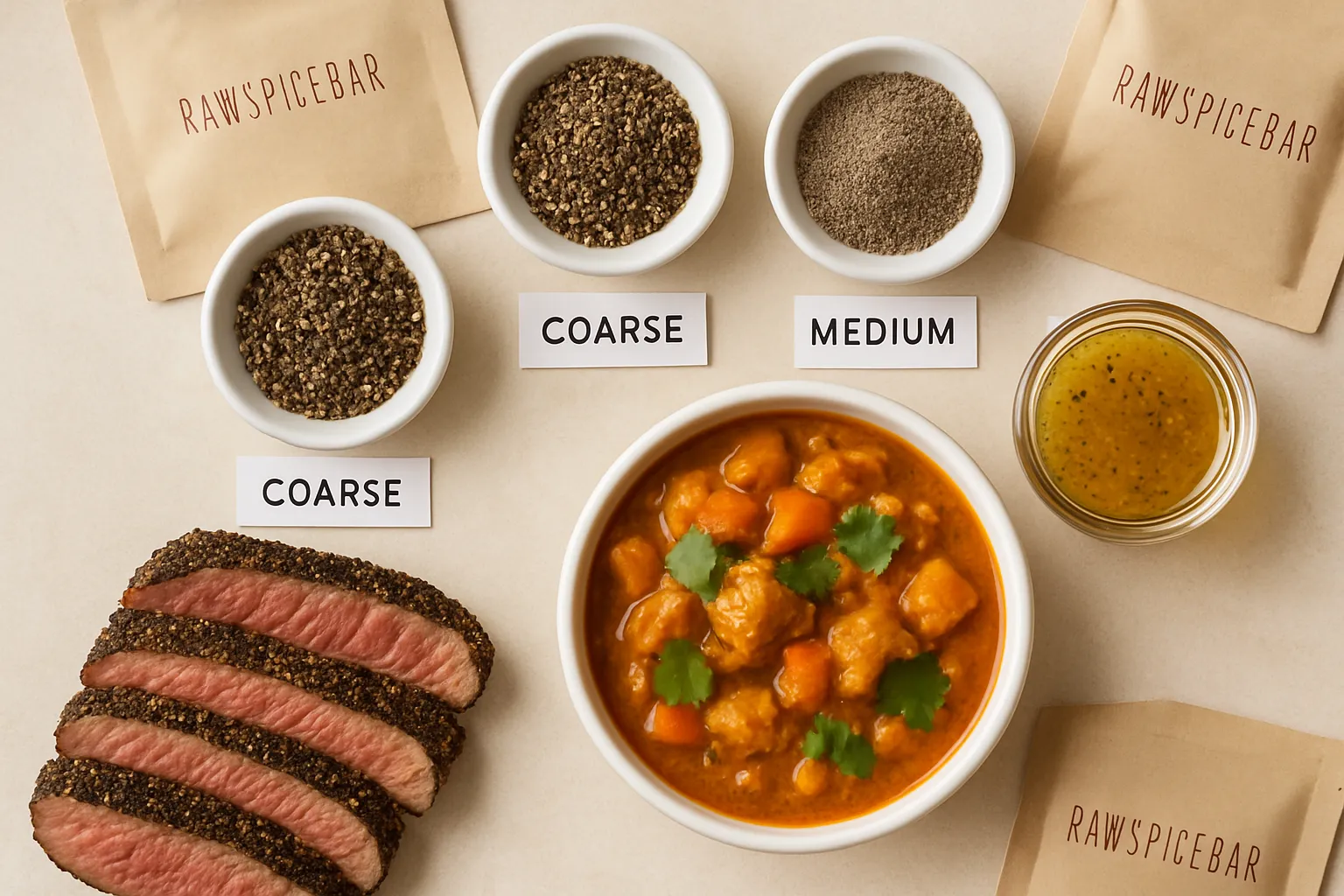
Coarse grind: texture-forward dishes
Best uses: BBQ rubs, steak au poivre, roasted vegetables where crunch and aroma matter.
Pair with Raw Spice Bar: American BBQ for smoky-sweet bark on ribs and brisket; Mediterranean Seasoning for charred zucchini, eggplant, and potatoes.
Medium grind: all-purpose blends and stews
Best uses: Chili, tagines, curries, and marinades - enough surface area for aroma with some texture left.
Pair with Raw Spice Bar: Berbere (Ethiopia) for deeply spiced stews; Sazón (Puerto Rico) for bright, savory marinades; Tuscany (Italy) for rustic soups and sheet-pan dinners.
Fine grind: sauces, baking, and delicate dishes
Best uses: Vinaigrettes and cream soups (especially ground white pepper), spice cakes and cookies, and quick infusions.
Pair with Raw Spice Bar: Thai Curry for fast, fragrant coconut sauces; Seoul Fire BBQ for ultra-flavorful glazes and stir-fries.
Try this flow
Toast whole spices (optional) → grind to size → cook or finish → adjust salt/acid to taste.
Experiment with our flexible subscription - mix Raw Spice Bar blends with single-origin whole spices for signature rubs and sauces.
Buying Whole Spices and Storing Them Right
How to shop smart
Look for plump, oily peppercorns; they should feel heavy for their size and smell peppery when cracked.
Choose fragrant cumin and coriander with a clean, fresh aroma (not dusty or stale).
Seek tight, bark-like cinnamon sticks and unbroken cloves; avoid faded color or musty scent.
Prefer whole spices for longevity and buy smaller amounts more frequently to maintain potency.
Storage best practices
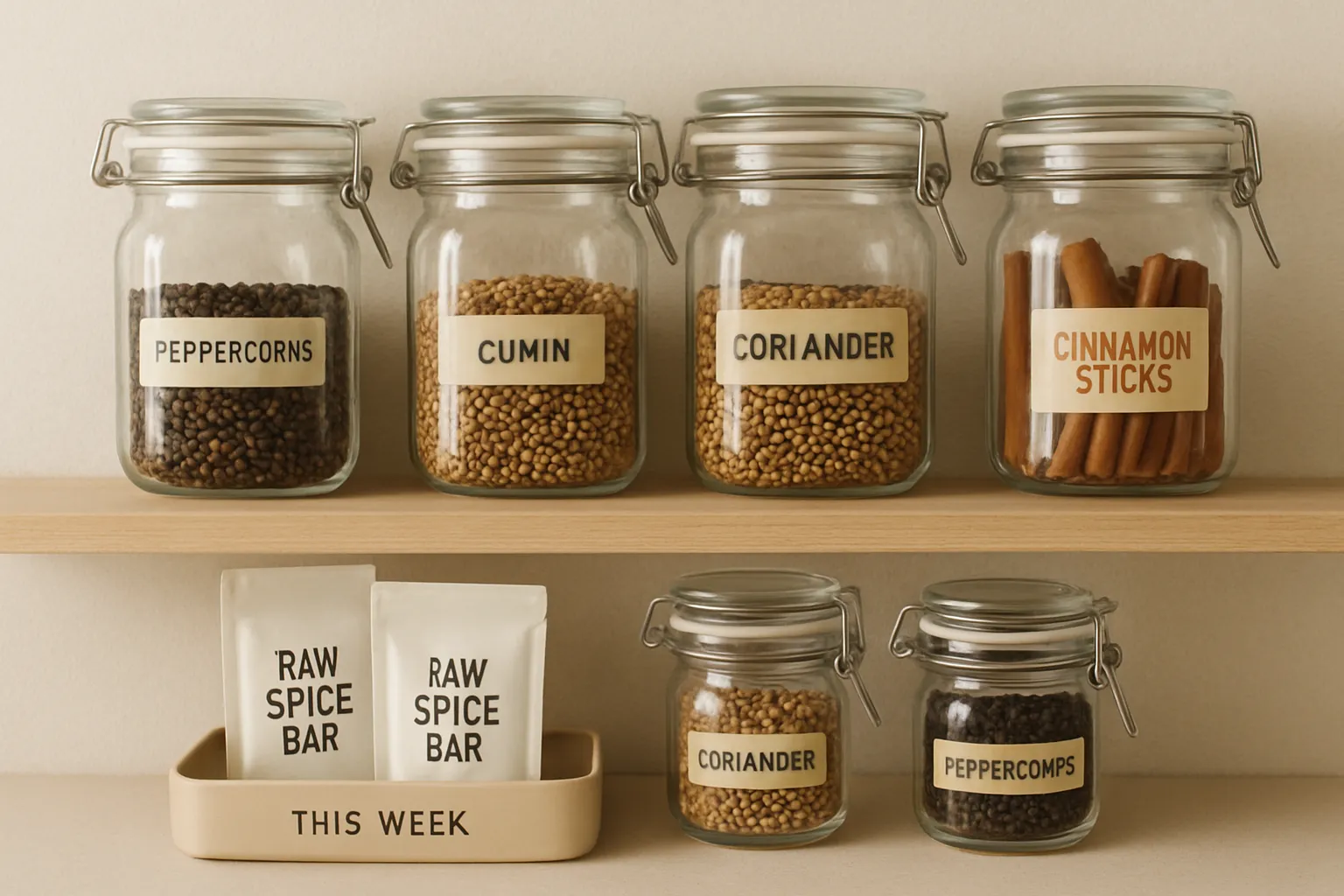
Keep spices in a dark, cool, airtight environment: use glass jars with tight-fitting lids.
Label and date each jar; rotate oldest first. Aim for 2–4 oz working jars and store backstock sealed and separate.
Avoid heat and steam sources (not above the stove or dishwasher vent). Keep away from direct sunlight.
For blends you reach for nightly, decant a small portion and keep the main bag/jar sealed to minimize air exposure.
"Whole spices can keep up to 4 years, while ground spices are best within 2–3 years when stored airtight in a cool, dark place." - Source
Shelf life expectations
Whole vs. ground: Whole spices typically outlast ground due to less exposed surface area; expect 3–4 years for many whole spices vs. 1–2 years for ground when stored well.
Quick potency test: Rub a small amount between fingers or crush with a spoon - if aroma is faint and flavor is flat, it’s time to refresh.
Batch and blend smartly: Grind only what you need for the week; store excess whole to preserve volatile oils.
Where Raw Spice Bar helps
Freshness first: Our small-batch blends are designed for maximum aroma with easy, 2 oz packs to keep rotation tight.
Confidence in the kitchen: Each blend includes a recipe card and pairing tips, so you use what you buy - no more stale jars lingering.
Keep discovering: Use our flexible subscription or curated gift sets to build a flavor-forward pantry you’ll actually cook through.
Smart Setups: Good Spice Grinder Combos for Every Cook
Minimalist (budget-friendly)
Setup: One electric blade grinder + a simple manual pepper mill.
Why it works: A blade grinder is a good spice grinder for fast batches of whole cumin, coriander, and multi-spice rubs; the manual mill keeps pepper black whole on demand at the table.
-
Use cases:
Weeknight freshly ground black pepper over salads, eggs, and steak.
Quick rubs from whole spices (coriander/cumin/fennel) for sheet-pan dinners and grills.
Pro tip: Pulse the blade grinder in short bursts for more even particle size; label your jar with “ground peppercorn” or blend name plus the date for consistency.
Versatile home cook
Setup: Electric blade grinder + mortar & pestle.
Why it works: Blade for speed; mortar & pestle for precision texture and paste-building.
-
Use cases:
Fast dry grinds for chili, tagines, curries, and marinades.
Perfect pastes (garlic/ginger/chiles + freshly ground spices) for Thai Curry or Berbere - great extraction with full control over grind size and mouthfeel.
Pro tip: Use the grinder for bulk dry blends, then finish with the mortar & pestle to “wake up” aromatics right before cooking.
Precision/entertainer
Setup: Burr mill dedicated to pepper + electric blade for mixed spices + mini microplane for nutmeg/cinnamon.
Why it works: The burr mill gives the most uniform grind for pepper - ideal for consistent ground peppercorn in salads and finishing. The blade grinder handles blends and larger batches. The microplane is perfect for tiny, fragrant amounts of hard spices.
-
Use cases:
Silky sauces with ground white pepper (precise fine setting).
Coarse pepper for steak au poivre without fines.
Freshly grated cinnamon or nutmeg over desserts and cocktails.
Pro tip: Dedicate the burr to pepper only; keep oily or sticky spices in the blade grinder to protect burr performance.
Tie-in with Raw Spice Bar
Build your pantry: Stock a rotating set of Raw Spice Bar’s small-batch blends alongside core whole spices (peppercorns, whole cumin, coriander, cinnamon sticks, cloves).
Use the cards: Our recipe cards flag ideal grind sizes and when to bloom spices for peak flavor - making your best grinder for spices even better.
Subscribe or gift: Keep discovery flowing with our flexible spice subscription, or outfit new kitchens with gift sets like Global Cuisine, Backyard BBQ, and Perfect Pantry. Each 2 oz blend is crafted for freshness and easy, repeatable results - so your grinder spice setup stays flavor-ready year-round.
Conclusion: Choose Your Grinder, Cook with Confidence (and Raw Spice Bar)
The best grinder for spices is the one that fits your cooking style and keeps flavor at its peak. Whether you go minimalist with a blade grinder and pepper mill, or mix in a mortar & pestle and burr mill for precision, a good spice grinder turns whole spices into on-demand aroma - from freshly ground black pepper to cumin, coriander, and cinnamon.
Start simple: pick a practical setup, master core techniques (short pulses, shake between bursts, cool toasted spices before grinding), and protect flavor with smart cleaning and storage. Small habits - like grinding only what you need and keeping jars airtight - make a big, delicious difference.
Raw Spice Bar makes the rest easy. Our small-batch blends, flexible subscription, and curated gift sets bring globally inspired flavors to your weeknights with recipe cards and pairing tips that eliminate guesswork. From Berbere and Sazón to Thai Curry and Seoul Fire BBQ, you’ll have everything you need to put your grinder to work - fast.
Ready to cook with confidence? Explore blends and start a flexible spice subscription at rawspicebar.com.


