

Why DIY a Salt‑Free Italian Seasoning? Fresh flavor, control, and versatility
A great italian seasoning recipe doesn’t need salt to deliver bold, satisfying flavor. With a diy italian seasoning (a true italian herb seasoning made from pantry staples), you control the balance of herbs and spice, skip additives, and mix only what you’ll actually use. The result: a fresher, more aromatic italian spice mix you can reach for every day.
"About 90% of Americans 2 years or older consume too much sodium." - Source
The big benefits
-
Full control over sodium without sacrificing flavor; build a homemade italian seasoning that’s 100% salt‑free.
-
Fresher taste and aroma by combining pantry italian seasoning ingredients right before use.
-
One jar, many uses: pasta, roasted veggies, soups, salad dressings, marinades, garlic bread, and pizza.
-
Cost‑effective: blend what you’ll use, reduce waste, and tailor to your household’s taste with a customized italian seasoning mix.
How this guide is different (and better than most)
-
Exact ratios for a balanced base, plus quick scaling for small or big batches - so your homemade italian seasoning is consistent every time.
-
Flavor‑tuning framework: make it garlicky, herb‑forward, earthy, or spicy with simple ratio tweaks to your italian spice mix.
-
Clear usage amounts per pound/cup so your food is seasoned just right - no guesswork when you sprinkle your italian herb seasoning.
-
Storage science and freshness tests to keep your mix vibrant, from light‑safe containers to crush‑and‑sniff potency checks.
-
Seamless integration with Raw Spice Bar’s fresh, small‑batch blends - like our Tuscany Blend and Mediterranean Seasoning - when you want ready‑to‑cook authenticity alongside your diy italian seasoning.
DIY Italian Seasoning Recipe (Salt‑Free): Exact ratios & 5‑minute method
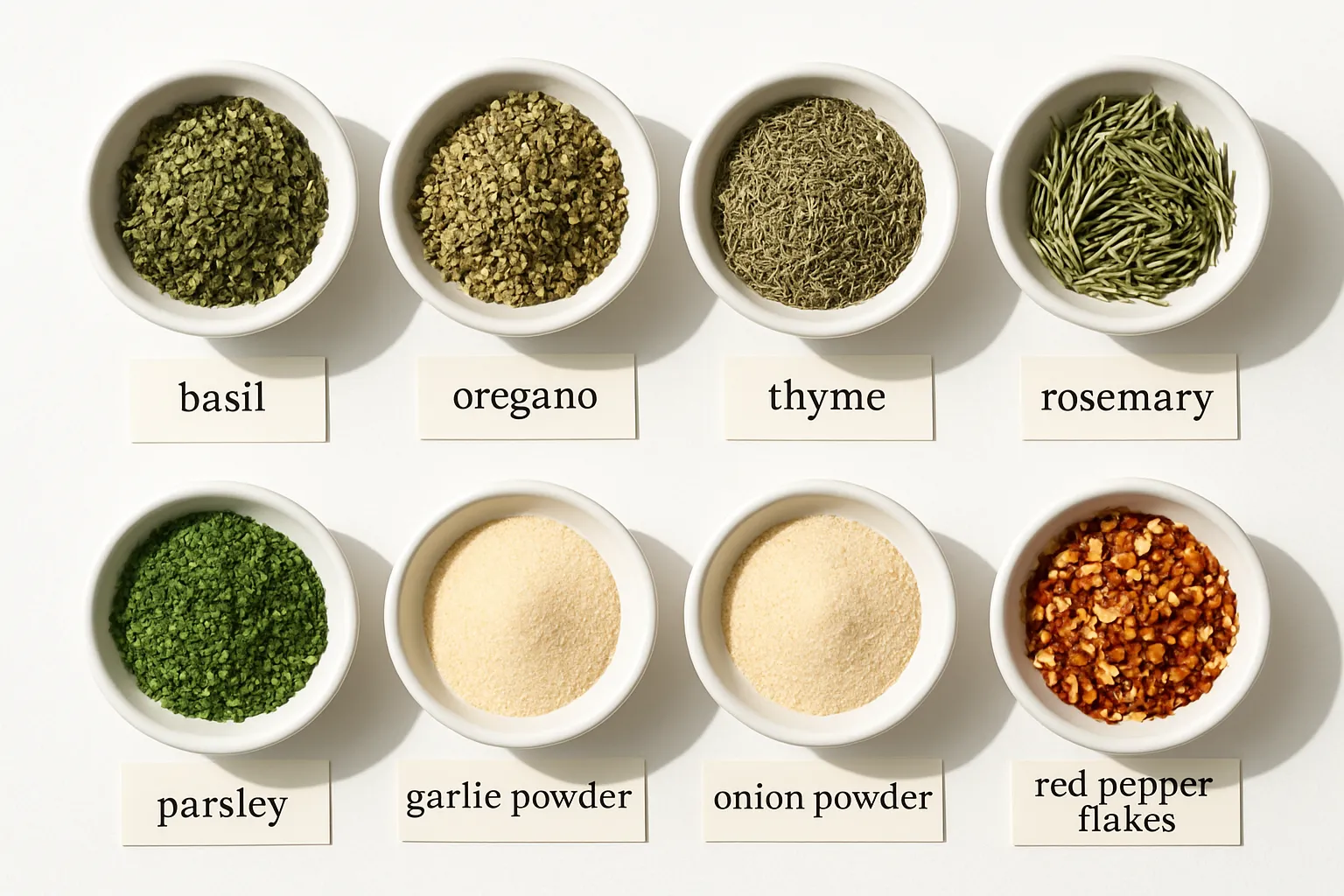
Make a fresh, salt‑free homemade italian seasoning in minutes. This balanced italian herb seasoning keeps your pantry streamlined, tastes brighter than store-bought, and scales cleanly for any jar size.
Balanced base blend (2/3 cup yield; scales cleanly)
Here’s the exact 2/3 cup italian seasoning recipe, plus a ratio so you can scale up or down with confidence.
-
Dried basil: 3 tbsp
-
Dried oregano: 3 tbsp
-
Dried parsley: 2 tbsp + 1/2 tsp
-
Dried thyme: 1 tbsp
-
Dried rosemary (lightly crushed): 1/2 tbsp (1 1/2 tsp)
-
Garlic powder: 1 tsp
-
Onion powder: 1 tsp
-
Red pepper flakes (optional but recommended): 1/2 tsp
-
Finely ground black pepper (optional): 1/2 tsp
Scaling ratio (by parts): Use teaspoons as “parts.” The 2/3 cup batch equals 32 parts total:
-
Basil 9, Oregano 9, Parsley 6.5, Thyme 3, Rosemary 1.5, Garlic 1, Onion 1, Red Pepper 0.5 (opt), Black Pepper 0.5 (opt) = 32 parts
1‑step prep
-
Add all ingredients to a jar, shake to combine, label with date, and store in a cool, dark place.
Table: Ingredient ratios and scaled batch sizes
Note: For best dispersion, lightly crush rosemary between your fingers before adding.
|
Ingredient |
Base Ratio (by parts) |
1/4 cup batch (≈12 tsp) |
2/3 cup batch (32 tsp) |
1 cup batch (48 tsp) |
|---|---|---|---|---|
|
Dried basil |
9 |
3 3/8 tsp (1 tbsp + 3/8 tsp) |
9 tsp (3 tbsp) |
13 1/2 tsp (4 tbsp + 1 1/2 tsp) |
|
Dried oregano |
9 |
3 3/8 tsp (1 tbsp + 3/8 tsp) |
9 tsp (3 tbsp) |
13 1/2 tsp (4 tbsp + 1 1/2 tsp) |
|
Dried parsley |
6.5 |
2 1/2 tsp (rounded from 2 7/16 tsp) |
6 1/2 tsp (2 tbsp + 1/2 tsp) |
9 3/4 tsp (3 tbsp + 3/4 tsp) |
|
Dried thyme |
3 |
1 1/8 tsp |
3 tsp (1 tbsp) |
4 1/2 tsp (1 tbsp + 1 1/2 tsp) |
|
Dried rosemary (lightly crushed) |
1.5 |
1/2–5/8 tsp (rounded) |
1 1/2 tsp (1/2 tbsp) |
2 1/4 tsp |
|
Garlic powder |
1 |
3/8 tsp |
1 tsp |
1 1/2 tsp (1/2 tbsp) |
|
Onion powder |
1 |
3/8 tsp |
1 tsp |
1 1/2 tsp (1/2 tbsp) |
|
Red pepper flakes (optional) |
0.5 |
1/8–3/16 tsp (rounded to 1/8 tsp) |
1/2 tsp |
3/4 tsp |
|
Finely ground black pepper (optional) |
0.5 |
1/8–3/16 tsp (rounded to 1/8 tsp) |
1/2 tsp |
3/4 tsp |
Quick batch scaling
-
Small tester (about 1/4 cup): Multiply each “part” by 0.375 to get tsp; use the table above for rounded spoon measures.
-
Standard pantry jar (2/3 cup): Use the exact measures listed under the balanced base blend or 32 total parts.
-
Big‑batch (1 cup+): Multiply each “part” by 1.5 to get tsp for 1 cup (48 parts). For 1 1/2 cups, multiply by 2.25; for 2 cups, multiply by 3. Use level spoon measures for consistency.
"Italian seasoning is not a traditional Italian staple but an American blend of dried herbs used to impart Italian flavors." - Source
Raw Spice Bar tip
Prefer a ready-to-cook italian spice mix vibe? Reach for Raw Spice Bar’s Tuscany Blend or Mediterranean Seasoning. Our fresh, small‑batch 2 oz pouches arrive with a recipe card so weeknight dinners come together fast - perfect alongside your diy italian seasoning for instant authenticity.
Customize your Italian herb seasoning: Flavor dials, add‑ins, and special blends
Dial your homemade italian seasoning to match any dish. Start with the balanced base, then twist these flavor “dials” to create a diy italian seasoning mix that’s truly yours.
Flavor dials (how to tune the profile)
-
Garlicky & savory: add extra garlic powder and onion powder for deeper umami.
-
Herbaceous & bright: increase basil and parsley; optional pinch of dried lemon zest for sparkle.
-
Rustic & woodsy: boost rosemary and thyme; add a whisper of sage or marjoram.
-
Gently spicy: increase red pepper flakes; optional Aleppo‑style pepper for warm, rounded heat.
Special blends you can build from the base
-
Pizza seasoning: base + lightly crushed fennel seed + sweet paprika for sausage‑like warmth and color.
-
Tuscan‑leaning: base + extra rosemary + marjoram; reduce parsley for a more woodsy profile.
-
Mediterranean vibe: base with oregano‑forward and thyme; optional sumac for tangy brightness.
Ingredient quality
-
Use fresh, vibrant dried herbs (look for bright green color and strong aroma) and avoid dusty or faded herbs to keep your italian spice mix lively.
Customization matrix
Use these guidelines per 1/2 cup (24 tsp) of base italian seasoning ingredients. Adjust up or down to taste.
|
Flavor goal |
Increase |
Decrease |
Optional add‑ins |
Best dishes |
|---|---|---|---|---|
|
Garlicky |
+1–2 tsp garlic powder; +1 tsp onion powder |
−1 tsp parsley (to keep savory focus) |
Pinch mushroom or tomato powder for umami |
Pasta sauces, meatballs, garlic bread, marinades |
|
Herbaceous |
+2–3 tsp basil; +2 tsp parsley |
−1 tsp thyme |
+1/2 tsp dried lemon zest; +1 tsp chives |
Tomato soup, caprese‑style pasta, salad dressings |
|
Rustic |
+1–2 tsp thyme; +1–1.5 tsp rosemary (lightly crushed) |
−1–2 tsp basil |
+1/2–1 tsp marjoram or 1/4–1/2 tsp sage |
Roasted chicken, potatoes, focaccia, bean stews |
|
Spicy (gentle) |
+1/2–1 tsp red pepper flakes |
−1 tsp parsley |
+1–2 tsp Aleppo‑style pepper |
Arrabbiata, pizza, shrimp, roasted veggies |
|
Pizza |
+1–1.5 tsp crushed fennel seed; +1–2 tsp sweet paprika; +1–2 tsp oregano |
−1–2 tsp parsley |
+1/2 tsp garlic granules for texture |
Pizza sauce, garlic knots, meatballs, marinara |
|
Tuscan |
+1–1.5 tsp rosemary; +1 tsp marjoram |
−2 tsp parsley |
+1/4–1/2 tsp sage |
Ribollita, grilled chicken, white beans, roast veg |
|
Mediterranean |
+2 tsp oregano; +1–1.5 tsp thyme |
−1 tsp basil |
+1 tsp sumac; +1/2 tsp lemon zest |
Greek salads, lemon chicken, roasted eggplant, vinaigrettes |
Note: Lightly crush rosemary for better dispersion in any blend.
Raw Spice Bar shortcut
Want a different regional angle without tweaking ratios? Try Raw Spice Bar Tuscany or Mediterranean Seasoning. Our small‑batch 2 oz pouches arrive fresh with a recipe card, so you get a well‑balanced italian seasoning mix flavor profile fast - perfect alongside your custom italian herb seasoning.
How to use homemade Italian seasoning mix (with exact amounts)
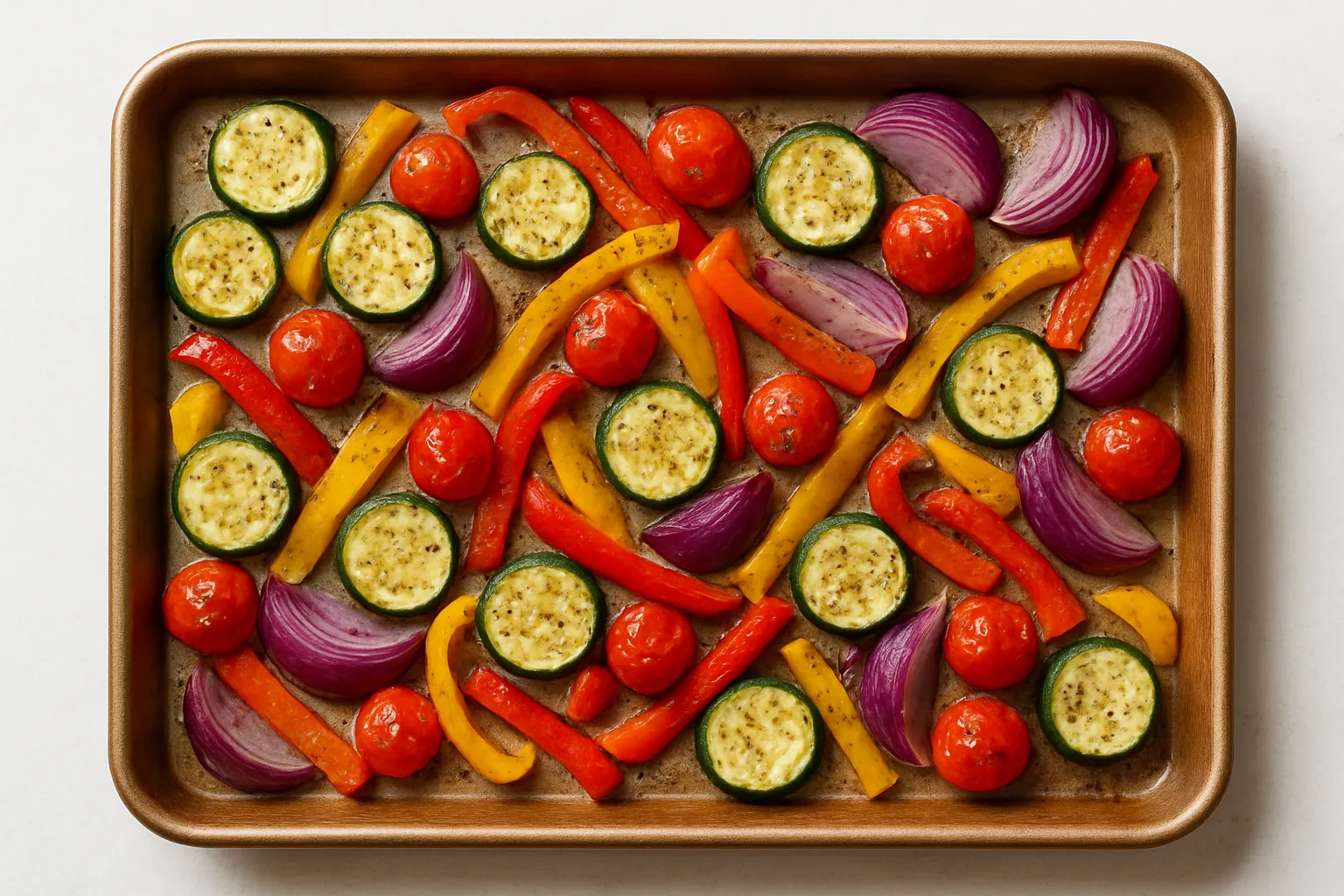
Everyday ways to use your italian spice mix
-
Pasta and red sauces: 1 to 1.5 tsp per 2 cups marinara.
-
Creamy sauces and soups: 1 tsp per quart; taste and adjust.
-
Roast vegetables: 1 to 1.5 tsp per pound of veg + 1–2 tbsp olive oil.
-
Chicken, turkey, or pork: 1 tbsp per pound (dry rub) or whisk into oil + vinegar marinade.
-
Garlic bread & focaccia: 1 tsp per 1/4 cup butter/olive oil.
-
Salad dressing: 1 tsp per 1/2 cup vinaigrette base.
-
Pizza and flatbreads: 1 tsp per 12–14 inch pizza (on sauce or post‑bake finish).
Pairing suggestions
-
Bright: add lemon zest or a squeeze of lemon.
-
Rich: add parmesan at the end.
-
Heat: finish with a pinch of red pepper flakes or a little Calabrian chili.
Raw Spice Bar tip
-
Try the mix in tandem with Raw Spice Bar’s Mediterranean Seasoning for grilled veg platters; or swap to Tuscany blend when you want rosemary‑forward notes.
Italian seasoning ingredients, explained (taste notes & best uses)
Dial in your homemade italian seasoning by understanding each herb’s role. These notes help you balance your italian spice mix for pasta, roasted veggies, soups, and marinades.
Core herbs
-
Basil: sweet, anise‑leaning; brightens sauces and dressings.
-
Best uses: tomato sauces, vinaigrettes, caprese‑style pasta, chicken cutlets. Add a touch more for “fresh” aroma in quick sautés.
-
-
Oregano: bold, slightly bitter; anchors pizza and tomato dishes.
-
Best uses: pizza sauce, roasted eggplant, grilled lamb, marinara. Standout in long simmers and baked casseroles.
-
-
Thyme: savory backbone that plays well in soups and roasts.
-
Best uses: bean soups, roasted chicken, mushrooms, pan sauces. A little goes a long way to deepen overall savoriness.
-
-
Rosemary: piney, woodsy; crush lightly to avoid ‘spiky’ texture.
-
Best uses: potatoes, focaccia, roast pork, white bean stews. Excellent in oven and grill applications; use sparingly in delicate sauces.
-
-
Parsley: fresh, grassy; softens bitterness and adds color.
-
Best uses: finishing touch for soups, herby garlic bread, meatballs, veggie medleys. Helps round out basil/oregano’s edges.
-
Helpful supporting players
-
Marjoram: gentler oregano; adds roundness to poultry and veg.
-
Best uses: Tuscan‑leaning blends, chicken, zucchini, herby dressings. Use when you want oregano’s character without the intensity.
-
-
Savory (optional): peppery, great in bean dishes.
-
Best uses: lentils, chickpeas, hearty stews; pairs well with thyme and rosemary for rustic profiles.
-
-
Garlic & onion powders: savory depth and umami.
-
Best uses: dry rubs, garlic bread butter, quick weeknight sauces. They disperse evenly and boost “cooked‑all‑day” flavor in minutes.
-
-
Red pepper flakes: heat and complexity.
-
Best uses: arrabbiata, pizza, roasted shrimp/veggies. Start small; heat concentrates in oil‑based marinades.
-
Balancing bitterness and brightness
-
Tip: a pinch of sugar or squeeze of lemon can balance bitterness in tomato sauces. For a lighter lift, add a touch more basil or parsley; for deeper roundness, a tiny splash of olive oil at the end can smooth sharp edges.
Raw Spice Bar note
-
Prefer curated blends with usage guidance? Raw Spice Bar’s Italy‑inspired blends come in fresh, small‑batch 2 oz pouches with recipe cards (omnivore and herbivore pairings included). Reach for our Tuscany blend when you want rosemary‑forward, woodsy notes, or Mediterranean Seasoning for an oregano‑and‑thyme backbone that’s weeknight‑ready.
Storage, shelf life, and freshness tests
"Even cutting back by 1,000 mg a day can improve blood pressure and heart health." - Source
Best practices
-
Use airtight jars (label with blend name and date).
-
Store in a dark cabinet/pantry away from heat and light.
-
Avoid sprinkling directly over steam to prevent clumping.
Shelf life guidelines
-
Most dried herbs retain best flavor 6–12 months once blended; refresh as aroma fades.
-
Signs it’s time to re‑blend: color dulls, aroma weak, flavor flat.
Quick freshness tests
-
Crush a pinch in your palm - aroma should bloom.
-
Rub rosemary/thyme to check oils; if faint, replace.
Raw Spice Bar angle
-
Keep flavor at its peak with Raw Spice Bar’s small‑batch 2 oz blends and flexible spice subscription - so you cook with fresh, vibrant seasonings year‑round.
Substitutions & quick swaps (when you’re missing an ingredient)
Smart swaps
-
No marjoram? Use extra oregano 1:1, then brighten with +1/2 tsp parsley per 1/2 cup mix.
-
No rosemary? Use thyme + a pinch of sage (3:1 thyme:sage) for similar woodsy depth.
-
No parsley? Add +1–2 tsp basil and a dash (1/4–1/2 tsp) of dried celery leaf for fresh, green lift.
-
No garlic powder? Use granulated garlic; reduce amount by ~25% to keep your italian seasoning mix balanced.
-
Heat alternatives: Substitute 1/2–1 tsp Aleppo‑style pepper for warm, mellow heat, or a pinch (1/8–1/4 tsp) cayenne for a sharper kick per 1/2 cup homemade italian seasoning.
Texture and grind tips
-
Lightly blitz large leaves (especially rosemary) so your diy italian seasoning sprinkles evenly and integrates into sauces.
-
Sift after blitzing through a fine mesh to remove woody bits if you’ll use the italian herb seasoning in salad dressings or light sauces.
-
For dry rubs, keep some flakes intact (don’t over‑powder) for better crust and visual appeal.
Salt‑free bonus
-
Keep your italian seasoning ingredients salt‑free. Add salt directly to dishes (or finish with flaky salt) so you can season to taste and adjust for different proteins, sauces, and vegetables.
-
For marinades and soups, salt the base first, then add your homemade italian seasoning - this prevents overseasoning and keeps flavors bright.
Prefer a ready-to-cook shortcut when you’re out of an herb? Raw Spice Bar’s small‑batch Tuscany and Mediterranean Seasoning blends deliver balanced, salt‑free flavor so you can keep dinner moving without compromising taste.
Troubleshooting & FAQs for DIY Italian seasoning
Common issues
-
Too bitter: decrease oregano/thyme by 10–20%, add parsley/basil to soften, and finish the dish with lemon zest or a squeeze of lemon. For tomato sauces, a tiny pinch of sugar (1/8–1/4 tsp per 2 cups) helps balance.
-
Too woody: crush rosemary finer (mortar/pestle or a few pulses in a spice grinder) and reduce by ~25%. Sift out any hard needles if you use your italian herb seasoning in dressings.
-
Lacks flavor: your herbs may be stale. Remake your homemade italian seasoning with fresher herbs (bright color, aromatic), or add 1/2–1 tsp each garlic/onion powder per 1/2 cup of mix for depth.
-
Clumping: caused by moisture. Spread the italian spice mix on a sheet tray to air‑dry 30 minutes, then re‑jar with a food‑safe desiccant. Avoid shaking over steamy pots.
Quick FAQs
-
What is in Italian seasoning? Core dried herbs: oregano, basil, thyme, rosemary, and parsley - often supported by garlic/onion powder and optional red pepper flakes. These italian seasoning ingredients create a versatile italian seasoning mix for everyday cooking.
-
Is italian seasoning gluten‑free? Yes. Single‑ingredient herbs and spices are naturally gluten‑free; as always, check labels for cross‑contact if buying blends.
-
How much do I use? Start at 1 tsp per pound of protein or per 2 cups sauce; taste and adjust. For roasts/veg, 1 to 1.5 tsp per pound is a solid starting point.
-
Fresh vs dried? Use dried in your diy italian seasoning for consistency and shelf life. If substituting fresh herbs in recipes, use roughly 3x the amount and add toward the end of cooking.
-
Can I add salt? Keep your italian seasoning recipe salt‑free. Season dishes independently so you can dial in salt by taste and avoid over‑salting.
-
How do I prevent bitterness in long simmers? Keep oregano/rosemary modest, add parsley for balance, and finish with lemon, a splash of olive oil, or a pinch of sugar.
-
Can I grind the blend finer? Yes - pulse briefly for smoother dispersion in dressings or soups, but avoid turning it to powder if you want texture for rubs.
Raw Spice Bar suggestion
For Italian‑night variety without re‑measuring, rotate Raw Spice Bar’s Tuscany and Mediterranean Seasoning blends alongside your homemade italian seasoning. Our fresh, small‑batch 2 oz pouches ship with recipe cards (omnivore and herbivore options) to turn your italian spice mix cravings into weeknight‑easy meals.
Better with Raw Spice Bar: When to DIY, when to buy, and tasty pairings
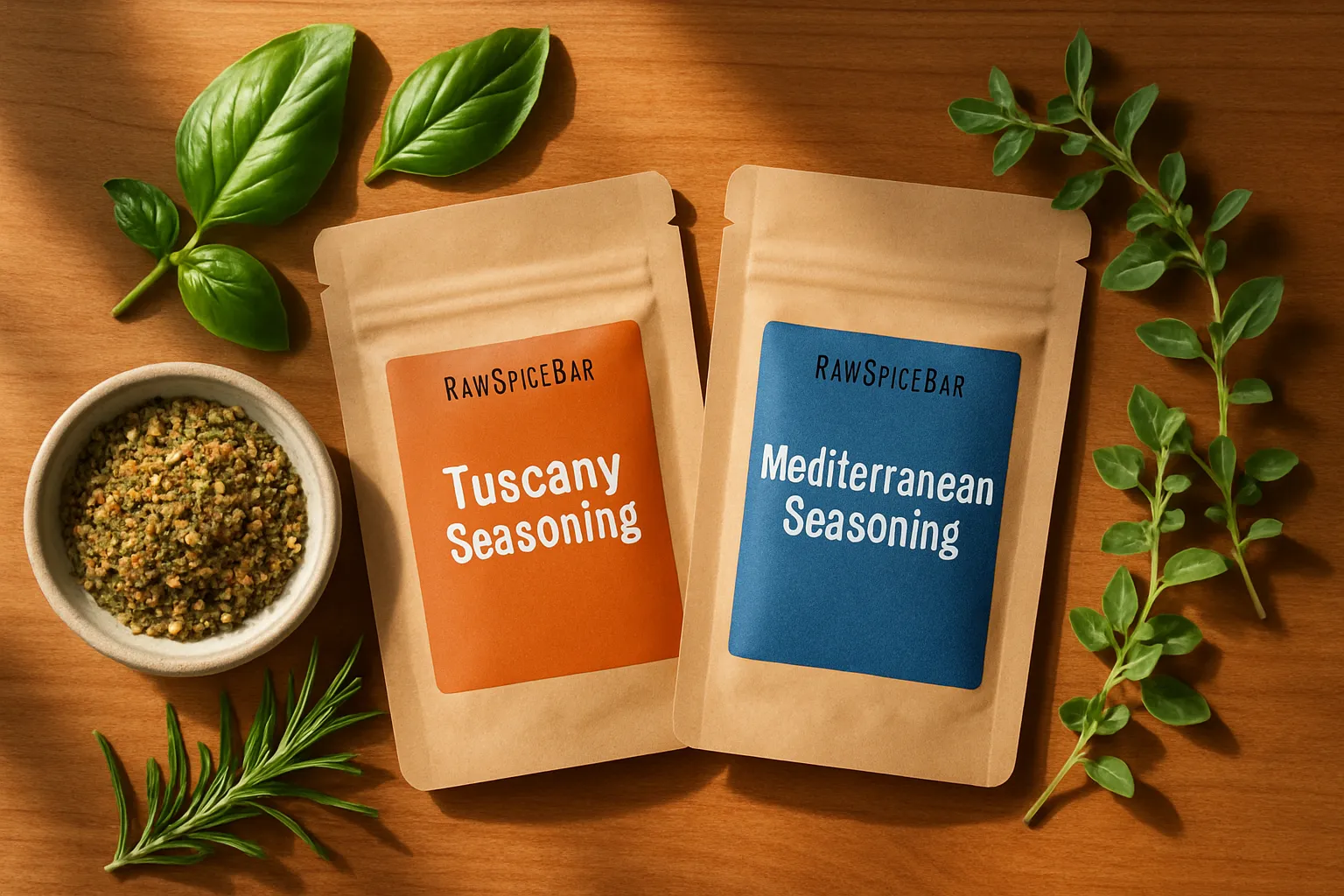
When to DIY your italian seasoning mix
-
You want total control over heat, garlic, and herb balance.
-
You’re cooking for low‑sodium diets.
When to buy a ready‑to‑use blend
-
You want maximum freshness with minimal effort and chef‑crafted balance.
-
You love discovering new global flavor profiles.
Raw Spice Bar picks for Italian and beyond
-
Tuscany (Italy): rosemary‑forward, perfect on roast chicken, potatoes, and focaccia.
-
Mediterranean Seasoning: oregano‑thyme brightness for grilled vegetables and salads.
-
American BBQ or Sazón for Italian‑adjacent menus with fusion flair.
-
Gift sets (Perfect Pantry, Global Cuisine, Backyard BBQ): thoughtful presents with 22 amazing spices to jump‑start any kitchen.
How to pair with your homemade blend
-
Use your DIY italian herb seasoning in sauces and dressings; finish cooked dishes with Raw Spice Bar Tuscany for aromatic lift.
-
Mix 50/50 DIY blend + Mediterranean Seasoning for weeknight sheet‑pan dinners; follow the included recipe card for timings.
Why Raw Spice Bar
-
Fresh, small‑batch 2 oz blends; clean ingredients; recipe cards with omnivore and herbivore options; subscription for ongoing discovery.
Conclusion: Start cooking with Raw Spice Bar’s fresh blends
-
You now have a dialed‑in, salt‑free italian seasoning recipe plus ways to customize, store, and use it everywhere. From pasta and roasts to dressings and pizzas, your homemade italian seasoning and italian spice mix are ready to go.
-
For days you want chef‑crafted speed and variety, stock Raw Spice Bar’s Tuscany and Mediterranean Seasoning blends. The fresh, small‑batch 2 oz packets and recipe cards make dinner decisions effortless - and keep your italian seasoning mix flavors vibrant.
-
Ready to upgrade your pantry? Explore the spice subscription and gift sets to keep inspiration flowing - and bring restaurant‑quality global flavor to weeknights with zero guesswork.
Your next great meal is one shake away. Open a pouch, follow the recipe card, and taste the difference fresh, small‑batch blends make.


