

Curry Powder Recipe: A Customizable Base + Spicy Variations
If you’ve ever wished for a reliable curry powder recipe that tastes bright, balanced, and works across everything from weeknight curries to roasted vegetables, you’re in the right kitchen. This guide gives you a dependable, all-purpose Indian curry powder base plus bold variations - spicy, earthy, and citrusy - so you can match your blend to the dish and your mood. Prefer convenience? Raw Spice Bar’s small-batch curry seasoning blends arrive ultra-fresh in 2 oz pouches with recipe cards, so you get restaurant-quality results without the guesswork.
"Once ground, spices’ volatile oils oxidize and decline; over a year of storage, ground black pepper shows reduced terpenes and increased oxidation products - clear signs of flavor degradation." - Source
What you’ll learn
A dependable, all-purpose Indian curry powder recipe (mild base)
How to build spicy, earthy, and citrusy variations
Pro tips for toasting, grinding, and storing curry spices for peak flavor
Easy ways to use your curry seasoning on weeknights
Why make your own curry seasoning
Fresher flavor, tailored heat and aroma, and no fillers: Customize your curry spices so your curry powder recipe fits your palate - mild or a spicy curry powder kick - without anti-caking agents or preservatives.
Control over allergens and sodium: Mix only what you trust, dial in salt at the pot (not in the jar), and skip hidden “natural flavors.”
When convenience wins: Raw Spice Bar’s small-batch blends deliver peak freshness and consistency. Each 2 oz pouch is crafted for authentic, globally inspired flavor and comes with a step-by-step recipe card - perfect for busy weeknights and confident results.
Quick note on authenticity and flexibility
Curry powders vary by region and household: There’s no single “correct” curry seasoning - only what tastes great and suits the dish.
This guide balances approachability with global inspiration: Start with a mild, versatile base, then layer heat, earthiness, or citrus to match your pantry and taste.
Choose your path: Grind whole spices for maximum aroma or grab Raw Spice Bar’s fresh blends when you want speed without sacrificing flavor.
Curry Spices 101: Origins, Key Aromatics, and Balance
"Curry powder emerged in Britain during the colonial era as a convenient approximation of Indian flavors, whereas Indian cuisines rely on diverse regional masalas tailored to specific dishes." - Source
Is curry powder Indian?
Short history: While “curry powder” is a British colonial-era pantry shortcut, India’s culinary traditions use region-specific masalas mixed for the dish at hand. Think Tamil-style kulambu/kuzhambu podi for tangy tamarind-based gravies, South Indian roasted blends with lentils and curry leaves, and countless household masalas across the subcontinent. The result: there’s no single “curry powder,” only a spectrum of blends.
The essential curry spices (roles and flavor)
-
Core foundation:
Coriander: citrusy, nutty base that rounds and sweetens.
Cumin: earthy, toasty depth; anchors savory notes.
Turmeric: golden color, gentle bitterness, warm backbone.
Fenugreek: maple-bitter complexity; adds body to gravies.
Mustard seeds: pungent snap and subtle heat once bloomed.
Black pepper: clean heat and piney spice; lifts aromatics.
-
Supporting notes:
Ginger: warm zing that brightens the mid-palate.
Fennel: cool sweetness, anise-like lift.
Cinnamon: soft woodsy warmth, slight sweetness.
Clove: potent, camphorous warmth - use sparingly.
Cardamom: floral-citrus perfume and lift.
-
Optional accents:
Bay leaf: herbaceous backbone for stews and rice.
Star anise: licorice depth; great in richer meat curries.
Dried citrus peel: bright top-notes that cut richness.
Curry leaves: nutty-citrus aroma quintessential to South Indian profiles.
Flavor balancing framework
Base: coriander + cumin for structure.
Body: turmeric + fenugreek for color and rounded bitterness.
Lift: ginger + cardamom for aromatic brightness.
Warmth: black pepper + cinnamon + clove for depth and gentle heat.
Brightness: fennel + citrus peel (or a squeeze of lemon at the end) to freshen and finish.
Pro tip: Balance bitterness (turmeric/fenugreek) with sweetness (fennel/cinnamon) and acidity (tomato/tamarind or citrus). Add heat last so it doesn’t mask nuance.
When to DIY vs. buy
DIY: Grind whole spices for ultimate control and freshness. Toast lightly until fragrant (not smoky), cool completely, then grind for a vibrant curry seasoning that matches your exact taste and pantry.
Buy: Choose Raw Spice Bar’s globally inspired small-batch blends for precision and speed. Explore options like our Thai Curry, Indian-inspired blends, and monthly discoveries. Each fresh 2 oz pouch includes pairing tips and vegetarian/omnivore recipe cards - so you can cook confidently, from weeknight veggies to slow-simmered stews.
Indian Curry Powder Recipe (Mild, All-Purpose Base)
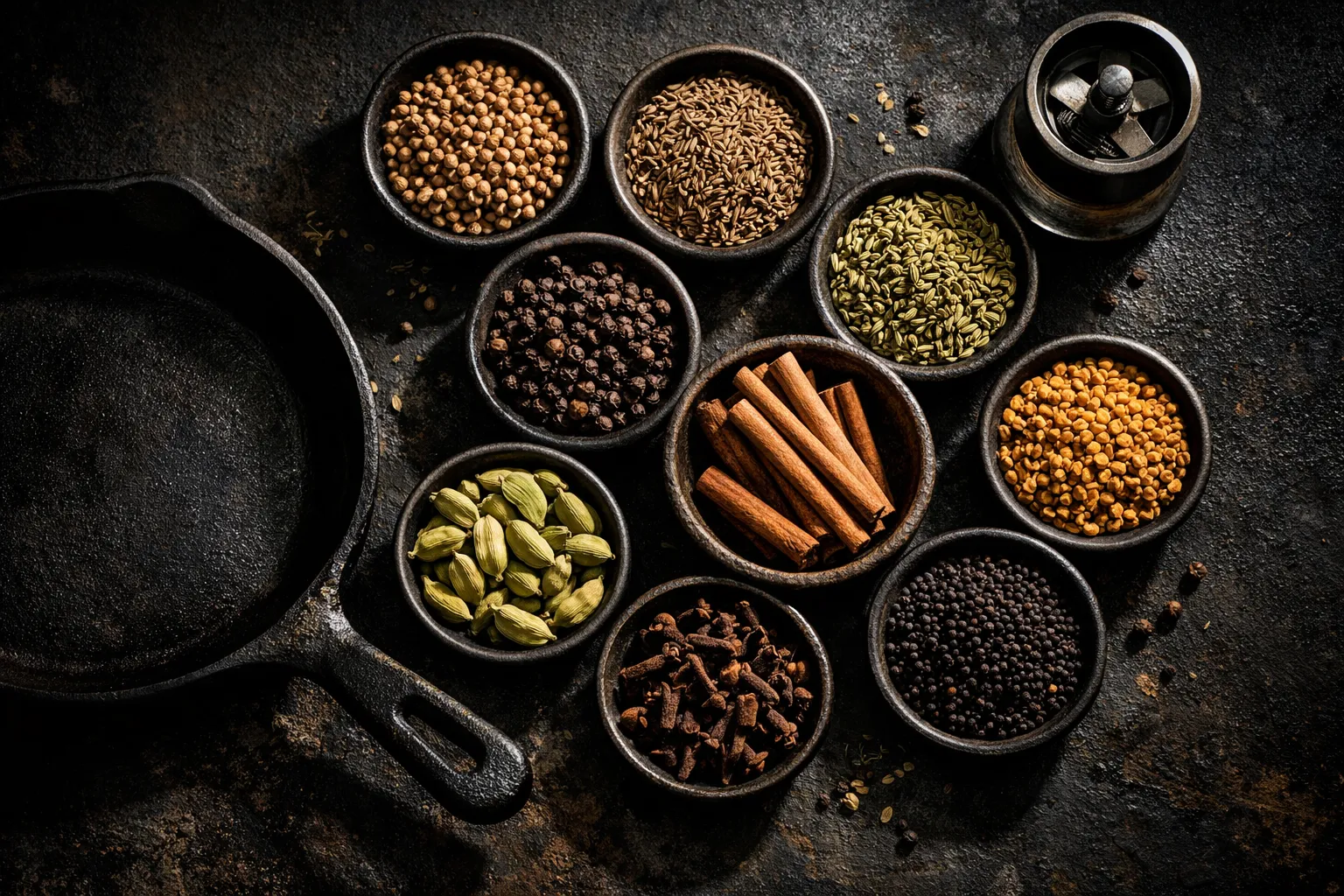
Yield, format, and grind
Makes ~6–8 tablespoons (enough for 8–12 servings)
Whole-spice-first for best aroma: Toast, cool fully, then grind. Pulse in short bursts so the grinder doesn’t heat the spices. For an ultra-smooth curry seasoning, sieve and regrind larger bits.
Ingredients (with gram weights for precision)
Base (mild, versatile):
18 g coriander seeds
10 g cumin seeds
6 g turmeric powder
3 g fenugreek seeds
3 g yellow mustard seeds
3 g black peppercorns
2 g dried or ground ginger
Optional, balanced accents (not garam-masala heavy):
2 g fennel seeds
0.8 g Ceylon cinnamon
0.6 g whole cloves
0.6 g green cardamom seeds
Step-by-step: toast, cool, grind, and cure
Toast in groups by hardness and oil:
Group A (harder/aromatic): coriander, cumin, black pepper, fennel. Dry toast over medium-low, stirring, 2–4 minutes until coriander turns a shade deeper and everything smells nutty. Do not brown.
Group B (delicate/bitter-prone): fenugreek + mustard. Toast on low 60–90 seconds until fenugreek is golden and nutty; pull immediately to prevent bitterness.
Group C (potent aromatics): cinnamon, cloves, cardamom (if using). Lightly warm 30–60 seconds just until fragrant.
Cool: Spread all toasted spices on a cool tray. Let them come to room temp to protect volatile oils.
Grind: Add all cooled spices plus turmeric and ginger to a spice grinder. Pulse to a fine powder. Sieve if you like, then regrind coarse bits.
Cure: Transfer to an airtight jar and rest 24 hours before using. This “marrying” step rounds edges and deepens aroma.
Base blend formula (precise weights, volumes, %; 1x and 3x)
Ingredient |
1x grams |
1x volume (approx) |
% of blend |
3x grams |
|---|---|---|---|---|
Coriander seeds |
18 |
3 tbsp |
36.7% |
54 |
Cumin seeds |
10 |
1 tbsp + 2 tsp |
20.4% |
30 |
Turmeric (ground) |
6 |
2 3/4 tsp |
12.2% |
18 |
Fenugreek seeds |
3 |
3/4 tsp |
6.1% |
9 |
Yellow mustard seeds |
3 |
1 tsp |
6.1% |
9 |
Black peppercorns |
3 |
1 1/4 tsp |
6.1% |
9 |
Ginger (dried/ground) |
2 |
1 tsp |
4.1% |
6 |
Fennel seeds (optional) |
2 |
1 tsp |
4.1% |
6 |
Ceylon cinnamon (optional) |
0.8 |
1/3 tsp (ground) |
1.6% |
2.4 |
Cloves (optional) |
0.6 |
1/4 tsp (ground) |
1.2% |
1.8 |
Green cardamom seeds (optional) |
0.6 |
1/3 tsp (ground) |
1.2% |
1.8 |
Notes:
1x batch yields ~6–8 tbsp depending on grind fineness.
Percentages let you scale precisely (multiply grams by 3 for a 3x batch).
Batch scaling and consistency
Use the % column to scale 1x/2x/3x without changing flavor balance.
Label your jar with the date and “Mild Base.” Taste after a week; if you want more heat, increase black pepper in the next batch or add chili to the dish rather than the jar to keep this base versatile.
Shortcut for busy nights
No time to toast and grind? Use Raw Spice Bar’s fresh, small-batch blends (2 oz) for consistent, restaurant-quality results. Each pouch includes pairing tips and omnivore/herbivore recipe cards - so you can put dinner on the table fast and still enjoy authentic, vibrant curry spices.
Spicy Curry Powder + Other Flavor Variations
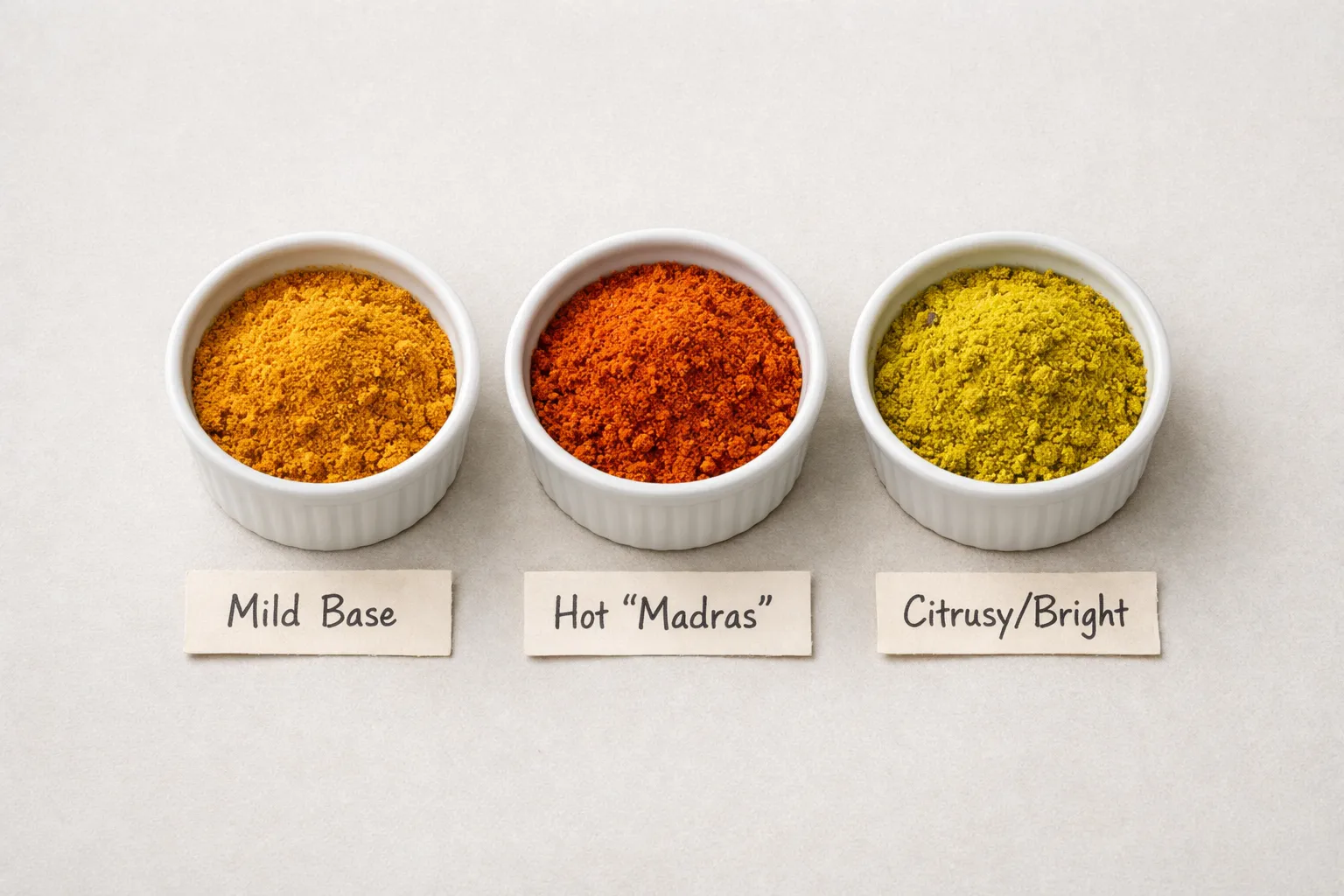
Hot “Madras-Style” variation (spicy curry powder)
Increase: dried red chilies (or hot paprika), black pepper, and a touch of mustard.
Keep base intact but add warmth with a pinch more cinnamon and clove if desired.
Flavor intent: bold heat with warm depth that stands up to tomatoes and rich meats.
Earthy & toasty variation
Increase: fenugreek and mustard slightly; add a touch more turmeric and fennel.
Optional: toast 1–2 tsp chana dal with your whole spices; grind for nutty body and natural thickening.
Flavor intent: roasted, savory, and grounded - great for lentils and root vegetables.
Citrusy & bright variation
Increase: coriander and fennel for lift.
Optional: 1/2–1 tsp dried lemon peel or a crumbled makrut lime leaf; add at grind or bloom in oil.
Flavor intent: fresh, aromatic top-notes - perfect for seafood, vegetable curries, and light coconut sauces.
Raw Spice Bar shortcuts by profile
Spicy weeknights: grab Raw Spice Bar’s Thai Curry for bright, fragrant heat, or pair your base with our Mediterranean Seasoning to add citrus-herb lift.
Explore via subscription: discover global blends month-to-month and layer them with your base for quick new flavor directions.
Variation Builder Chart
Profile |
What to increase/decrease |
Heat rating (1–5) |
Best pairings |
Raw Spice Bar shortcut |
|---|---|---|---|---|
Mild Base (reference) |
Balanced as in base recipe |
1 |
Chicken, tofu, cauliflower, chickpeas |
Use as-is or blend with Mediterranean Seasoning for herb lift |
Hot “Madras-Style” |
+ dried red chilies or hot paprika, + black pepper, + mustard; optional + pinch cinnamon/clove |
4–5 |
Beef, lamb, tomato-based curries, hearty veg |
Thai Curry for quick spicy-fragrant boost |
Earthy & Toasty |
+ fenugreek, + mustard, + turmeric, + fennel; optional + 1–2 tsp chana dal |
2 |
Lentils, potatoes, squash, mushrooms |
Berbere or American BBQ (smoky depth) to layer warmth |
Citrusy & Bright |
+ coriander, + fennel; optional + dried lemon peel or makrut lime leaf |
1–2 |
Shrimp, white fish, greens, coconut curries |
Mediterranean Seasoning for citrus-herb brightness |
Pro tip: Adjust heat in the pan, not the jar. Keep the base versatile, then add fresh chili, chili oil, or extra black pepper as you cook so each dish lands exactly where you want on the heat scale.
Toasting, Grinding, and Extraction: Get the Most from Your Curry Spices
"Heating spices drives off moisture and releases volatile aromatic compounds, intensifying aroma and creating deeper flavor notes." - Source
Toasting cues and control
-
Pan type:
Heavy stainless steel or cast iron for even heat. Avoid thin pans that create hot spots; nonstick is fine only over gentle heat.
-
Heat level:
Medium–low is your friend. Too hot = scorched oils and bitter undertones. Aim for fragrant, not smoky.
-
Batch and layer:
Toast small amounts in a single layer. Overcrowding steams spices and dulls aromatics.
-
Stirring pattern:
Keep spices moving - stir or shake every 5–10 seconds. Rotate the pan to avoid hot patches.
-
Aromatic checkpoints (guide times vary by stove):
Coriander: turns a shade deeper and smells nutty/citrusy (2–4 minutes).
Cumin: warm, toasty aroma; color deepens slightly.
Black pepper: clean pine and peppery lift blooms.
Fennel: sweet anise perfume releases.
Fenugreek: stop at golden and nutty - pull quickly to avoid sharp bitterness (60–90 seconds on low).
Mustard seeds: slight popping and nutty scent signals done (about 60 seconds).
Whole bark/clove/cardamom: only warm until fragrant (30–60 seconds).
-
Prevent bitterness (especially fenugreek and mustard):
Toast these on low, separately or last, and pull the moment they smell nutty. If you see smoke, remove the pan from heat and toss to cool.
-
Cool fast:
Spread on a cool tray/plate to halt carryover heat and preserve the volatile oils that make an Indian curry powder sing.
Grinding tools and particle size
-
Blade grinder (coffee/spice grinder):
Best for speed. Pulse in 5–10 second bursts, shaking between pulses. Don’t overfill (½ full max) and avoid heat build-up; let the motor rest.
-
Burr/spice mill:
More uniform particle size and less heat. Great for regular curry seasoning batches; check the manual before grinding tough bark.
-
Mortar & pestle:
Maximum control, classic texture. Pre-crack hard spices (cinnamon/clove) with the pestle, then pound and grind in circles.
-
Sifting for uniformity:
Pass ground curry spices through a fine mesh sieve; regrind the coarse bits. A fine grind dissolves smoothly into sauces; a medium grind works well for rubs and roasted veg.
-
Resting the blend:
Let your freshly ground curry powder recipe rest 12–24 hours in an airtight jar. Aromatics equilibrate (“marry”), rounding edges and deepening flavor.
Extraction: bloom for peak flavor
-
Whole spices:
Bloom in 1–2 tablespoons neutral oil or ghee over medium heat until fragrant and lightly sizzling (30–60 seconds), then add onions/garlic/ginger. This dissolves fat‑soluble aromatics and lays a flavorful base.
-
Ground blends:
Add your curry seasoning after aromatics soften. Stir with oil for 20–30 seconds; if it catches, splash in water/stock/tomato to prevent scorching.
-
Liquid choice:
Tomato concentrates bitterness and heat (great for spicy curry powder). Coconut milk softens edges and highlights sweet, citrusy notes.
Clean-up, cross-contamination, and aroma management
-
Deodorizing the grinder:
Blitz 2–3 tablespoons of plain white rice to a fine flour; discard. For stubborn aromas, add a few breadcrumbs and repeat. Wipe the chamber dry; avoid moisture.
-
Turmeric stain savvy:
Store ground blends in glass, not porous plastics. Wipe spills immediately; a little oil followed by dish soap lifts fresh stains. Sunlight helps fade stubborn yellow on boards/containers.
-
Cross-contamination and allergens:
Keep a dedicated grinder for spices (don’t share with coffee). Label and date blends. If cooking for sensitive eaters, maintain separate tools and avoid cross-contact with chiles or sesame.
-
Storage:
Airtight glass; cool, dark pantry; small jars minimize oxygen exposure. For best pop, use ground blends within 3–6 months; whole spices can hold well for a year or two.
-
Pro move for consistency:
Note pan, times, and sensory cues for each batch (sound, aroma, color). This “roast profile” helps you repeat a perfect mild or spicy curry powder every time.
Tip: Want the control of DIY with the ease of a weeknight? Raw Spice Bar’s fresh, small‑batch blends (clean ingredients, 2 oz pouches) include recipe cards with bloom timings and pairing ideas - so your curry spices hit peak flavor without the guesswork.
Store Your Curry Seasoning Like a Pro
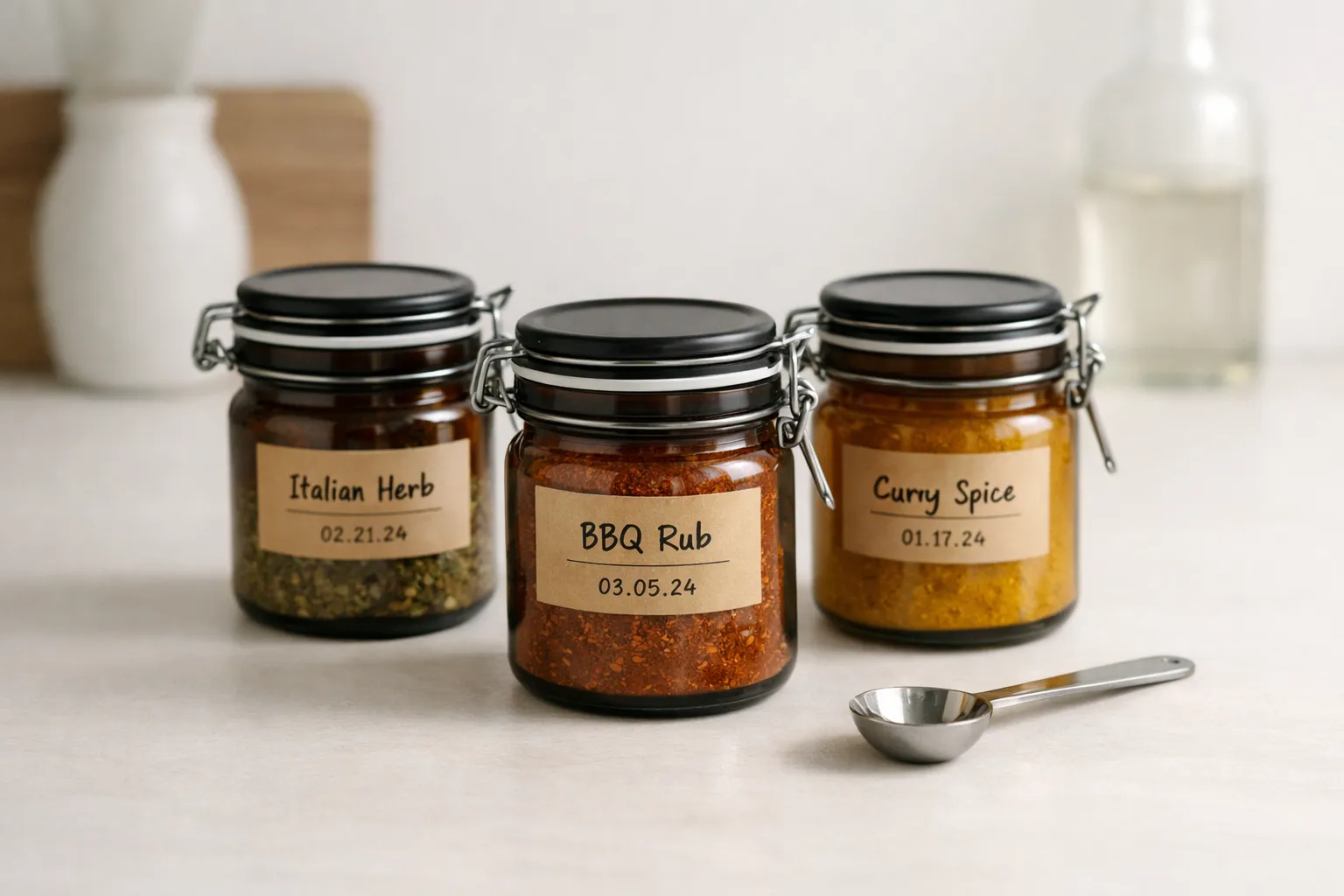
Best containers and conditions
Use opaque or dark glass jars with airtight lids to protect volatile oils.
Keep in a cool, dry spot away from light, heat, and humidity - no countertop by the stove.
Minimize oxygen exposure: smaller jars filled near the top keep aromas vibrant.
Shelf-life snapshots
Whole spices: peak for 12–24 months when stored well.
Ground blends: best intensity in 3–6 months (plan small, frequent batches).
Labeling: include blend name, batch size, and date so you can track freshness and tweak next time.
Smart batch sizes: aim for what you’ll use in 4–8 weeks for your Indian curry powder or spicy curry powder variations - your nose and palate will thank you.
How Raw Spice Bar keeps it fresh
Fresh 2 oz small-batch blends are designed to be used up before peak flavor fades - no giant jars losing aroma.
Subscription = built-in rotation. Discover a new globally inspired blend each month; stock up on past favorites à la carte when you find keepers.
Recipe cards guide omnivore/herbivore cooking paths so you use blends confidently and consistently.
Rejuvenating an older blend
Bloom 1–2 teaspoons of curry seasoning in oil, butter, or ghee over medium heat for 20–30 seconds to revive sleepy aromatics.
Avoid scorching: if it smells smoky or sharp, pull the pan off heat and add a splash of liquid (water/stock/coconut milk) to save the flavor.
How to Use Curry Powder (Everyday Ratios and Pairings)
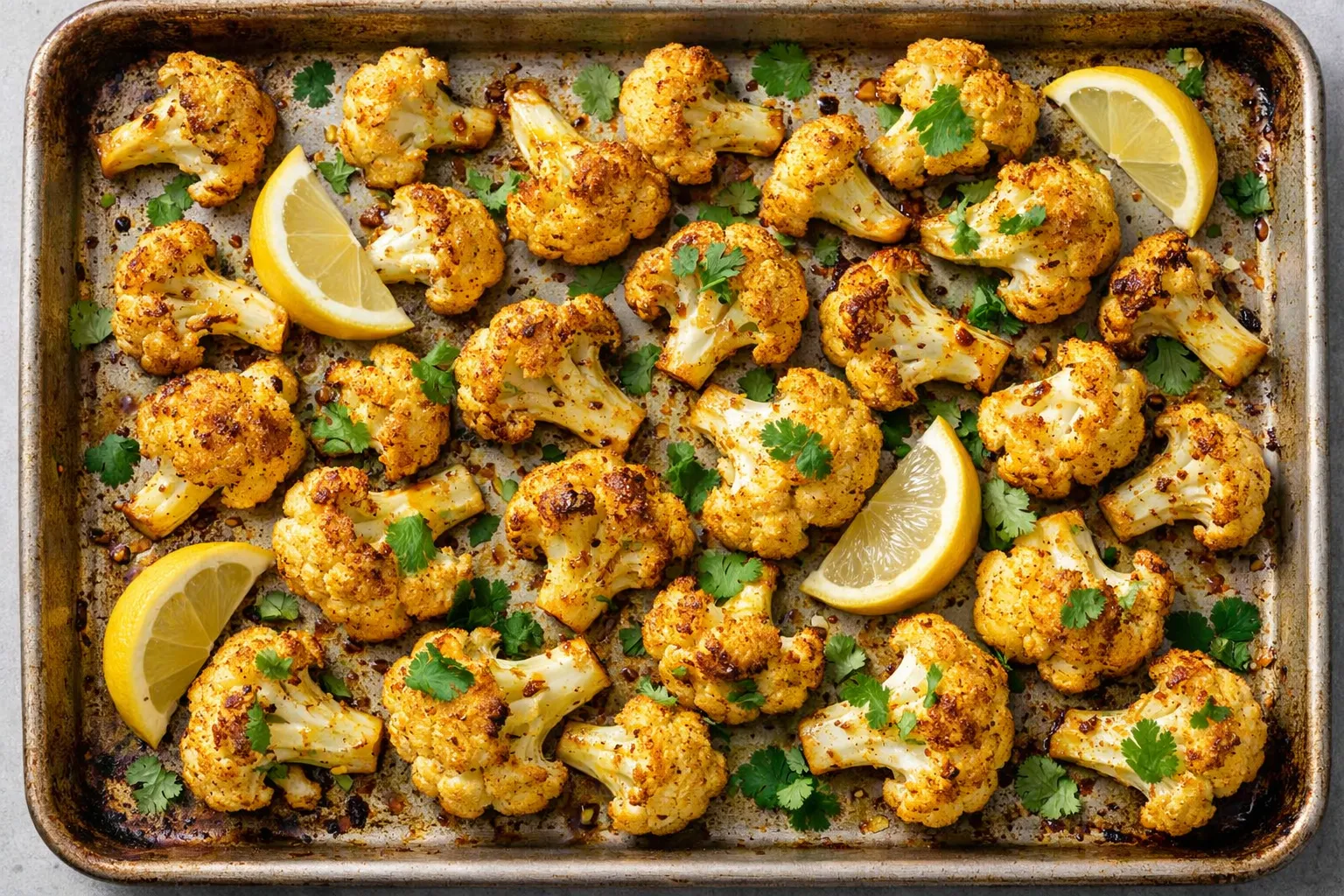
Quick ratio guide (starting points)
-
Dry rubs
1–1.5 tbsp curry seasoning per 1 lb (450 g) protein + 1–1.5 tsp kosher salt. Add 1–2 tsp oil to help adhesion. Great base or spicy curry powder for grilled/seared meats and tofu.
-
Roasted vegetables
1–1.5 tsp curry powder per 1 lb (450 g) veg + 1–1.5 tbsp oil + 3/4–1 tsp kosher salt. Toss thoroughly; roast at 425°F/220°C.
-
Soups and stews
1–2 tbsp Indian curry powder per 4 cups (1 qt) liquid; bloom in fat with aromatics before adding liquid for deeper extraction.
-
Skillet curries (serves 4)
1–1.5 tbsp curry spices (base) or 2 tbsp for a spicy curry powder profile. Bloom 20–30 seconds in 1–2 tbsp oil/ghee with onion/garlic/ginger, then add liquids.
-
Marinades
1 tbsp curry powder per 1 cup marinade (see template below). Salt to taste.
-
Blooming vs. finishing
Bloom in fat: maximizes fat‑soluble aromatics and body - use for stews, skillet curries, braises.
Sprinkle at finish: adds top notes and color - use on roasted veg, grain bowls, or to refresh leftovers.
Flavor pairings that sing
Proteins: chicken, chickpeas, lentils, shrimp, tofu/tempeh. For richer meats (beef/lamb), consider the hot “Madras-style” variation.
Vegetables: cauliflower, potatoes, carrots, squash, greens (spinach/kale), tomatoes. Brighten with lemon or yogurt at the end if using earthy blends.
Carbs: basmati rice, couscous, quinoa, naan, flatbreads. Stir a pinch of curry seasoning into buttered rice or a quick yogurt sauce for easy layering.
10-minute marinade template
1/2 cup plain yogurt (or coconut milk for dairy-free)
1 tbsp curry powder (base or spicy)
1 tbsp lemon juice (or 2 tsp rice vinegar)
1 tbsp neutral oil
3/4–1 tsp kosher salt + optional 1 tsp honey for balance
Method: Whisk, coat 1 lb (450 g) protein or veg, rest 10–30 minutes (up to overnight). Cook hot and fast for caramelization.
Turnkey help when you need it
Raw Spice Bar recipe cards include omnivore and herbivore options plus pairing ideas, so you can build bowls, sheet‑pan dinners, and skillet curries without guesswork.
Fusion made easy: layer your base curry powder recipe with Raw Spice Bar blends - Seoul Fire BBQ for sweet-heat on tofu or wings; Mediterranean Seasoning for citrus-herb lift on roasted veg and grain bowls.
Ingredient Swaps and Dietary Considerations
Allergens and sensitivities
Clean-label by design: A DIY curry powder recipe is naturally a spice-only blend - no anti-caking agents, fillers, or preservatives. If you prefer ready-to-go, Raw Spice Bar’s small-batch blends are clean-label and crafted without additives.
Mustard allergy: Omit mustard seeds and increase black pepper slightly for bite; a tiny pinch of nigella (kalonji) can add savory edge without mustard.
Fenugreek sensitivity: Reduce or skip fenugreek seeds and add a pinch more coriander for body. For finish, use a crumble of dried fenugreek leaf (kasoori methi) only if tolerated - it reads gentler than the seed.
Nightshade avoidance: Skip chili powders and lean on black pepper and fresh ginger for perceived heat; warm depth can come from cinnamon and a touch of cloves rather than chilies.
Low-FODMAP: Bloom your curry seasoning in oil and cook with green tops of scallions or chives; skip onions/garlic. If you use asafoetida (hing) for oniony depth, ensure it’s certified gluten-free (many brands are cut with wheat flour).
Heat adjustments
-
Choose the right chili for the job:
Mild color and fruit: Kashmiri or Byadgi chili.
Neutral, clean heat: cayenne or hot paprika.
Peppery lift without chili: increase black pepper.
-
Balance, don’t just blast:
Dial up coriander/fennel to keep spicy curry powder aromatic, not harsh.
Temper heat with fat (coconut milk, yogurt, ghee/plant ghee) and acidity (lemon, lime, or a splash of vinegar).
A touch of sweetness (honey or coconut sugar) can round sharp edges in tomato-heavy curries.
Sodium- and sugar-free by default
Keep the blend versatile and salt-free; season food in the pan to your taste and dietary needs.
Add sweetness only at cook time if desired - e.g., to balance a tangy tomato base or very hot chilies.
Vegetarian, vegan, and gluten-free friendly
-
Plant-forward layering:
Bloom your curry spices in oil to unlock fat-soluble aromatics, then add tomato paste or coconut milk for body.
Build umami with roasted mushrooms, tomato paste, miso, or tamari/coconut aminos (gluten-free as needed).
Finish with acid and herbs: lemon/lime juice, chopped cilantro, or a spoon of dairy-free yogurt for brightness.
Protein ideas: chickpeas, red lentils, paneer or tofu/tempeh (marinate with yogurt or coconut milk + curry seasoning + lemon).
Grain and veg partners: basmati or quinoa; cauliflower, potatoes, squash, greens, and tomatoes love an Indian curry powder profile.
Raw Spice Bar advantage: If you’re managing allergens or time, our fresh 2 oz blends and recipe cards map vegan and omnivore options, so you can cook fast and stay within your dietary lane.
FAQs About Curry Powder
Is curry powder the same as garam masala?
No. Curry powder (often an Indian curry powder style) typically centers on coriander, cumin, turmeric, and fenugreek - with black pepper and mustard for bite - making it a great all-purpose curry seasoning. Garam masala leans on warming aromatics (cardamom, cinnamon, clove, black pepper) and is usually added toward the end for fragrance. Use curry powder to build body and color; finish with garam masala for perfumed warmth.
Do all Indian curries use curry powder?
No. Many Indian dishes use regional masalas or fresh pastes. Our curry powder recipe is a flexible pantry shortcut that channels familiar curry spices for weeknights. For regional specificity minus the effort, Raw Spice Bar’s small-batch blends and recipe cards guide you through authentic profiles without guesswork.
Can I make curry powder without a grinder?
-
Yes. Try:
Mortar & pestle: Crack hard spices first (coriander/cumin), then grind in circles.
Rolling pin + zip bag: Pre-crush whole spices on a sturdy board; finish in a sieve to remove larger bits.
Pre-ground spices (stopgap): Mix as directed and bloom gently in oil - don’t dry-toast pre-ground spices, which burn quickly. Expect milder aroma than freshly ground curry spices.
How do I avoid turmeric stains?
Handle with care: Use glass jars and silicone or wooden tools you don’t mind tinting.
Clean promptly: Wipe spills fast. Oil loosens pigment; follow with dish soap.
For surfaces: A paste of baking soda + water or a rub of lemon juice can help. Sunlight naturally fades yellow tints on boards and containers.
Turmeric and black pepper synergy
Flavor and function: Black pepper adds clean heat and piney lift to spicy curry powder - and it helps turmeric work harder in your body.
"Co-administering 20 mg piperine with 2 g curcumin increased curcumin’s bioavailability by about 2000% in humans." - Source
Tip: Keep a versatile curry powder base on hand, then layer Raw Spice Bar blends like Mediterranean Seasoning or Seoul Fire BBQ for fusion bowls, sheet-pan dinners, and marinades - fast, flavorful, and fuss-free.
Ready to Cook? Blend It Your Way or Grab a Fresh Pouch
Your takeaways
A reliable base curry powder recipe + three tasty variations (hot “Madras”-style spicy curry powder, earthy & toasty, citrusy & bright)
Pro techniques for toasting, grinding, and storage to keep your curry spices vibrant
Everyday ratios and pairings to make weeknights easier - from skillet curries to roasted veg and quick marinades
Next step: start flavorful habits today
DIY a small batch this weekend, label the jar, and taste after 24 hours. Use it as your go-to Indian curry powder for soups, stews, and stir-fries.
Or, save time with Raw Spice Bar’s fresh 2 oz blends and flexible subscription - recipe cards included, past blends available à la carte, and curated global gift sets (22 spices) for curious cooks who crave discovery.
Call to action
Stock your pantry with Raw Spice Bar for approachable authenticity, consistent small-batch quality, and exciting global flavors - then use this guide to customize every curry seasoning to your taste. Whether you build the blend yourself or start with a fresh pouch, you’ll cook brighter, faster, and more confidently tonight.


